 Bird Album
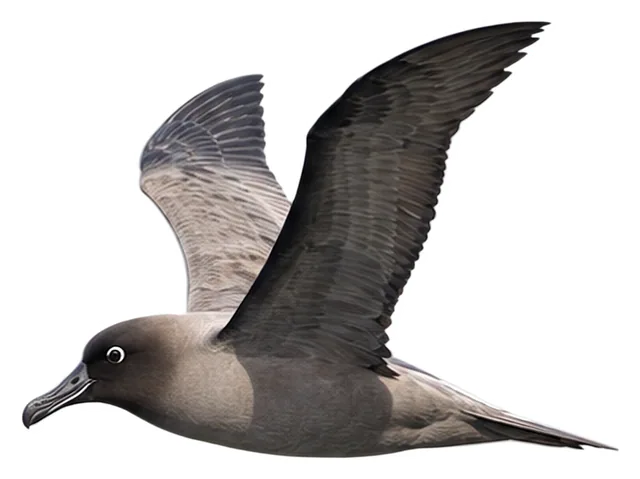
Light-mantled Albatross
Phoebetria palpebrata (Forster, JR, 1785)
3.1 kgWeight
The light-mantled albatross (Phoebetria palpebrata), also known as the grey-mantled albatross or the light-mantled sooty albatross, is a small albatross in the genus Phoebetria, which it shares with the sooty albatross.
Busiest months: November · Most records: South Georgia & South Sandwich Islands, Antarctica, Australia
Where and when it's recorded

Light-mantled Albatross has been recorded at 33 of the 8,171 birding hotspots we track, in 8 countries and regions.
Records by month Southern Hemisphere
Where it's recorded most
- Gold HarbourSouth Georgia & South Sandwich Islands284 records
- ElsehulSouth Georgia & South Sandwich Islands199 records
- Eaglehawk Neck Pelagic TripAustralia191 records
More places
- Drake PassageAntarctica165 records
- Cooper BaySouth Georgia & South Sandwich Islands154 records
- GrytvikenSouth Georgia & South Sandwich Islands145 records
- Hercules BaySouth Georgia & South Sandwich Islands118 records
- Salisbury PlainSouth Georgia & South Sandwich Islands104 records
- Prion IslandSouth Georgia & South Sandwich Islands99 records
- Fortuna Bay – Whistle CoveSouth Georgia & South Sandwich Islands95 records
Countries and regions with the most records
eBird records via GBIF up to 2024-12-31. A record means someone listed it; more records partly mean more birders, not more birds.
About
The light-mantled albatross (Phoebetria palpebrata), also known as the grey-mantled albatross or the light-mantled sooty albatross, is a small albatross in the genus Phoebetria, which it shares with the sooty albatross. The light-mantled albatross was first described as Phoebetria palpebrata by Johann Reinhold Forster, in 1785, based on a specimen from south of the Cape of Good Hope.
Excerpt from Wikipedia, CC BY-SA 4.0 · authors · Read more on Wikipedia
Questions
How big is the Light-mantled Albatross?
The Light-mantled Albatross weighs around 3.1 kg.
Where does the Light-mantled Albatross live?
Its breeding range: Southern Ocean: subantarctic islands from South Georgia to Macquarie Island (far southeast of Australia), Antipodes (southeast of Stewart Island) and Campbell Islands (south of South Island; New Zealand). It is most often recorded in South Georgia & South Sandwich Islands, Antarctica and Australia.
When is the best time to see the Light-mantled Albatross?
At the hotspots we track, it is recorded most in November (Southern Hemisphere).
Is the Light-mantled Albatross endangered?
The IUCN Red List classifies the Light-mantled Albatross as Near Threatened.
What does the Light-mantled Albatross eat?
Main food: Fish, shrimp & shellfish.
What family is the Light-mantled Albatross in?
It belongs to the family Albatrosses (Diomedeidae), order Procellariiformes.
At a glance
- Weight
- 3.1 kg
- Habitat
- Ocean
- Diet
- Fish, shrimp & shellfish
- Lifestyle
- On the water surface
- Migration
- Partial migrant
- Conservation
- Near Threatened
More measurements
- Wing
- 524 mm
- Tail
- 281 mm
- Bill
- 106 mm
- Tarsus
- 77 mm
Averages from the AVONET dataset; length from field guides where available.
Range
Southern Ocean: subantarctic islands from South Georgia to Macquarie Island (far southeast of Australia), Antipodes (southeast of Stewart Island) and Campbell Islands (south of South Island; New Zealand)
Breeding range, IOC World Bird List 15.2
Classification
- Order
- Procellariiformes
- Family
- Albatrosses Diomedeidae
- Genus
- Phoebetria
Other birds in the genus Phoebetria
 Sooty AlbatrossPhoebetria fusca
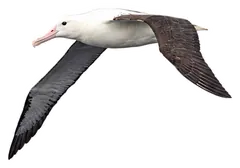 Northern Royal AlbatrossDiomedea sanfordi
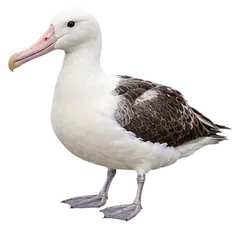 Southern Royal AlbatrossDiomedea epomophora
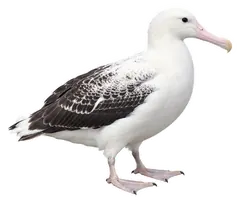 Snowy AlbatrossDiomedea exulans
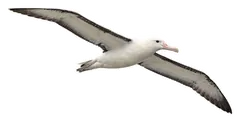 Tristan AlbatrossDiomedea dabbenena
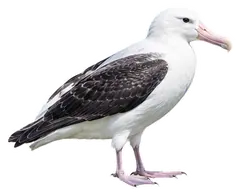 Antipodean AlbatrossDiomedea antipodensis
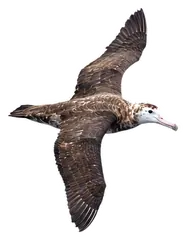 Amsterdam AlbatrossDiomedea amsterdamensis
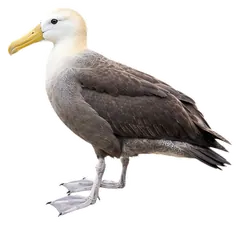 Waved AlbatrossPhoebastria irrorata
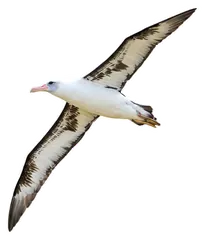 Laysan AlbatrossPhoebastria immutabilis
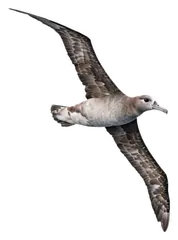 Black-footed AlbatrossPhoebastria nigripes
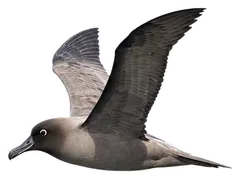
Download illustration
Free to use with credit: “Illustration: Bird Album (birdalbum.com)”. Drawn by AI from a reference photo by Christopher Stephens. ↗
Heard it but can't see it? Mingji identifies birds by sound and photo, on your phone.
In other languages
- EnglishLight-mantled Albatross
- 简体中文灰背信天翁
- 繁體中文灰背信天翁
- 日本語ハイイロアホウドリ
- DeutschGraumantelalbatros
- FrançaisAlbatros fuligineux
- EspañolAlbatros tiznado
- Portuguêsalbatroz-tisnado
- ItalianoAlbatros mantochiaro
- NederlandsRoetkopalbatros
- РусскийСветлоспинный альбатрос
- Svenskaljusryggig albatross
- DanskLys Sodalbatros
- Polskialbatros ciemnogłowy