 Bird Album
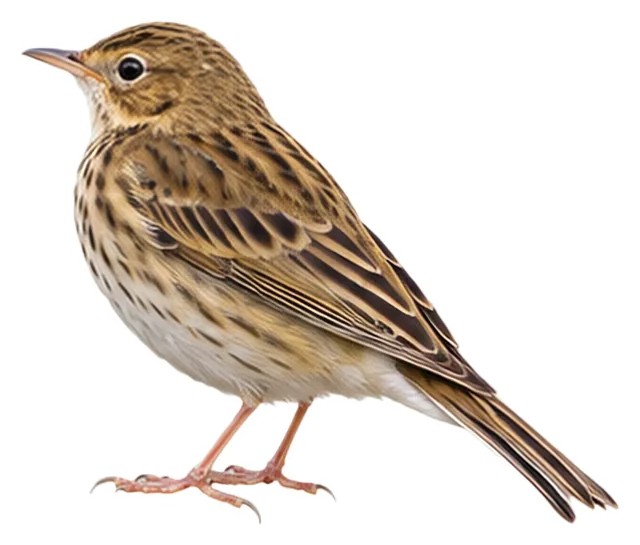
Meadow Pipit
Anthus pratensis (Linnaeus, 1758)
14–15 cmLength26 cmWingspan18 gWeight
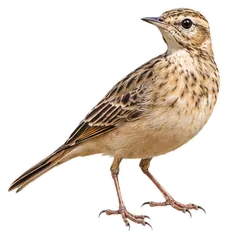
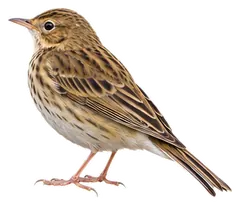
Its rufous body is inconspicuous, but the claw on the hind toe is exceptionally long.
Busiest months: October · Most records: United Kingdom, Spain, Portugal
How to identify
Field marks
- Upperparts rufous with dark stripes
- Rufous tail with narrow white edges on both sides
- Bill thin; legs and feet pale pinkish-yellow
- Hind toe claw exceptionally long
Voice
The call is soft and weak, like “tsi-tsi”.
Where and when it's recorded

Meadow Pipit has been recorded at 1,267 of the 8,171 birding hotspots we track, in 81 countries and regions.
Records by month Northern Hemisphere
Where it's recorded most
- Titchwell Marsh RSPB ReserveUnited Kingdom4,357 records
- Spurn Bird Observatory Recording AreaUnited Kingdom3,317 records
- KaldbakstjarnirIceland3,174 records
More places
- Frampton Marsh RSPB ReserveUnited Kingdom2,408 records
- Lezíria Grande de Vila Franca de Xira – área geralPortugal2,293 records
- Cley & Salthouse Marshes NWT NR – Cley Marshes including Hides and Visitor CentreUnited Kingdom2,183 records
- Bempton Cliffs RSPB ReserveUnited Kingdom2,176 records
- Teesside South GareUnited Kingdom2,174 records
- East Tilbury River and MarshesUnited Kingdom2,166 records
- Wanstead FlatsUnited Kingdom2,137 records
Countries and regions with the most records
eBird records via GBIF up to 2024-12-31. A record means someone listed it; more records partly mean more birders, not more birds.
About
The meadow pipit (Anthus pratensis) is a small passerine bird that breeds throughout much of the Palearctic, from south-eastern Greenland and Iceland east to just east of the Ural Mountains in Russia, and south to central France and Romania; an isolated population also occurs in the Caucasus Mountains. It is migratory over most of its range, wintering in southern Europe, North Africa, and south-western Asia, but is resident year-round in western Europe, although even here many birds move to the coast or lowlands in winter.
Excerpt from Wikipedia, CC BY-SA 4.0 · authors · Read more on Wikipedia
Questions
How big is the Meadow Pipit?
The Meadow Pipit is about 14–15 cm long, with a wingspan of 26 cm and weighs around 18 g.
Where does the Meadow Pipit live?
Its breeding range: Palearctic: Iceland through western, northern Europe to western Russia. It is most often recorded in United Kingdom, Spain and Portugal.
When is the best time to see the Meadow Pipit?
At the hotspots we track, it is recorded most in October (Northern Hemisphere).
Is the Meadow Pipit endangered?
The IUCN Red List classifies the Meadow Pipit as Least Concern.
What does the Meadow Pipit eat?
Main food: Insects & other invertebrates.
What family is the Meadow Pipit in?
It belongs to the family Wagtails, Pipits (Motacillidae), order Passerines (Passeriformes).
At a glance
- Length
- 14–15 cm
- Wingspan
- 26 cm
- Weight
- 18 g
- Habitat
- Grassland
- Diet
- Insects & other invertebrates
- Lifestyle
- Active on the ground
- Migration
- Partial migrant
- Conservation
- Least Concern
More measurements
- Wing
- 78 mm
- Tail
- 56 mm
- Bill
- 14 mm
- Tarsus
- 22 mm
Averages from the AVONET dataset; length from field guides where available.
Range
Palearctic: Iceland through western, northern Europe to western Russia
Breeding range, IOC World Bird List 15.2
Classification
- Order
- Passerines Passeriformes
- Family
- Wagtails, Pipits Motacillidae
- Genus
- Anthus
Other birds in the genus Anthus
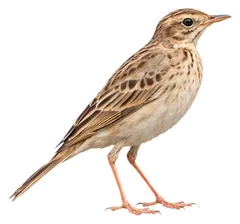 Richard's PipitAnthus richardi
 Paddyfield PipitAnthus rufulus
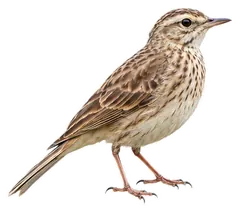 Australian PipitAnthus australis
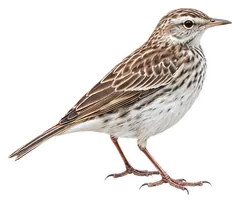 New Zealand PipitAnthus novaeseelandiae
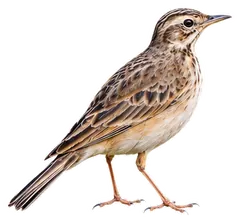 African PipitAnthus cinnamomeus
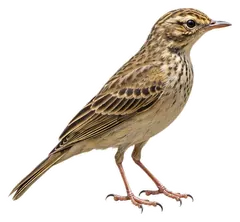 Mountain PipitAnthus hoeschi
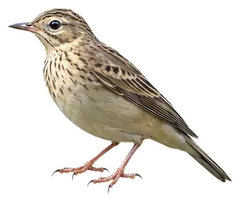 Blyth's PipitAnthus godlewskii
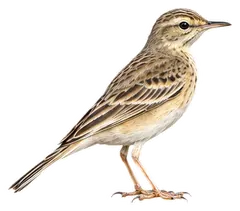 Tawny PipitAnthus campestris
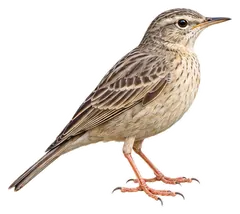 Long-billed PipitAnthus similis
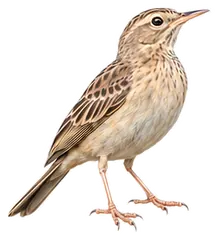 Nicholson's PipitAnthus nicholsoni
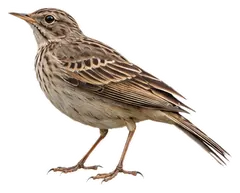 Wood PipitAnthus nyassae
 Buffy PipitAnthus vaalensis
Download illustration
Free to use with credit: “Illustration: Bird Album (birdalbum.com)”. Drawn by AI from a reference photo by Viktor N. Chekan. ↗
Heard it but can't see it? Mingji identifies birds by sound and photo, on your phone.