 Bird Album
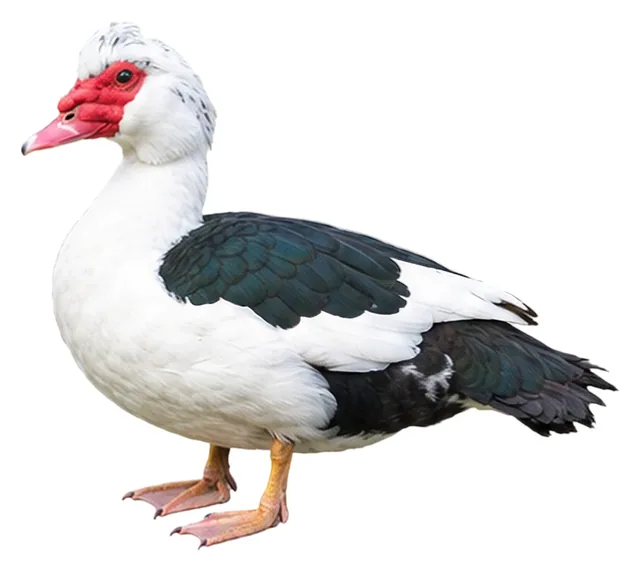
Muscovy Duck
Cairina moschata (Linnaeus, 1758)
76–84 cmLength2.4 kgWeight
This large duck has bare facial skin and a knob at the base of the bill in the male, with the wild form mostly black with large white wing patches.
Busiest months: January–March · Most records: United States, Costa Rica, Brazil
How to identify
Field marks
- Male has black or dark red bare skin on the face
- Wild form black with large white wing patches; domestic forms mostly white or mixed black and white
- Male has a knob at the base of the bill; wild form has a black bill with pink spots
- Wild form has black legs and feet, long claws and a broad, flat tail
Male, female and young
Male distinctly larger than female, with a short crest at the rear of the head. Female has a feathered face, no obvious knob and duller plumage. Juvenile darker, with little or no white on the wings.
Voice
Male gives a low, breathy call; female gives a soft, trilled coo.
Where and when it's recorded

Muscovy Duck has been recorded at 1,659 of the 8,171 birding hotspots we track, in 105 countries and regions.
Records by month Northern Hemisphere
Where it's recorded most
- UTRGV BrownsvilleUnited States3,574 records
- Piedmont ParkUnited States3,086 records
- Plantation PreserveUnited States3,067 records
More places
- South Padre Is. – Birding and Nature CenterUnited States2,882 records
- Riparian Preserve at Gilbert Water RanchUnited States2,523 records
- Frank G. Bonelli RP/Puddingstone Reservoir and vicinityUnited States2,356 records
- Tárcoles – Tour en BoteCosta Rica2,225 records
- Zamorano Univ. – Campus Farms and River 740-815 maslHonduras2,137 records
- Legg LakeUnited States1,602 records
- Poconé – Pousada PiuvalBrazil1,564 records
Countries and regions with the most records
eBird records via GBIF up to 2024-12-31. A record means someone listed it; more records partly mean more birders, not more birds.
About
The Muscovy duck (Cairina moschata) is a species of duck native to the Americas, from the Lower Rio Grande Valley of Texas and Mexico south to Argentina and Uruguay. The species has been domesticated, and feral Muscovy ducks can be found locally in New Zealand, Australia, the United States, and in Central and Eastern Europe.
Excerpt from Wikipedia, CC BY-SA 4.0 · authors · Read more on Wikipedia
Questions
How big is the Muscovy Duck?
The Muscovy Duck is about 76–84 cm long and weighs around 2.4 kg.
Where does the Muscovy Duck live?
Its breeding range: North America, Middle America, South America: southern Texas to northern Argentina. It is most often recorded in United States, Costa Rica and Brazil.
When is the best time to see the Muscovy Duck?
At the hotspots we track, it is recorded most in January, February and March (Northern Hemisphere).
Is the Muscovy Duck endangered?
The IUCN Red List classifies the Muscovy Duck as Least Concern.
What does the Muscovy Duck eat?
Main food: Omnivore.
What family is the Muscovy Duck in?
It belongs to the family Ducks, Geese, Swans (Anatidae), order Anseriformes.
At a glance
- Length
- 76–84 cm
- Weight
- 2.4 kg
- Habitat
- Wetland
- Diet
- Omnivore
- Lifestyle
- Varied
- Migration
- Resident (barely migrates)
- Conservation
- Least Concern
More measurements
- Wing
- 345 mm
- Tail
- 160 mm
- Bill
- 66 mm
- Tarsus
- 56 mm
Averages from the AVONET dataset; length from field guides where available.
Range
North America, Middle America, South America: southern Texas to northern Argentina
Breeding range, IOC World Bird List 15.2
Classification
- Order
- Anseriformes
- Family
- Ducks, Geese, Swans Anatidae
- Genus
- Cairina
More from the family Ducks, Geese, Swans
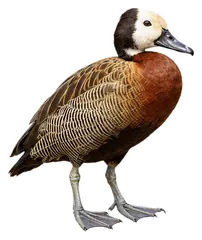 White-faced Whistling DuckDendrocygna viduata
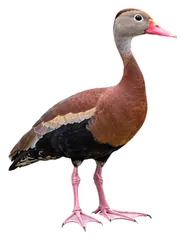 Black-bellied Whistling DuckDendrocygna autumnalis
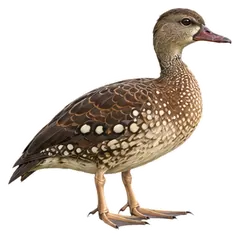 Spotted Whistling DuckDendrocygna guttata
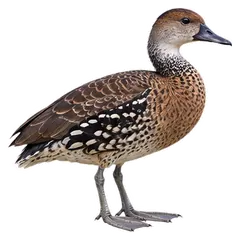 West Indian Whistling DuckDendrocygna arborea
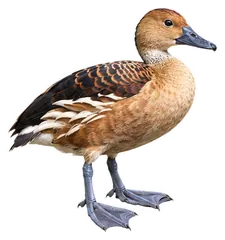 Fulvous Whistling DuckDendrocygna bicolor
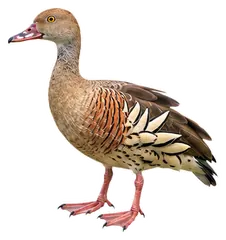 Plumed Whistling DuckDendrocygna eytoni
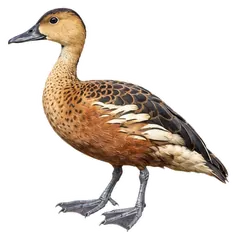 Wandering Whistling DuckDendrocygna arcuata
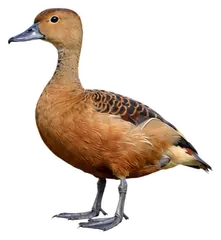 Lesser Whistling DuckDendrocygna javanica
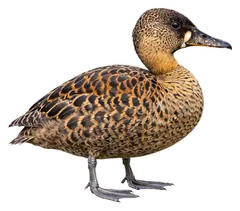 White-backed DuckThalassornis leuconotus
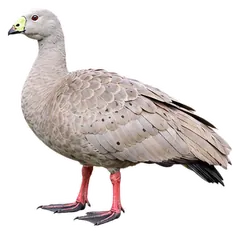 Cape Barren GooseCereopsis novaehollandiae
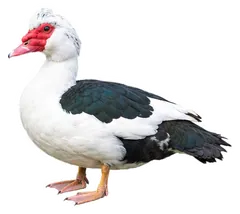
Download illustration
Free to use with credit: “Illustration: Bird Album (birdalbum.com)”. Drawn by AI from reference photos. ↗

Heard it but can't see it? Mingji identifies birds by sound and photo, on your phone.