 Bird Album
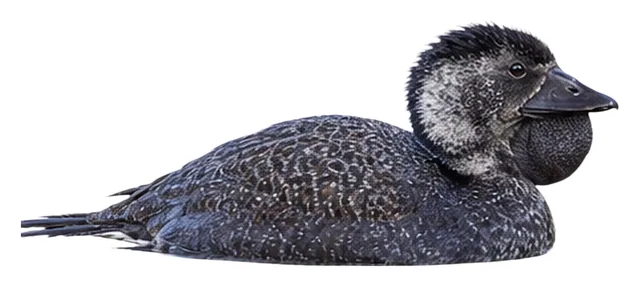
Musk Duck
Biziura lobata (Shaw, 1796)
1.9 kgWeight
The musk duck (Biziura lobata) is a highly aquatic, stiff-tailed duck native to southern Australia.
Busiest months: January · Most records: Australia
Where and when it's recorded

Musk Duck has been recorded at 95 of the 8,171 birding hotspots we track, in 1 country or region.
Records by month Southern Hemisphere
Where it's recorded most
- Western Treatment PlantAustralia7,641 records
- Herdsman LakeAustralia1,947 records
- Bibra LakeAustralia1,041 records
More places
- Lake Wendouree – FairylandAustralia979 records
- Lake WallaceAustralia824 records
- Lake Monger ReserveAustralia781 records
- Tallawarra Ash Pond 3, YallahAustralia601 records
- Alfred Cove Nature ReserveAustralia562 records
- Jawbone Flora and Fauna ReserveAustralia560 records
- Lysterfield ParkAustralia536 records
Countries and regions with the most records
eBird records via GBIF up to 2024-12-31. A record means someone listed it; more records partly mean more birders, not more birds.
About
The musk duck (Biziura lobata) is a highly aquatic, stiff-tailed duck native to southern Australia. It is the only living member of the genus Biziura. An extinct relative, the New Zealand musk duck or de Lautour's duck (B. delautouri), once occurred on New Zealand, but is only known from prehistoric subfossil bones.
Excerpt from Wikipedia, CC BY-SA 4.0 · authors · Read more on Wikipedia
Questions
How big is the Musk Duck?
The Musk Duck weighs around 1.9 kg.
Where does the Musk Duck live?
Its breeding range: Australasia: southwestern Western Australia, southwestern Queensland to southern Victoria and southeastern South Australia and Tasmania (southwestern, southeastern Australia). It is most often recorded in Australia.
When is the best time to see the Musk Duck?
At the hotspots we track, it is recorded most in January (Southern Hemisphere).
Is the Musk Duck endangered?
The IUCN Red List classifies the Musk Duck as Least Concern.
What does the Musk Duck eat?
Main food: Fish, shrimp & shellfish.
What family is the Musk Duck in?
It belongs to the family Ducks, Geese, Swans (Anatidae), order Anseriformes.
At a glance
- Weight
- 1.9 kg
- Habitat
- Wetland
- Diet
- Fish, shrimp & shellfish
- Lifestyle
- On the water surface
- Migration
- Partial migrant
- Conservation
- Least Concern
More measurements
- Wing
- 212 mm
- Tail
- 105 mm
- Bill
- 42 mm
- Tarsus
- 47 mm
Averages from the AVONET dataset; length from field guides where available.
Range
Australasia: southwestern Western Australia, southwestern Queensland to southern Victoria and southeastern South Australia and Tasmania (southwestern, southeastern Australia)
Breeding range, IOC World Bird List 15.2
Classification
- Order
- Anseriformes
- Family
- Ducks, Geese, Swans Anatidae
- Genus
- Biziura
More from the family Ducks, Geese, Swans
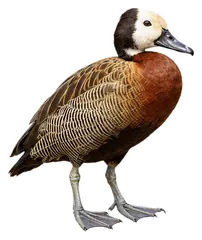 White-faced Whistling DuckDendrocygna viduata
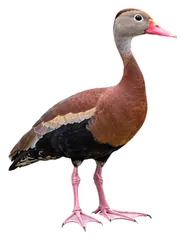 Black-bellied Whistling DuckDendrocygna autumnalis
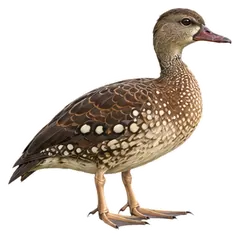 Spotted Whistling DuckDendrocygna guttata
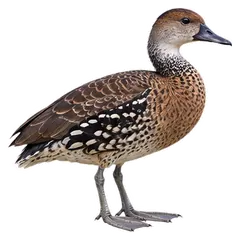 West Indian Whistling DuckDendrocygna arborea
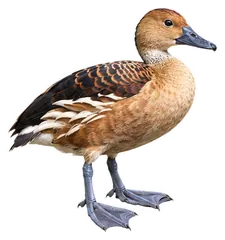 Fulvous Whistling DuckDendrocygna bicolor
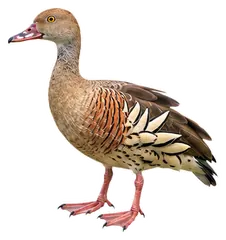 Plumed Whistling DuckDendrocygna eytoni
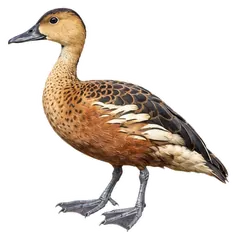 Wandering Whistling DuckDendrocygna arcuata
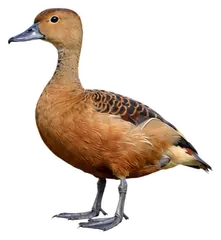 Lesser Whistling DuckDendrocygna javanica
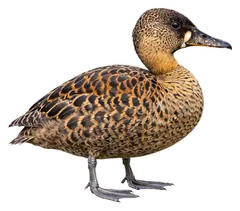 White-backed DuckThalassornis leuconotus
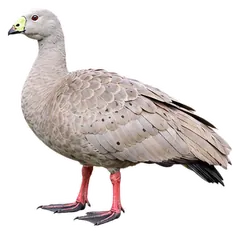 Cape Barren GooseCereopsis novaehollandiae
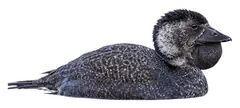
Download illustration
Free to use with credit: “Illustration: Bird Album (birdalbum.com)”. Drawn by AI from a reference photo by Leo. ↗
Heard it but can't see it? Mingji identifies birds by sound and photo, on your phone.