 Bird Album
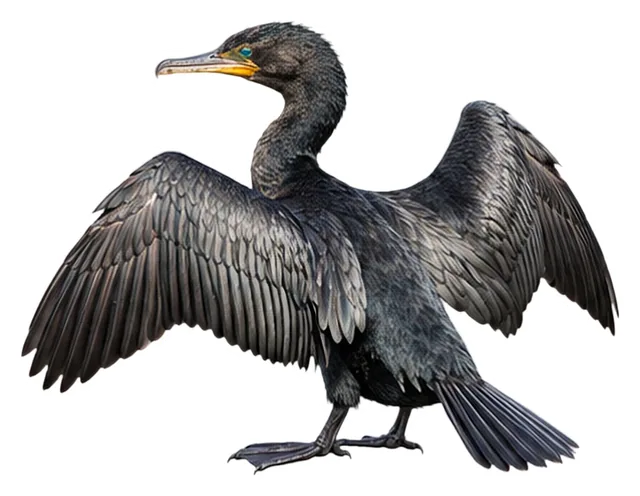
Neotropic Cormorant
Nannopterum brasilianum (Gmelin, JF, 1789)
1.2 kgWeight
Busiest months: April · Most records: United States, Argentina, Chile
Where and when it's recorded
Busiest months: April · Most records: United States, Argentina, Chile

Neotropic Cormorant has been recorded at 1,222 of the 8,276 birding hotspots we track, in 33 countries and regions.
Records by month Northern Hemisphere
Where it's recorded most
- Riparian Preserve at Gilbert Water RanchUnited States17,952 records
- High Island – Smith Oaks SanctuaryUnited States12,565 records
- Estero Llano Grande SP WBCUnited States11,892 records
More places
- Reserva Ecológica Costanera SurArgentina10,218 records
- Leonabelle Turnbull Birding Ctr.United States9,787 records
- Mitchell Lake Audubon CenterUnited States8,357 records
- Reid ParkUnited States7,697 records
- Jocelyn Nungaray NWR (Anahuac)United States6,753 records
- South Padre Is. – Birding and Nature CenterUnited States6,651 records
- Santa Ana NWRUnited States6,026 records
Countries and regions with the most records
eBird records via GBIF up to 2024-12-31. A record means someone listed it; more records partly mean more birders, not more birds.
About
The neotropic cormorant or olivaceous cormorant (Nannopterum brasilianum) is a medium-sized cormorant found throughout the American tropics and subtropics, from the middle Rio Grande and the Gulf and Californian coasts of the United States south through Mexico and Central America to southern South America, where it is called by the indigenous name of biguá. It also breeds in the Bahamas, Cuba, and Trinidad. It can be found both on coasts (including some mangrove areas) and in inland waters.
Excerpt from Wikipedia, CC BY-SA 4.0 · authors · Read more on Wikipedia
Questions
How big is the Neotropic Cormorant?
The Neotropic Cormorant weighs around 1.2 kg.
Where does the Neotropic Cormorant live?
Its breeding range: North America, Middle America, South America: widespread inland and coastal central, southern USA to Tierra del Fuego; Bahamas and Cuba. It is most often recorded in United States, Argentina and Chile.
When is the best time to see the Neotropic Cormorant?
At the hotspots we track, it is recorded most in April (Northern Hemisphere).
Is the Neotropic Cormorant endangered?
The IUCN Red List classifies the Neotropic Cormorant as Least Concern.
What does the Neotropic Cormorant eat?
Main food: Fish, shrimp & shellfish.
What family is the Neotropic Cormorant in?
It belongs to the family Cormorants, Shags (Phalacrocoracidae), order Suliformes.
At a glance
- Weight
- 1.2 kg
- Habitat
- Wetland
- Diet
- Fish, shrimp & shellfish
- Lifestyle
- Varied
- Migration
- Resident (barely migrates)
- Conservation
- Least Concern
More measurements
- Wing
- 275 mm
- Tail
- 187 mm
- Bill
- 63 mm
- Tarsus
- 49 mm
Averages from the AVONET dataset; length from field guides where available.
Range
North America, Middle America, South America: widespread inland and coastal central, southern USA to Tierra del Fuego; Bahamas and Cuba
Breeding range, IOC World Bird List 15.2
Classification
- Order
- Suliformes
- Family
- Cormorants, Shags Phalacrocoracidae
- Genus
- Nannopterum
Other birds in the genus Nannopterum
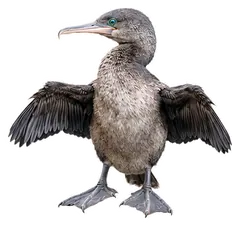 Flightless CormorantNannopterum harrisi
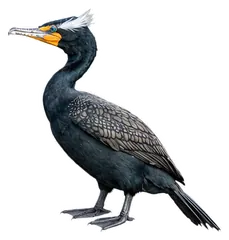 Double-crested CormorantNannopterum auritum
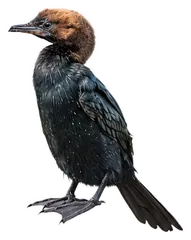 Pygmy CormorantMicrocarbo pygmaeus
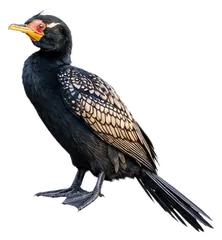 Reed CormorantMicrocarbo africanus
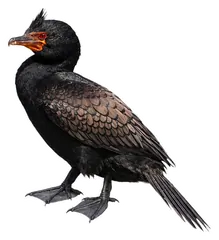 Crowned CormorantMicrocarbo coronatus
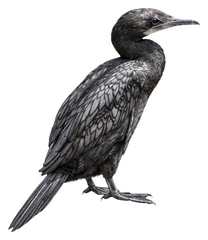 Little CormorantMicrocarbo niger
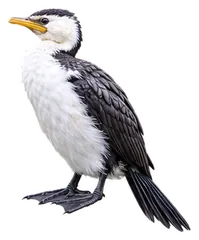 Little Pied CormorantMicrocarbo melanoleucos
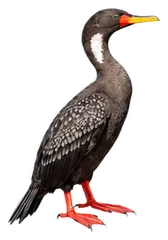 Red-legged CormorantPoikilocarbo gaimardi
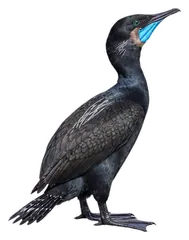 Brandt's CormorantUrile penicillatus
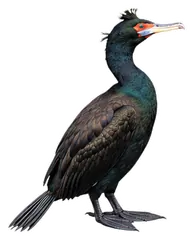 Red-faced CormorantUrile urile
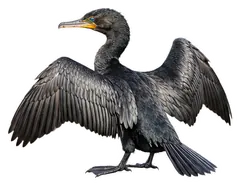
Download illustration
Free to use with credit: “Illustration: Bird Album (birdalbum.com)”. Drawn by AI from a reference photo by matias saa. ↗
Heard it but can't see it? Mingji identifies birds by sound and photo, on your phone.