 Bird Album
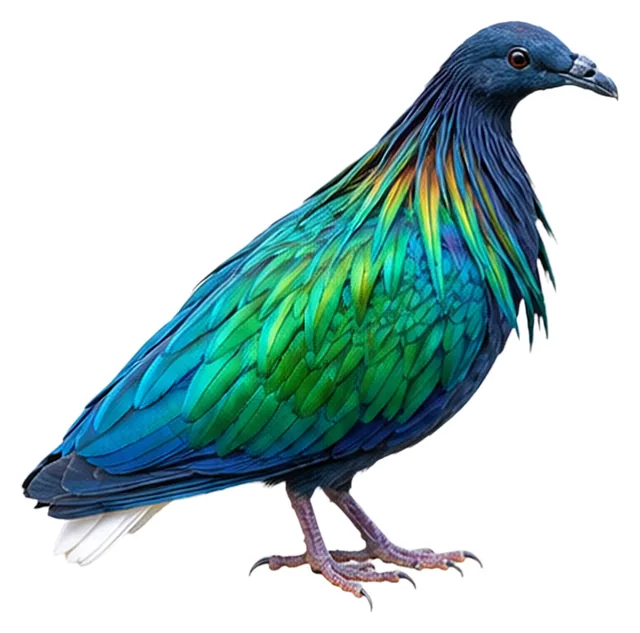
Nicobar Pigeon
Caloenas nicobarica (Linnaeus, 1758)
32–35 cmLength538 gWeight
The Nicobar pigeon or Nicobar dove (Caloenas nicobarica, Car: ma-kūö-kö) is a bird found on small islands and in coastal regions from the Andaman and Nicobar Islands, India, east through the Indonesian Archipelago, to the Solomons and Palau.
Busiest months: May and October · Most records: Palau, Papua New Guinea, Malaysia
Where and when it's recorded
Busiest months: May and October · Most records: Palau, Papua New Guinea, Malaysia

Nicobar Pigeon has been recorded at 24 of the 8,276 birding hotspots we track, in 6 countries and regions.
Records by month Northern Hemisphere
Where it's recorded most
- Kulu RiverPapua New Guinea104 records
- Ngchus St.2Palau62 records
- Pulau Mantanani BesarMalaysia43 records
More places
- Long Island Park & Conservation AreaPalau42 records
- Ulong St.1Palau31 records
- Euidelchol St.1Palau28 records
- Ngemelis St.1Palau27 records
- Ulong St.2Palau27 records
- Tetepare Nature PreserveSolomon Islands18 records
- Ngeanges St.3Palau17 records
Countries and regions with the most records
eBird records via GBIF up to 2024-12-31. A record means someone listed it; more records partly mean more birders, not more birds.
About
The Nicobar pigeon or Nicobar dove (Caloenas nicobarica, Car: ma-kūö-kö) is a bird found on small islands and in coastal regions from the Andaman and Nicobar Islands, India, east through the Indonesian Archipelago, to the Solomons and Palau. It is the only living member of the genus Caloenas alongside the extinct spotted green pigeon and Kanaka pigeon, and is the closest living relative of the extinct dodo and Rodrigues solitaire.
Excerpt from Wikipedia, CC BY-SA 4.0 · authors · Read more on Wikipedia
Questions
How big is the Nicobar Pigeon?
The Nicobar Pigeon is about 32–35 cm long and weighs around 538 g.
Where does the Nicobar Pigeon live?
Its breeding range: Oriental, Australasia: Andaman and Nicobar islands to Philippines, Indonesian Archipelago, New Guinea satellites, Bismarck Archipelago, Solomon Islands and Palau (western Caroline Islands, western Micronesia). It is most often recorded in Palau, Papua New Guinea and Malaysia.
When is the best time to see the Nicobar Pigeon?
At the hotspots we track, it is recorded most in May and October (Northern Hemisphere).
Is the Nicobar Pigeon endangered?
The IUCN Red List classifies the Nicobar Pigeon as Near Threatened.
What does the Nicobar Pigeon eat?
Main food: Omnivore.
What family is the Nicobar Pigeon in?
It belongs to the family Pigeons, Doves (Columbidae), order Columbiformes.
At a glance
- Length
- 32–35 cm
- Weight
- 538 g
- Habitat
- Forest
- Diet
- Omnivore
- Lifestyle
- Active on the ground
- Migration
- Partial migrant
- Conservation
- Near Threatened
More measurements
- Wing
- 259 mm
- Tail
- 99 mm
- Bill
- 31 mm
- Tarsus
- 44 mm
Averages from the AVONET dataset; length from field guides where available.
Range
Oriental, Australasia: Andaman and Nicobar islands to Philippines, Indonesian Archipelago, New Guinea satellites, Bismarck Archipelago, Solomon Islands and Palau (western Caroline Islands, western Micronesia)
Breeding range, IOC World Bird List 15.2
Classification
- Order
- Columbiformes
- Family
- Pigeons, Doves Columbidae
- Genus
- Caloenas
More from the family Pigeons, Doves
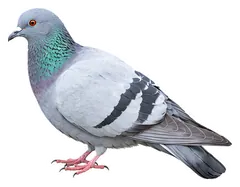 Rock DoveColumba livia
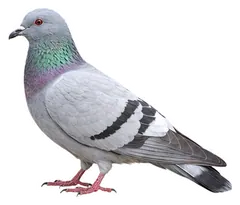 Hill PigeonColumba rupestris
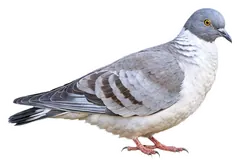 Snow PigeonColumba leuconota
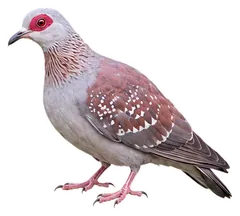 Speckled PigeonColumba guinea
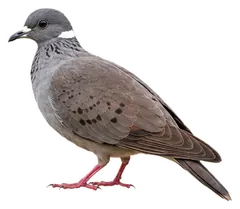 White-collared PigeonColumba albitorques
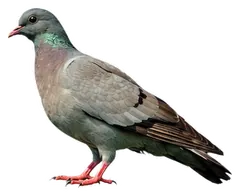 Stock DoveColumba oenas
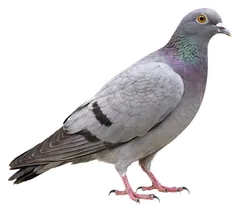 Yellow-eyed PigeonColumba eversmanni
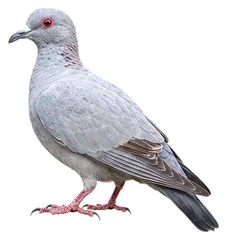 Somali PigeonColumba oliviae
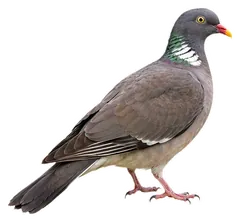 Common Wood PigeonColumba palumbus
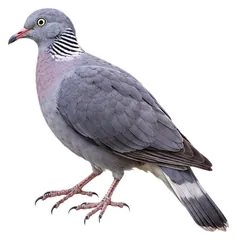 Trocaz PigeonColumba trocaz
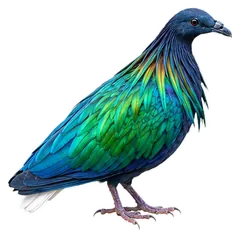
Download illustration
Free to use with credit: “Illustration: Bird Album (birdalbum.com)”. Drawn by AI from a reference photo by Bird Explorers. ↗
Heard it but can't see it? Mingji identifies birds by sound and photo, on your phone.