 Bird Album
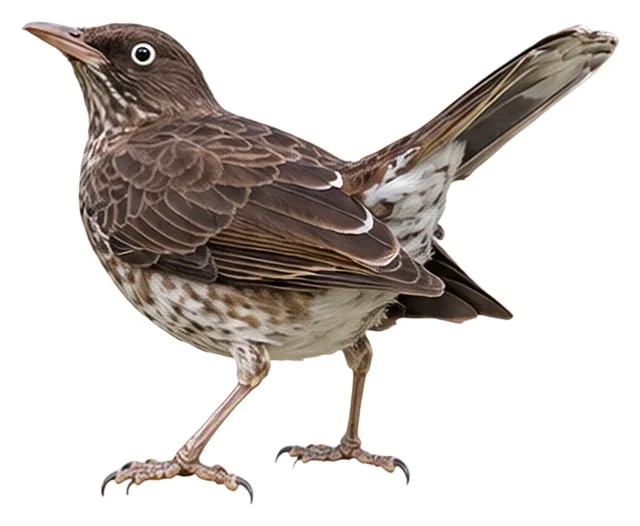
Pearly-eyed Thrasher
Margarops fuscatus (Vieillot, 1808)
98 gWeight
The pearly-eyed thrasher (Margarops fuscatus) is a bird in the thrasher family Mimidae.
Busiest months: January and March · Most records: Puerto Rico, U.S. Virgin Islands, Guadeloupe
Where and when it's recorded

Pearly-eyed Thrasher has been recorded at 205 of the 8,171 birding hotspots we track, in 21 countries and regions.
Records by month Northern Hemisphere
Where it's recorded most
- PN Julio Enrique MonagaPuerto Rico1,268 records
- Bosque Estatal de MaricaoPuerto Rico1,002 records
- Jardín Botánico de la UPRPuerto Rico799 records
More places
- Parque Central de San JuanPuerto Rico739 records
- Viejo San JuanPuerto Rico683 records
- 26 HDLPuerto Rico589 records
- Reserva Natural Punta GuaniquillaPuerto Rico488 records
- Virgin Islands NP – Francis Bay TrailU.S. Virgin Islands402 records
- Bosque Estatal de PiñonesPuerto Rico383 records
- Refugio de Vida Silvestre de BoquerónPuerto Rico347 records
Countries and regions with the most records
eBird records via GBIF up to 2024-12-31. A record means someone listed it; more records partly mean more birders, not more birds.
About
The pearly-eyed thrasher (Margarops fuscatus) is a bird in the thrasher family Mimidae. It is found on many Caribbean islands, from the Bahamas in the north to the Grenadines in the south, with an isolated subspecies on Bonaire.
Excerpt from Wikipedia, CC BY-SA 4.0 · authors · Read more on Wikipedia
Questions
How big is the Pearly-eyed Thrasher?
The Pearly-eyed Thrasher weighs around 98 g.
Where does the Pearly-eyed Thrasher live?
Its breeding range: North America: West Indies. It is most often recorded in Puerto Rico, U.S. Virgin Islands and Guadeloupe.
When is the best time to see the Pearly-eyed Thrasher?
At the hotspots we track, it is recorded most in January and March (Northern Hemisphere).
Is the Pearly-eyed Thrasher endangered?
The IUCN Red List classifies the Pearly-eyed Thrasher as Least Concern.
What does the Pearly-eyed Thrasher eat?
Main food: Omnivore.
What family is the Pearly-eyed Thrasher in?
It belongs to the family Mockingbirds, Thrashers (Mimidae), order Passerines (Passeriformes).
At a glance
- Weight
- 98 g
- Habitat
- Shrubland
- Diet
- Omnivore
- Lifestyle
- Perches in trees
- Migration
- Resident (barely migrates)
- Conservation
- Least Concern
More measurements
- Wing
- 132 mm
- Tail
- 115 mm
- Bill
- 31 mm
- Tarsus
- 37 mm
Averages from the AVONET dataset; length from field guides where available.
Range
North America: West Indies
Breeding range, IOC World Bird List 15.2
Classification
- Order
- Passerines Passeriformes
- Family
- Mockingbirds, Thrashers Mimidae
- Genus
- Margarops
More from the family Mockingbirds, Thrashers
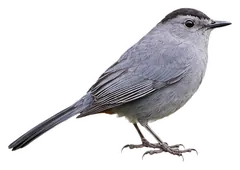 Grey CatbirdDumetella carolinensis
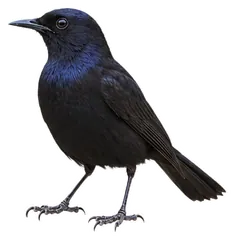 Black CatbirdMelanoptila glabrirostris
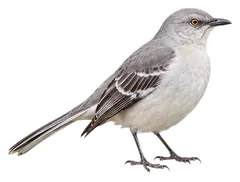 Northern MockingbirdMimus polyglottos
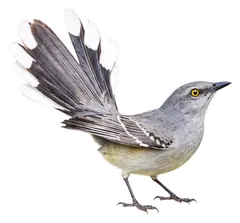 Tropical MockingbirdMimus gilvus
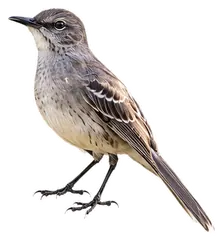 Bahama MockingbirdMimus gundlachii
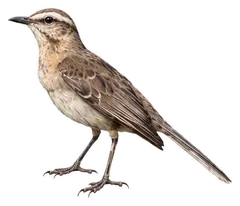 Chilean MockingbirdMimus thenca
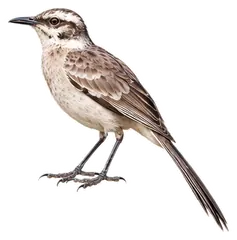 Long-tailed MockingbirdMimus longicaudatus
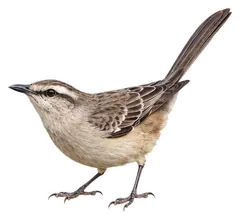 Chalk-browed MockingbirdMimus saturninus
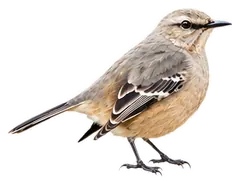 Patagonian MockingbirdMimus patagonicus
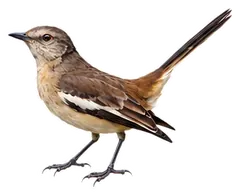 White-banded MockingbirdMimus triurus
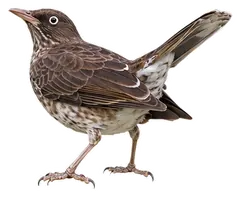
Download illustration
Free to use with credit: “Illustration: Bird Album (birdalbum.com)”. Drawn by AI from a reference photo by Stephen Cresswell. ↗
Heard it but can't see it? Mingji identifies birds by sound and photo, on your phone.
In other languages
- EnglishPearly-eyed Thrasher
- 简体中文珠眼嘲鸫
- 繁體中文珠眼嘲鶇
- 日本語オオウロコツグミモドキ
- DeutschPerlaugen-Spottdrossel
- FrançaisMoqueur corossol
- EspañolCuitlacoche chucho
- Portuguêsdebulhador-de-bico-claro
- ItalianoMimo occhiperla
- NederlandsWitoogspotlijster
- РусскийЖемчужноглазый пересмешник
- Svenskavitögd härmtrast
- DanskAntilrøddrossel
- Polskiłuskopiór żółtodzioby