 Bird Album
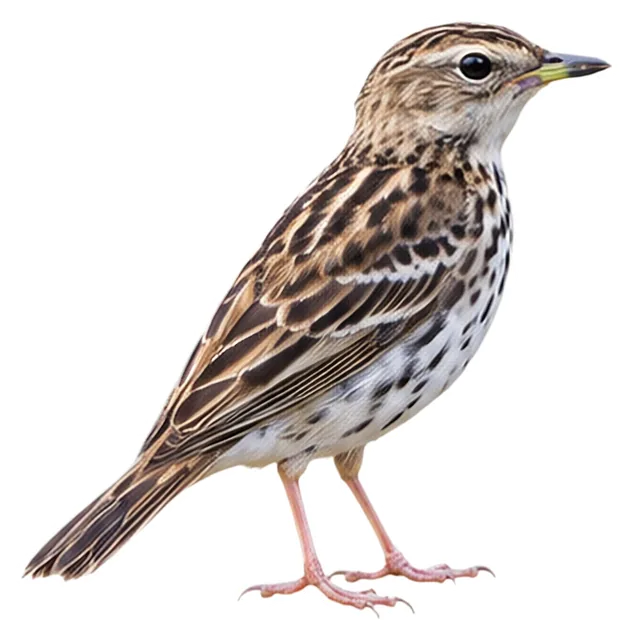
Pechora Pipit
Anthus gustavi Swinhoe, 1863
≈15 cmLength20 gWeight
It has heavy streaks on the back and hides in long grass, reluctant to take flight.
Busiest months: October · Most records: China, United States, South Korea
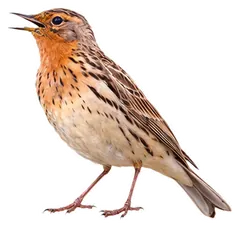
Looks like Red-throated Pipit
How to identify
Field marks
- Back with heavy rufous streaks
- Back with whitish streaks
- Pale yellowish-brown breast contrasting clearly with white belly
- Breast and belly with black markings
Voice
The call has an electric quality, like a single “zip”.
Similar species
Where and when it's recorded
Busiest months: October · Most records: China, United States, South Korea

Pechora Pipit has been recorded at 255 of the 8,276 birding hotspots we track, in 13 countries and regions.
Records by month Northern Hemisphere
Where it's recorded most
- Kenting NP – Sheding Lingxiao Pavilion (Raptors Observation Spot)Taiwan (China)326 records
- Taipei – Tianliaoyang WetlandTaiwan (China)273 records
- GambellUnited States209 records
More places
- Yilan – Dingliao Ecological ParkTaiwan (China)198 records
- Nanhui DongtanChina116 records
- Fair IsleUnited Kingdom68 records
- Taipei – NTU Experimental Farm/Ecological PondTaiwan (China)67 records
- Las Pinas-Paranaque Critical Habitat and Ecotourism AreaPhilippines65 records
- Baengnyeong-do (island)South Korea58 records
- Yeliu IBATaiwan (China)57 records
Countries and regions with the most records
eBird records via GBIF up to 2024-12-31. A record means someone listed it; more records partly mean more birders, not more birds.
About
The Pechora pipit (Anthus gustavi) is a small passerine bird which breeds in the East Palearctic tundra and densely vegetated areas near river banks ranges from the Pechora River to the Chukchi Peninsula. It also breeds in Kamchatka and the Commander Islands, and with a disjunct population much further south in northeastern China and southeastern Siberia. It is a long-distance migrant, moving in winter to Indonesia.
Excerpt from Wikipedia, CC BY-SA 4.0 · authors · Read more on Wikipedia
Questions
How big is the Pechora Pipit?
The Pechora Pipit is about ≈15 cm long and weighs around 20 g.
Where does the Pechora Pipit live?
Its breeding range: Palearctic: north-central, northeastern. It is most often recorded in China, United States and South Korea.
When is the best time to see the Pechora Pipit?
At the hotspots we track, it is recorded most in October (Northern Hemisphere).
Is the Pechora Pipit endangered?
The IUCN Red List classifies the Pechora Pipit as Least Concern.
What does the Pechora Pipit eat?
Main food: Insects & other invertebrates.
What family is the Pechora Pipit in?
It belongs to the family Wagtails, Pipits (Motacillidae), order Passerines (Passeriformes).
At a glance
- Length
- ≈15 cm
- Weight
- 20 g
- Habitat
- Shrubland
- Diet
- Insects & other invertebrates
- Lifestyle
- Active on the ground
- Migration
- Migratory
- Conservation
- Least Concern
More measurements
- Wing
- 80 mm
- Tail
- 57 mm
- Bill
- 15 mm
- Tarsus
- 22 mm
Averages from the AVONET dataset; length from field guides where available.
Range
Palearctic: north-central, northeastern
Breeding range, IOC World Bird List 15.2
Subspecies · 1
- Anthus gustavi menzbieri se Siberia and ne China
Classification
- Order
- Passerines Passeriformes
- Family
- Wagtails, Pipits Motacillidae
- Genus
- Anthus
Other birds in the genus Anthus
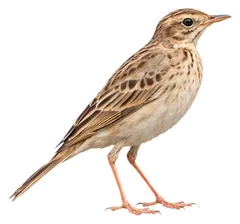 Richard's PipitAnthus richardi
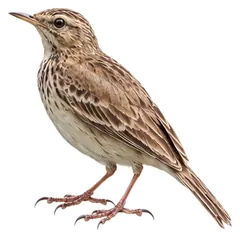 Paddyfield PipitAnthus rufulus
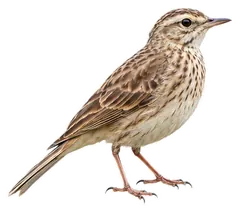 Australian PipitAnthus australis
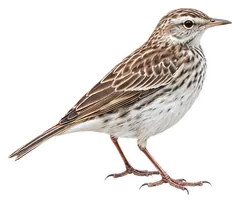 New Zealand PipitAnthus novaeseelandiae
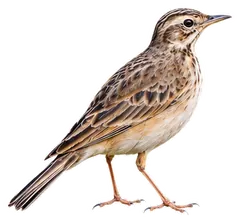 African PipitAnthus cinnamomeus
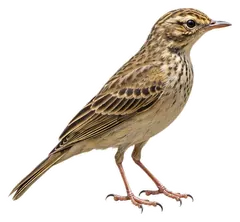 Mountain PipitAnthus hoeschi
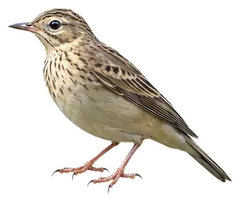 Blyth's PipitAnthus godlewskii
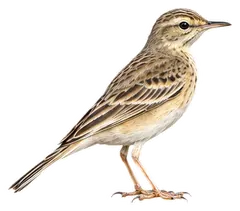 Tawny PipitAnthus campestris
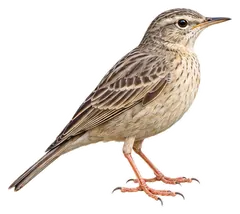 Long-billed PipitAnthus similis
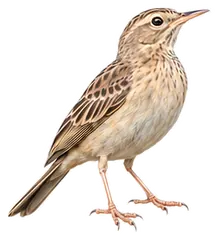 Nicholson's PipitAnthus nicholsoni
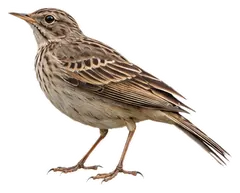 Wood PipitAnthus nyassae
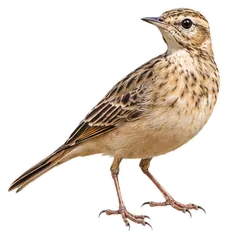 Buffy PipitAnthus vaalensis
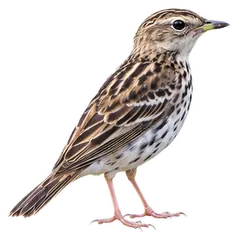
Download illustration
Free to use with credit: “Illustration: Bird Album (birdalbum.com)”. Drawn by AI from a reference photo by Pavel Shukov. ↗
Heard it but can't see it? Mingji identifies birds by sound and photo, on your phone.