 Bird Album
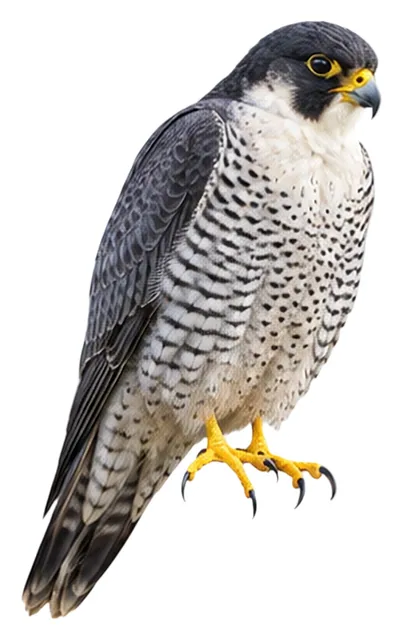
Peregrine Falcon
Falco peregrinus Tunstall, 1771
≈49 cmLength102 cmWingspan760 gWeight
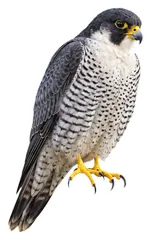
It has a black head and black “moustache”, a blue-gray back and a white belly with fine barring.
Busiest months: October · Most records: United States, Canada, China
How to identify
Field marks
- Crown and cheek “moustache” black, contrasting with white throat
- Back and long, pointed wings blue-black to gray; wingtips black
- Belly white to rusty, with regular fine dark barring
- Tail tip black, with a single white terminal edge
Male, female and young
Sexes similar in plumage; the female is up to 30% larger than the male; juveniles are browner, with streaks rather than barring on the belly.
Where and when it's recorded

Peregrine Falcon has been recorded at 5,177 of the 8,171 birding hotspots we track, in 191 countries and regions.
Records by month Northern Hemisphere
Where it's recorded most
- Southeast Farallon IslandUnited States16,230 records
- Edwin B. Forsythe NWRUnited States9,218 records
- Oceanside Marine Nature Study AreaUnited States8,523 records
More places
- Parker River NWRUnited States6,780 records
- Billy Frank Jr. Nisqually NWRUnited States6,342 records
- Cape Island – CMPSP – Hawkwatch PlatformUnited States6,138 records
- Edwin B. Forsythe NWR – Wildlife DriveUnited States5,815 records
- Reifel Bird SanctuaryCanada5,016 records
- Arcata Marsh and Wildlife SanctuaryUnited States4,500 records
- RNF du Cap-TourmenteCanada4,405 records
Countries and regions with the most records
eBird records via GBIF up to 2024-12-31. A record means someone listed it; more records partly mean more birders, not more birds.
About
The peregrine falcon (Falco peregrinus), sometimes referred to simply as the peregrine, is a bird of prey (raptor) in the family Falconidae known for its speed. As is typical for bird-eating (avivore) raptors, peregrine falcons are sexually dimorphic, with females being considerably larger than males.
Excerpt from Wikipedia, CC BY-SA 4.0 · authors · Read more on Wikipedia
Questions
How big is the Peregrine Falcon?
The Peregrine Falcon is about ≈49 cm long, with a wingspan of 102 cm and weighs around 760 g.
Where does the Peregrine Falcon live?
Its breeding range: Worldwide: widespread. It is most often recorded in United States, Canada and China.
When is the best time to see the Peregrine Falcon?
At the hotspots we track, it is recorded most in October (Northern Hemisphere).
Is the Peregrine Falcon endangered?
The IUCN Red List classifies the Peregrine Falcon as Least Concern.
What does the Peregrine Falcon eat?
Main food: Vertebrate prey.
What family is the Peregrine Falcon in?
It belongs to the family Caracaras, Falcons (Falconidae), order Falconiformes.
At a glance
- Length
- ≈49 cm
- Wingspan
- 102 cm
- Weight
- 760 g
- Habitat
- Grassland
- Diet
- Vertebrate prey
- Lifestyle
- Feeds in the air
- Migration
- Partial migrant
- Conservation
- Least Concern
More measurements
- Wing
- 315 mm
- Tail
- 143 mm
- Bill
- 31 mm
- Tarsus
- 45 mm
Averages from the AVONET dataset; length from field guides where available.
Range
Worldwide: widespread
Breeding range, IOC World Bird List 15.2
Subspecies · 1
- Falco peregrinus peregrinator Pakistan, India and Sri Lanka to s, e China
Classification
- Order
- Falconiformes
- Family
- Caracaras, Falcons Falconidae
- Genus
- Falco
Other birds in the genus Falco
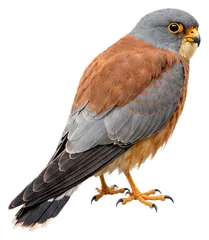 Lesser KestrelFalco naumanni
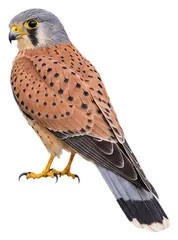 Common KestrelFalco tinnunculus
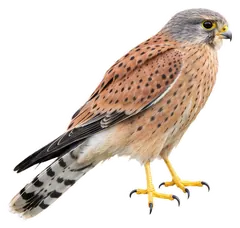 Rock KestrelFalco rupicolus
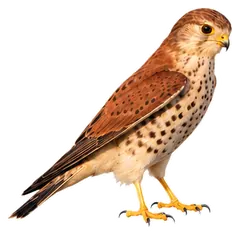 Malagasy KestrelFalco newtoni
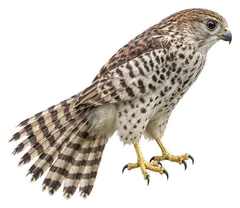 Mauritius KestrelFalco punctatus
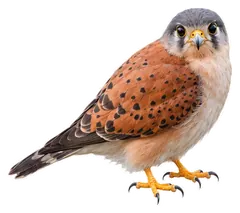 Seychelles KestrelFalco araeus
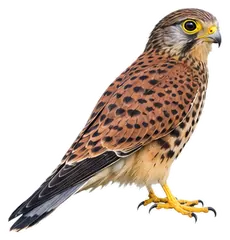 Spotted KestrelFalco moluccensis
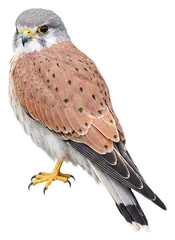 Nankeen KestrelFalco cenchroides
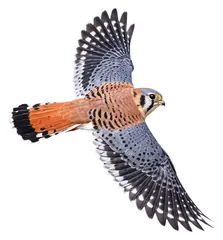 American KestrelFalco sparverius
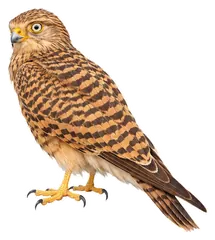 Greater KestrelFalco rupicoloides
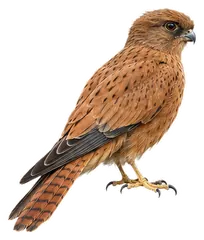 Fox KestrelFalco alopex
 Grey KestrelFalco ardosiaceus
Download illustration
Free to use with credit: “Illustration: Bird Album (birdalbum.com)”. Drawn by AI from a reference photo by Mykola Swarnyk. ↗

Heard it but can't see it? Mingji identifies birds by sound and photo, on your phone.