 Bird Album
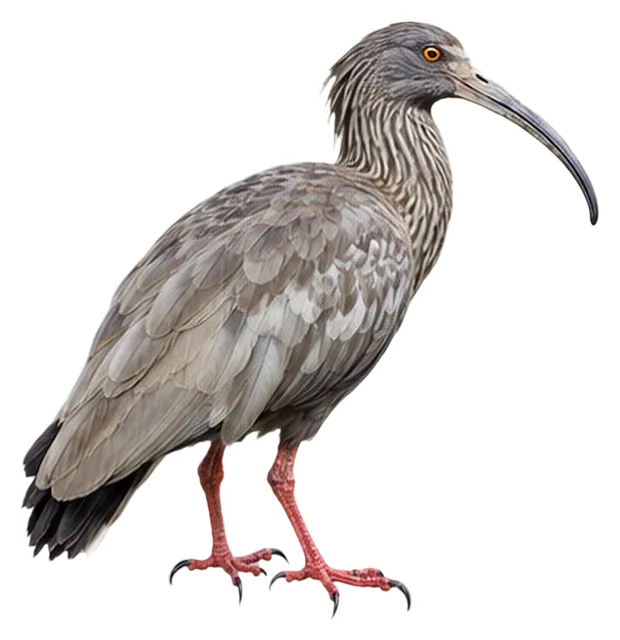
Plumbeous Ibis
Theristicus caerulescens (Vieillot, 1817)
1.5 kgWeight
The plumbeous ibis (Theristicus caerulescens), also formerly called the blue ibis, is a large distinctive ibis species endemic to parts of central South America.
Busiest months: July–October · Most records: Brazil, Uruguay, Argentina
Where and when it's recorded

Plumbeous Ibis has been recorded at 125 of the 8,171 birding hotspots we track, in 5 countries and regions.
Records by month Southern Hemisphere
Where it's recorded most
- Poconé – Pousada PiuvalBrazil2,153 records
- Poconé – Pousada Pouso AlegreBrazil864 records
- Paso Centurión – ÁreaUruguay564 records
More places
- Aquidauana – Pousada AguapéBrazil522 records
- Pantanal – Porto JofreBrazil508 records
- Refúgio Ecológico CaimanBrazil504 records
- Poconé – SouthWild PantanalBrazil500 records
- (IBA) Esteros del Arroyo Maldonado – ÁreaUruguay479 records
- Pantanal – P. Jofre boat on Rio Cuiabá & tributariesBrazil473 records
- Pantanal – northern TranspantaneiraBrazil423 records
Countries and regions with the most records
eBird records via GBIF up to 2024-12-31. A record means someone listed it; more records partly mean more birders, not more birds.
About
The plumbeous ibis (Theristicus caerulescens), also formerly called the blue ibis, is a large distinctive ibis species endemic to parts of central South America.
Excerpt from Wikipedia, CC BY-SA 4.0 · authors · Read more on Wikipedia
Questions
How big is the Plumbeous Ibis?
The Plumbeous Ibis weighs around 1.5 kg.
Where does the Plumbeous Ibis live?
Its breeding range: South America: northeastern Bolivia and southern Brazil to northeastern Argentina and Uruguay. It is most often recorded in Brazil, Uruguay and Argentina.
When is the best time to see the Plumbeous Ibis?
At the hotspots we track, it is recorded most in July, August, September and October (Southern Hemisphere).
Is the Plumbeous Ibis endangered?
The IUCN Red List classifies the Plumbeous Ibis as Least Concern.
What does the Plumbeous Ibis eat?
Main food: Insects & other invertebrates.
What family is the Plumbeous Ibis in?
It belongs to the family Ibises, Spoonbills (Threskiornithidae), order Pelecaniformes.
At a glance
- Weight
- 1.5 kg
- Habitat
- Grassland
- Diet
- Insects & other invertebrates
- Lifestyle
- Active on the ground
- Migration
- Resident (barely migrates)
- Conservation
- Least Concern
More measurements
- Wing
- 408 mm
- Tail
- 161 mm
- Bill
- 158 mm
- Tarsus
- 88 mm
Averages from the AVONET dataset; length from field guides where available.
Range
South America: northeastern Bolivia and southern Brazil to northeastern Argentina and Uruguay
Breeding range, IOC World Bird List 15.2
Classification
- Order
- Pelecaniformes
- Family
- Ibises, Spoonbills Threskiornithidae
- Genus
- Theristicus
Other birds in the genus Theristicus
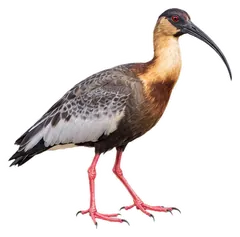 Buff-necked IbisTheristicus caudatus
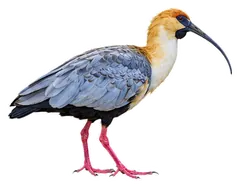 Black-faced IbisTheristicus melanopis
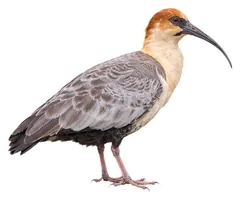 Andean IbisTheristicus branickii
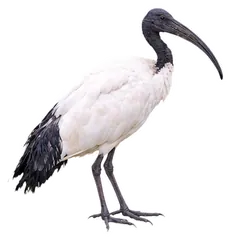 African Sacred IbisThreskiornis aethiopicus
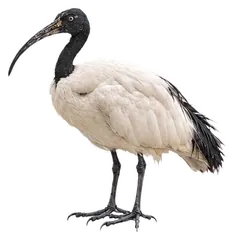 Malagasy Sacred IbisThreskiornis bernieri
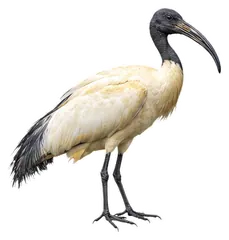 Black-headed IbisThreskiornis melanocephalus
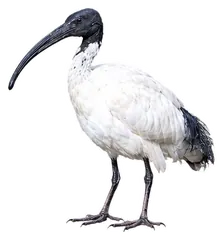 Australian White IbisThreskiornis molucca
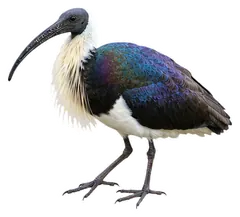 Straw-necked IbisThreskiornis spinicollis
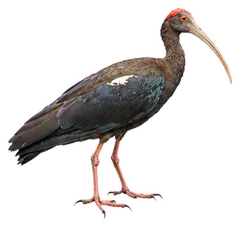 Red-naped IbisPseudibis papillosa
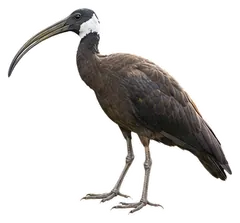 White-shouldered IbisPseudibis davisoni
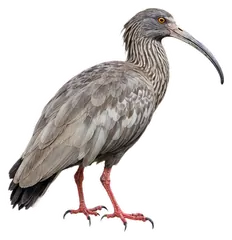
Download illustration
Free to use with credit: “Illustration: Bird Album (birdalbum.com)”. Drawn by AI from a reference photo by Paul Donahue. ↗
Heard it but can't see it? Mingji identifies birds by sound and photo, on your phone.