 Bird Album
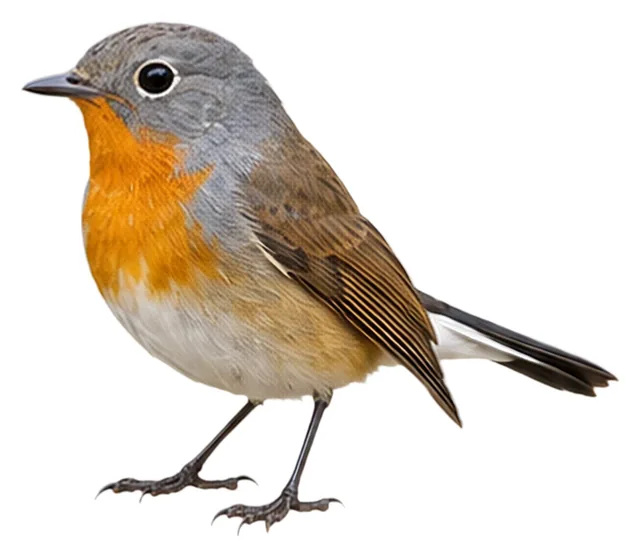
Red-breasted Flycatcher
Ficedula parva (Bechstein, 1792)
≈12 cmLength11 gWeight
The male has an orange throat during the breeding season, a white eye-ring, and a black tail with white on both sides of the base, and often flicks its tail.
Busiest months: February · Most records: India, China, United Kingdom
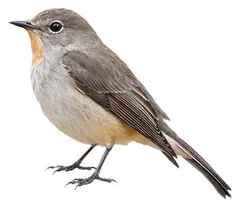
Looks like Taiga Flycatcher
How to identify
Field marks
- Male has a gray head and orange throat during the breeding season
- Conspicuous white eye-ring in all plumages
- All-black tail with white bases to the outer tail feathers
- Black bill with a pale pink base
Male, female and young
Female and juvenile are similar in color, but lack the orange throat patch.
Voice
Song consists of repeated sweet whistles that carry far; mostly quiet in winter, but gives a typical flycatcher call, “chip-chip-chr-rrr”.
Similar species
Where and when it's recorded
Busiest months: February · Most records: India, China, United Kingdom

Red-breasted Flycatcher has been recorded at 577 of the 8,276 birding hotspots we track, in 67 countries and regions.
Records by month Northern Hemisphere
Where it's recorded most
- Kanha NP – Mukki ZoneIndia2,216 records
- Bharatpur – Keoladeo Ghana NPIndia2,066 records
- Sultanpur National ParkIndia1,600 records
More places
- Fergusson College CampusIndia1,383 records
- Vetal Tekdi/HillIndia922 records
- Sinhagad ValleyIndia889 records
- Bardena – Galugah Raptor Count SiteIran728 records
- Nandi HillsIndia544 records
- Okhla Bird SanctuaryIndia537 records
- Kanha NP – Kanha ZoneIndia495 records
Countries and regions with the most records
eBird records via GBIF up to 2024-12-31. A record means someone listed it; more records partly mean more birders, not more birds.
About
The red-breasted flycatcher (Ficedula parva) is a small passerine bird in the Old World flycatcher family. It breeds in eastern Europe and across Central Asia and is migratory, wintering in south Asia. The breeding male is mainly muted brown above and white below, with a grey head and an orange throat.
Excerpt from Wikipedia, CC BY-SA 4.0 · authors · Read more on Wikipedia
Questions
How big is the Red-breasted Flycatcher?
The Red-breasted Flycatcher is about ≈12 cm long and weighs around 11 g.
Where does the Red-breasted Flycatcher live?
Its breeding range: Palearctic: central, northern Europe to western Russia and Iran. It is most often recorded in India, China and United Kingdom.
When is the best time to see the Red-breasted Flycatcher?
At the hotspots we track, it is recorded most in February (Northern Hemisphere).
Is the Red-breasted Flycatcher endangered?
The IUCN Red List classifies the Red-breasted Flycatcher as Least Concern.
What does the Red-breasted Flycatcher eat?
Main food: Insects & other invertebrates.
What family is the Red-breasted Flycatcher in?
It belongs to the family Chats, Old World Flycatchers (Muscicapidae), order Passerines (Passeriformes).
At a glance
- Length
- ≈12 cm
- Weight
- 11 g
- Habitat
- Woodland
- Diet
- Insects & other invertebrates
- Lifestyle
- Perches in trees
- Migration
- Migratory
- Conservation
- Least Concern
More measurements
- Wing
- 67 mm
- Tail
- 53 mm
- Bill
- 13 mm
- Tarsus
- 15 mm
Averages from the AVONET dataset; length from field guides where available.
Range
Palearctic: central, northern Europe to western Russia and Iran
Breeding range, IOC World Bird List 15.2
Classification
- Order
- Passerines Passeriformes
- Family
- Chats, Old World Flycatchers Muscicapidae
- Genus
- Ficedula
Other birds in the genus Ficedula
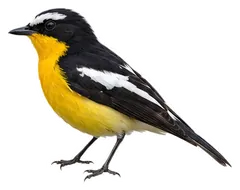 Yellow-rumped FlycatcherFicedula zanthopygia
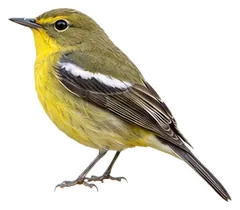 Green-backed FlycatcherFicedula elisae
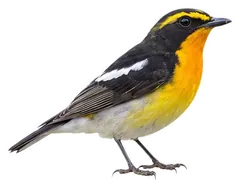 Narcissus FlycatcherFicedula narcissina
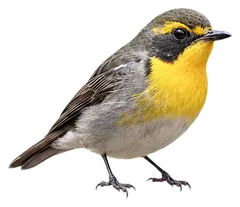 Ryukyu FlycatcherFicedula owstoni
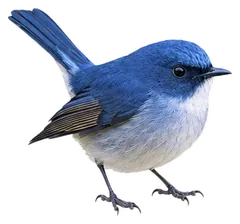 Slaty-blue FlycatcherFicedula tricolor
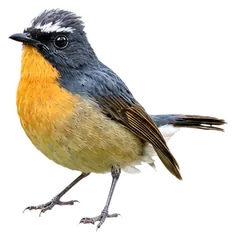 Snowy-browed FlycatcherFicedula hyperythra
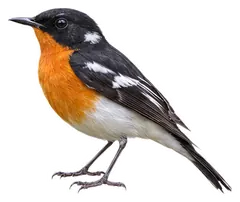 Mugimaki FlycatcherFicedula mugimaki
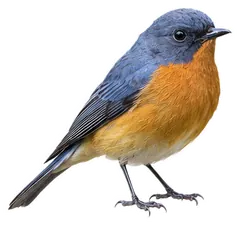 Slaty-backed FlycatcherFicedula erithacus
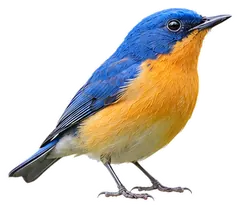 Pygmy FlycatcherFicedula hodgsoni
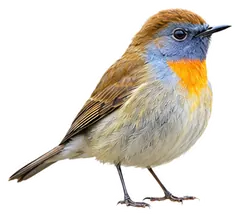 Rufous-gorgeted FlycatcherFicedula strophiata
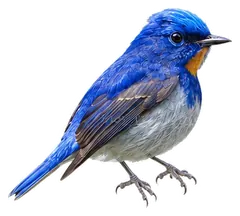 Sapphire FlycatcherFicedula sapphira
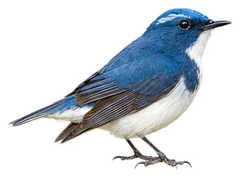 Ultramarine FlycatcherFicedula superciliaris
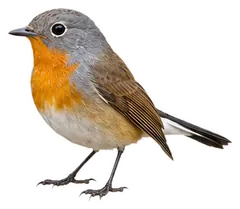
Download illustration
Free to use with credit: “Illustration: Bird Album (birdalbum.com)”. Drawn by AI from a reference photo by Nppgrandmeadow. ↗

Heard it but can't see it? Mingji identifies birds by sound and photo, on your phone.
In other languages
- EnglishRed-breasted Flycatcher
- 简体中文红胸姬鹟
- 繁體中文紅胸姬鶲
- 日本語ニシオジロビタキ
- 한국어서양흰꼬리딱새
- DeutschZwergschnäpper
- FrançaisGobemouche nain
- EspañolPapamoscas papirrojo
- Portuguêspapa-moscas-real-ocidental
- ItalianoPigliamosche pettirosso
- NederlandsKleine Vliegenvanger
- РусскийМалая мухоловка
- Svenskamindre flugsnappare
- DanskLille Fluesnapper
- Polskimuchołówka mała