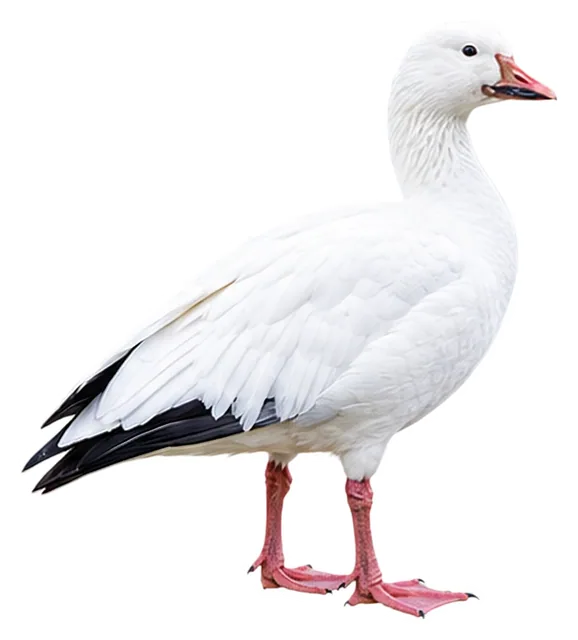
Snow Goose
Anser caerulescens (Linnaeus, 1758)
≈70 cmLength150 cmWingspan2.6 kgWeight
It has white feathers, black wingtips, a pink bill and red legs and feet, with a blue-gray morph also occurring.
Busiest months: November · Most records: United States, Canada, United Kingdom
How to identify
Field marks
- White morph white overall except for black wingtips
- Bill pink with black edges forming a “grin”
- Legs and feet rose-red
- Blue-gray morph retains white on the head, neck and tail tip
Male, female and young
Juvenile has a less brightly colored bill, legs and feet than adult; blue-gray morph juvenile dark gray, with almost no white on the head, neck or belly.
Voice
Vocal, often audible from more than a mile away.
Where and when it's recorded
Busiest months: November · Most records: United States, Canada, United Kingdom

Snow Goose has been recorded at 861 of the 8,276 birding hotspots we track, in 36 countries and regions.
Records by month Northern Hemisphere
Where it's recorded most
- RNF du Cap-TourmenteCanada11,487 records
- Edwin B. Forsythe NWRUnited States9,683 records
- Reifel Bird SanctuaryCanada8,959 records
More places
- Baie-du-FebvreCanada8,443 records
- Bombay Hook National Wildlife RefugeUnited States7,894 records
- Bosque del Apache NWRUnited States6,988 records
- Edwin B. Forsythe NWR – Wildlife DriveUnited States6,871 records
- Middle Creek WMA (IBA)United States6,849 records
- Réservoir BeaudetCanada5,957 records
- Hagerman NWRUnited States5,016 records
Countries and regions with the most records
eBird records via GBIF up to 2024-12-31. A record means someone listed it; more records partly mean more birders, not more birds.
About
The snow goose (Anser caerulescens) is a species of goose native to North America. Both white and dark morphs exist, the latter often known as blue goose. Its name derives from the typically white plumage.
Excerpt from Wikipedia, CC BY-SA 4.0 · authors · Read more on Wikipedia
Questions
How big is the Snow Goose?
The Snow Goose is about ≈70 cm long, with a wingspan of 150 cm and weighs around 2.6 kg.
Where does the Snow Goose live?
Its breeding range: Palearctic, North America: northeastern Siberia through northern Alaska (USA) and northern Canada to northwestern Greenland. It is most often recorded in United States, Canada and United Kingdom.
When is the best time to see the Snow Goose?
At the hotspots we track, it is recorded most in November (Northern Hemisphere).
Is the Snow Goose endangered?
The IUCN Red List classifies the Snow Goose as Least Concern.
What does the Snow Goose eat?
Main food: Land plants.
What family is the Snow Goose in?
It belongs to the family Ducks, Geese, Swans (Anatidae), order Anseriformes.
At a glance
- Length
- ≈70 cm
- Wingspan
- 150 cm
- Weight
- 2.6 kg
- Habitat
- Grassland
- Diet
- Land plants
- Lifestyle
- Active on the ground
- Migration
- Migratory
- Conservation
- Least Concern
More measurements
- Wing
- 412 mm
- Tail
- 124 mm
- Bill
- 62 mm
- Tarsus
- 77 mm
Averages from the AVONET dataset; length from field guides where available.
Range
Palearctic, North America: northeastern Siberia through northern Alaska (USA) and northern Canada to northwestern Greenland
Breeding range, IOC World Bird List 15.2
Classification
- Order
- Anseriformes
- Family
- Ducks, Geese, Swans Anatidae
- Genus
- Anser
Other birds in the genus Anser
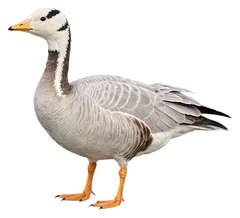 Bar-headed GooseAnser indicus
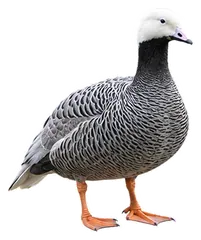 Emperor GooseAnser canagicus
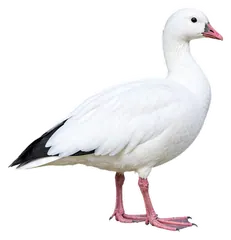 Ross's GooseAnser rossii
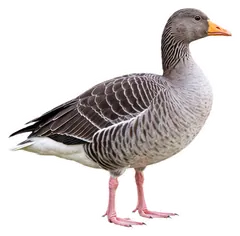 Greylag GooseAnser anser
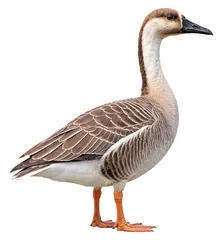 Swan GooseAnser cygnoides
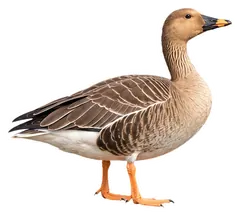 Taiga Bean GooseAnser fabalis
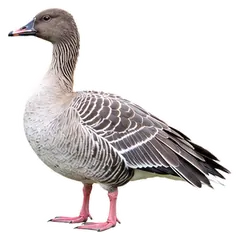 Pink-footed GooseAnser brachyrhynchus
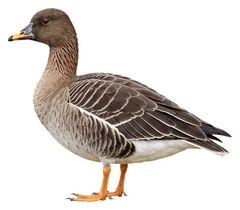 Tundra Bean GooseAnser serrirostris
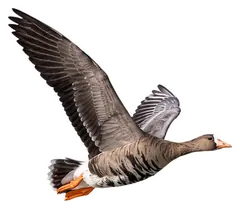 Greater White-fronted GooseAnser albifrons
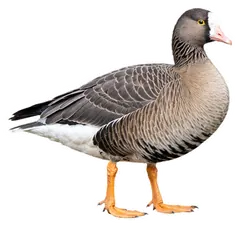 Lesser White-fronted GooseAnser erythropus
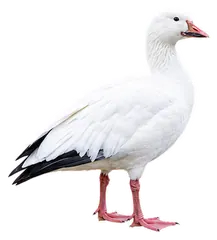
Download illustration
Free to use with credit: “Illustration: Bird Album (birdalbum.com)”. Drawn by AI from a reference photo by Brad Imhoff. ↗
Heard it but can't see it? Mingji identifies birds by sound and photo, on your phone.