 Bird Album
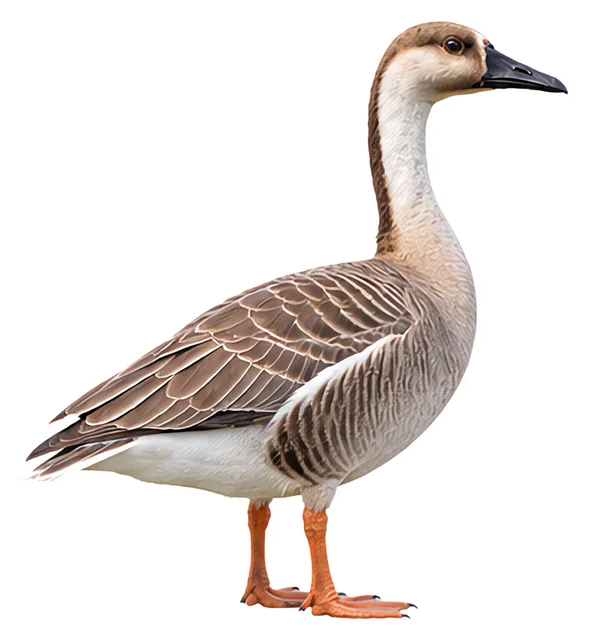
Swan Goose
Anser cygnoides (Linnaeus, 1758)
81–94 cmLength180 cmWingspan3.5 kgWeight
This long-necked goose has a black bill, with white on the front of the neck and rufous on the nape.
Busiest months: December–January · Most records: China, United States, Mongolia
Looks like Greater White-fronted Goose, Lesser White-fronted Goose
How to identify
Field marks
- Front of neck white, nape rufous-brown, with a sharp boundary
- Long black bill forms a straight line with the forehead
- A single narrow rufous-white ring at the base of the bill
- Upperparts gray-brown with buff feather edges; legs and feet deep orange-yellow
Male, female and young
Male usually larger and more robust; juvenile darker, without the white stripe at the base of the bill or dark streaks on the belly.
Voice
Gives a typical goose call in flight, a drawn-out rising note.
Similar species
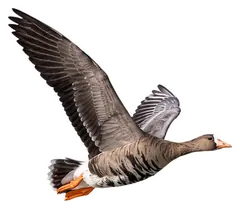
Swan Goose has an all-black bill and very little white on the forehead, confined to a single fine white ring at the base of the bill.
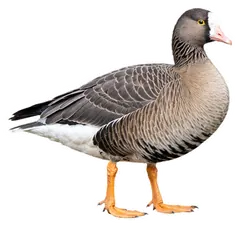
Swan Goose has an all-black bill and very little white on the forehead, confined to a single fine white ring at the base of the bill.
Where and when it's recorded

Swan Goose has been recorded at 563 of the 8,171 birding hotspots we track, in 35 countries and regions.
Records by month Northern Hemisphere
To protect this bird from disturbance, we don't list exact sites.
Countries and regions with the most records
eBird records via GBIF up to 2024-12-31. A record means someone listed it; more records partly mean more birders, not more birds.
About
The swan goose (Anser cygnoides) is a large goose with a natural breeding range in inland Mongolia, Northeast China, and the Russian Far East. It is migratory and winters mainly in central and eastern China. Vagrant birds are encountered in Japan and Korea (where it used to winter in numbers when it was more common), and more rarely in Kazakhstan, Laos, coastal Siberia, Taiwan (China), Thailand and Uzbekistan.
Excerpt from Wikipedia, CC BY-SA 4.0 · authors · Read more on Wikipedia
Questions
How big is the Swan Goose?
The Swan Goose is about 81–94 cm long, with a wingspan of 180 cm and weighs around 3.5 kg.
Where does the Swan Goose live?
Its breeding range: Palearctic: Central Asia and Mongolia to southeastern Siberia. It is most often recorded in China, United States and Mongolia.
When is the best time to see the Swan Goose?
At the hotspots we track, it is recorded most in January and December (Northern Hemisphere).
Is the Swan Goose endangered?
The IUCN Red List classifies the Swan Goose as Endangered.
What does the Swan Goose eat?
Main food: Land plants.
What family is the Swan Goose in?
It belongs to the family Ducks, Geese, Swans (Anatidae), order Anseriformes.
At a glance
- Length
- 81–94 cm
- Wingspan
- 180 cm
- Weight
- 3.5 kg
- Habitat
- Wetland
- Diet
- Land plants
- Lifestyle
- Active on the ground
- Migration
- Migratory
- Conservation
- Endangered
More measurements
- Wing
- 422 mm
- Tail
- 123 mm
- Bill
- 93 mm
- Tarsus
- 76 mm
Averages from the AVONET dataset; length from field guides where available.
Range
Palearctic: Central Asia and Mongolia to southeastern Siberia
Breeding range, IOC World Bird List 15.2
Classification
- Order
- Anseriformes
- Family
- Ducks, Geese, Swans Anatidae
- Genus
- Anser
Other birds in the genus Anser
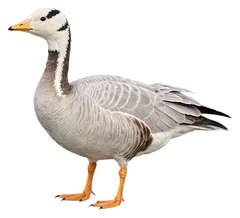 Bar-headed GooseAnser indicus
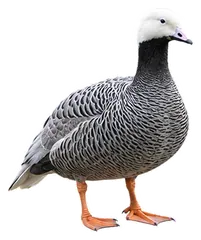 Emperor GooseAnser canagicus
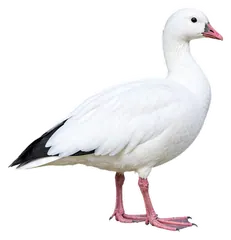 Ross's GooseAnser rossii
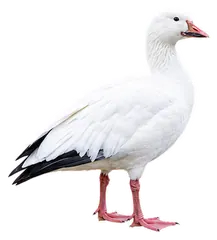 Snow GooseAnser caerulescens
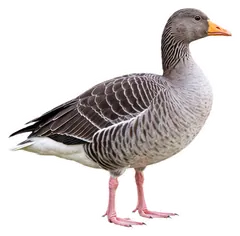 Greylag GooseAnser anser
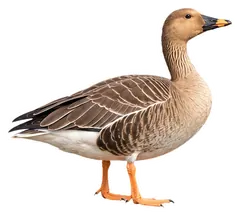 Taiga Bean GooseAnser fabalis
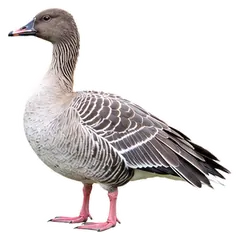 Pink-footed GooseAnser brachyrhynchus
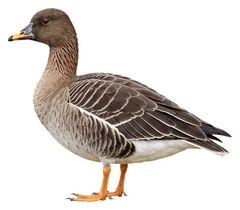 Tundra Bean GooseAnser serrirostrisGreater White-fronted GooseAnser albifronsLesser White-fronted GooseAnser erythropus
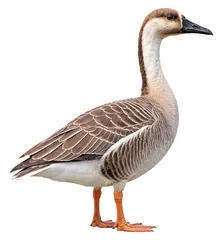
Download illustration
Free to use with credit: “Illustration: Bird Album (birdalbum.com)”. Drawn by AI from a reference photo by grihahasanov. ↗

Heard it but can't see it? Mingji identifies birds by sound and photo, on your phone.