 Bird Album
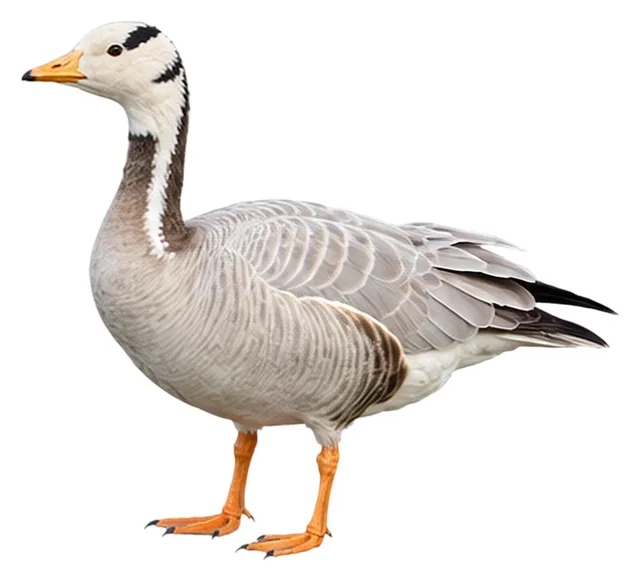
Bar-headed Goose
Anser indicus (Latham, 1790)
71–76 cmLength150 cmWingspan2.2 kgWeight
This gray goose is a size smaller than Greylag Goose, with a dirty-white head and two black bands across the back of the head.
Busiest months: December–February · Most records: India, China, Mongolia
Looks like Greylag Goose
How to identify
Field marks
- Two black bands across the crown, one slightly horseshoe-shaped
- Head dirty-white
- Back pale gray
- Bill orange-yellow with a black nail, legs and feet orange-yellow
Male, female and young
Sexes identical in shape and color, difficult to distinguish; juvenile lacks black patches on the crown and is dingier in color.
Voice
Gives typical goose calls in flight.
Similar species
Where and when it's recorded
Busiest months: December–February · Most records: India, China, Mongolia

Bar-headed Goose has been recorded at 604 of the 8,276 birding hotspots we track, in 43 countries and regions.
Records by month Northern Hemisphere
Where it's recorded most
- Bharatpur – Keoladeo Ghana NPIndia3,040 records
- Kaziranga NP & Surroundings – Eastern RangeIndia778 records
- Thol Bird SanctuaryIndia770 records
More places
- Hadinaru KereIndia706 records
- Okhla Bird SanctuaryIndia624 records
- Ujani Dam – Kumbhargaon Bird SanctuaryIndia623 records
- Kaziranga NP & Surroundings – Western RangeIndia600 records
- Maguri BeelIndia569 records
- Budhera Water Treatment PlantIndia568 records
- ChanduIndia546 records
Countries and regions with the most records
eBird records via GBIF up to 2024-12-31. A record means someone listed it; more records partly mean more birders, not more birds.
About
The bar-headed goose (Anser indicus) is a goose that breeds in Central Asia in colonies of thousands near mountain lakes and winters in South Asia, as far south as peninsular India. It lays three to eight eggs at a time in a ground nest. It is known for the extreme altitudes it reaches when migrating across the Himalayas.
Excerpt from Wikipedia, CC BY-SA 4.0 · authors · Read more on Wikipedia
Questions
How big is the Bar-headed Goose?
The Bar-headed Goose is about 71–76 cm long, with a wingspan of 150 cm and weighs around 2.2 kg.
Where does the Bar-headed Goose live?
Its breeding range: Palearctic: Central Asia. It is most often recorded in India, China and Mongolia.
When is the best time to see the Bar-headed Goose?
At the hotspots we track, it is recorded most in January, February and December (Northern Hemisphere).
Is the Bar-headed Goose endangered?
The IUCN Red List classifies the Bar-headed Goose as Least Concern.
What does the Bar-headed Goose eat?
Main food: Land plants.
What family is the Bar-headed Goose in?
It belongs to the family Ducks, Geese, Swans (Anatidae), order Anseriformes.
At a glance
- Length
- 71–76 cm
- Wingspan
- 150 cm
- Weight
- 2.2 kg
- Habitat
- Wetland
- Diet
- Land plants
- Lifestyle
- Active on the ground
- Migration
- Migratory
- Conservation
- Least Concern
More measurements
- Wing
- 438 mm
- Tail
- 133 mm
- Bill
- 50 mm
- Tarsus
- 71 mm
Averages from the AVONET dataset; length from field guides where available.
Range
Palearctic: Central Asia
Breeding range, IOC World Bird List 15.2
Classification
- Order
- Anseriformes
- Family
- Ducks, Geese, Swans Anatidae
- Genus
- Anser
Other birds in the genus Anser
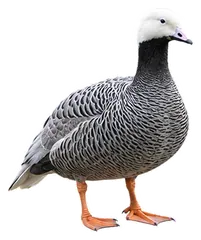 Emperor GooseAnser canagicus
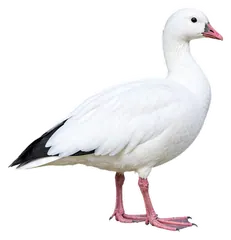 Ross's GooseAnser rossii
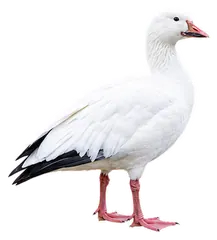 Snow GooseAnser caerulescens
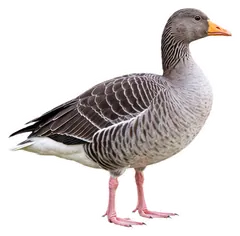 Greylag GooseAnser anser
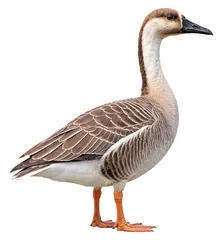 Swan GooseAnser cygnoides
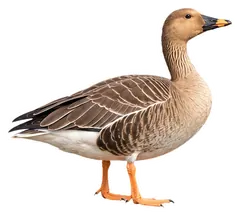 Taiga Bean GooseAnser fabalis
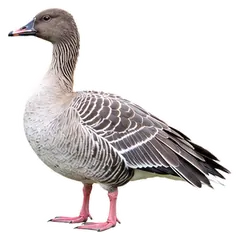 Pink-footed GooseAnser brachyrhynchus
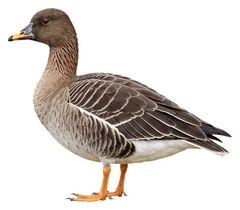 Tundra Bean GooseAnser serrirostris
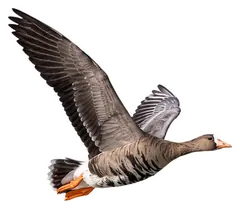 Greater White-fronted GooseAnser albifrons
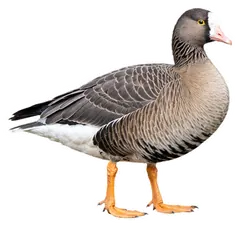 Lesser White-fronted GooseAnser erythropus
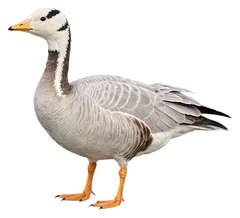
Download illustration
Free to use with credit: “Illustration: Bird Album (birdalbum.com)”. Drawn by AI from a reference photo by Tisha Mukherjee. ↗

Heard it but can't see it? Mingji identifies birds by sound and photo, on your phone.