 Bird Album
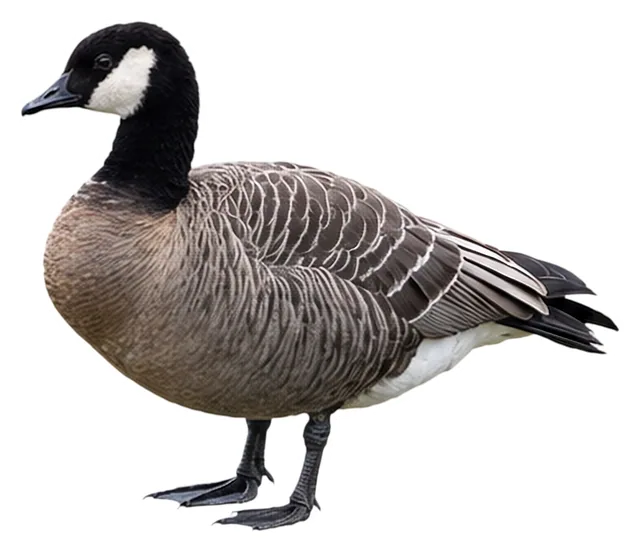
Cackling Goose
Branta hutchinsii (Richardson, 1832)
≈65 cmLength2.8 kgWeight
This goose has a black head and neck with a white “chinstrap” under the chin.
Busiest months: November · Most records: United States, Canada, Mexico
Looks like Canada Goose, Barnacle Goose
How to identify
Field marks
- Head and neck black, with a white “chinstrap” under the chin
- Body brownish rather than gray
Male, female and young
Sexes almost identical in appearance; female slightly lighter in weight, with different calls.
Similar species
Where and when it's recorded
Busiest months: November · Most records: United States, Canada, Mexico

Cackling Goose has been recorded at 577 of the 8,276 birding hotspots we track, in 22 countries and regions.
Records by month Northern Hemisphere
Where it's recorded most
- Billy Frank Jr. Nisqually NWRUnited States10,855 records
- Ridgefield NWR – River 'S' UnitUnited States6,402 records
- Fernhill WetlandsUnited States5,934 records
More places
- Arcata Marsh and Wildlife SanctuaryUnited States4,438 records
- Tualatin River NWR – Atfálat'i UnitUnited States3,230 records
- Marymoor ParkUnited States3,097 records
- Philomath Sewage PondsUnited States2,720 records
- Reifel Bird SanctuaryCanada2,695 records
- Rio Grande Nature Center SPUnited States2,643 records
- Southeast Farallon IslandUnited States2,643 records
Countries and regions with the most records
eBird records via GBIF up to 2024-12-31. A record means someone listed it; more records partly mean more birders, not more birds.
Questions
How big is the Cackling Goose?
The Cackling Goose is about ≈65 cm long and weighs around 2.8 kg.
Where does the Cackling Goose live?
Its breeding range: Palearctic, North America: northeastern Russia to northern Canada. It is most often recorded in United States, Canada and Mexico.
When is the best time to see the Cackling Goose?
At the hotspots we track, it is recorded most in November (Northern Hemisphere).
Is the Cackling Goose endangered?
The IUCN Red List classifies the Cackling Goose as Least Concern.
What does the Cackling Goose eat?
Main food: Land plants.
What family is the Cackling Goose in?
It belongs to the family Ducks, Geese, Swans (Anatidae), order Anseriformes.
At a glance
- Length
- ≈65 cm
- Weight
- 2.8 kg
- Habitat
- Grassland
- Diet
- Land plants
- Lifestyle
- Active on the ground
- Migration
- Migratory
- Conservation
- Least Concern
More measurements
- Wing
- 396 mm
- Tail
- 121 mm
- Bill
- 42 mm
- Tarsus
- 71 mm
Averages from the AVONET dataset; length from field guides where available.
Range
Palearctic, North America: northeastern Russia to northern Canada
Breeding range, IOC World Bird List 15.2
Classification
- Order
- Anseriformes
- Family
- Ducks, Geese, Swans Anatidae
- Genus
- Branta
Other birds in the genus Branta
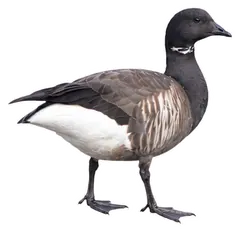 Brant GooseBranta bernicla
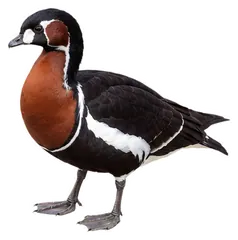 Red-breasted GooseBranta ruficollis
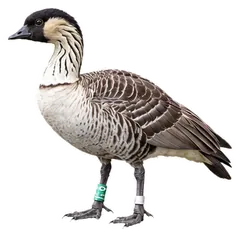 NeneBranta sandvicensis
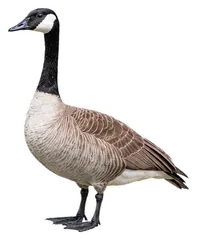 Canada GooseBranta canadensis
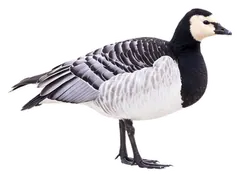 Barnacle GooseBranta leucopsis
 White-faced Whistling DuckDendrocygna viduata
 Black-bellied Whistling DuckDendrocygna autumnalis
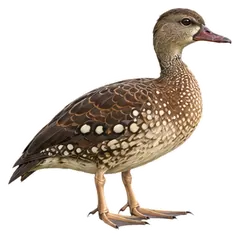 Spotted Whistling DuckDendrocygna guttata
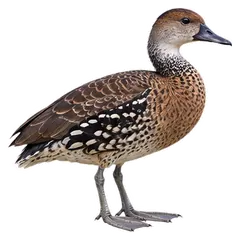 West Indian Whistling DuckDendrocygna arborea
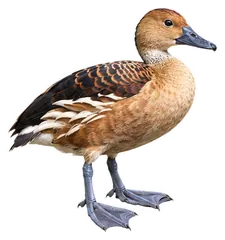 Fulvous Whistling DuckDendrocygna bicolor
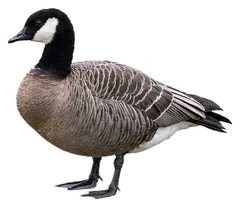
Download illustration
Free to use with credit: “Illustration: Bird Album (birdalbum.com)”. Drawn by AI from a reference photo by Tser. ↗
Heard it but can't see it? Mingji identifies birds by sound and photo, on your phone.
In other languages
- EnglishCackling Goose
- 简体中文小美洲黑雁
- 繁體中文小加拿大雁
- 日本語シジュウカラガン
- 한국어캐나다기러기
- DeutschZwergkanadagans
- FrançaisBernache de Hutchins
- EspañolBarnacla canadiense chica
- Portuguêsganso-da-tundra
- ItalianoOca canadese di Hutchins
- NederlandsKleine Canadese Gans
- РусскийМалая канадская казарка
- Svenskapolargås
- DanskDværgcanadagås
- Polskibernikla północna