 Bird Album
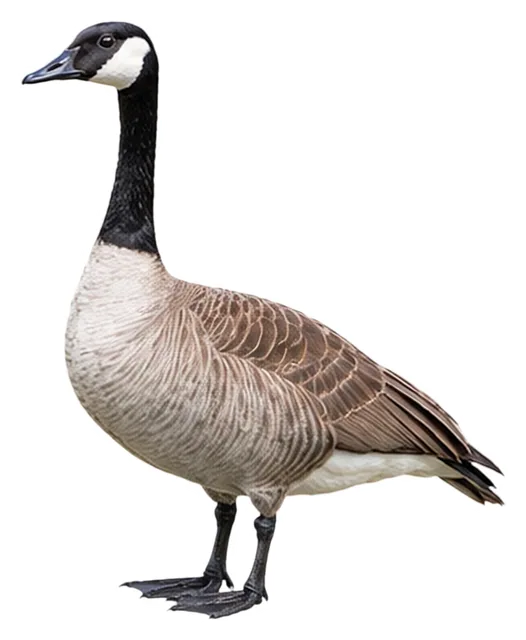
Canada Goose
Branta canadensis (Linnaeus, 1758)
100 cmLength169 cmWingspan2.8 kgWeight
This very large goose has a black head and neck with white cheeks and chin.
Busiest months: May · Most records: United States, Canada, United Kingdom
Looks like Cackling Goose, Barnacle Goose
How to identify
Field marks
- Head and neck black, with white patches on both cheeks
- Scapulars and back gray-brown; wing coverts have pale brown feather edges
- Breast and belly whitish, grading into the upperparts
- Uppertail-coverts white, tail feathers black
Male, female and young
Sexes identical in shape and color; female slightly lighter in weight.
Voice
Male gives a “honk”; female gives a shorter, higher “hrink”; birds usually give a high-pitched hiss first when excited or defending territory.
Similar species
Where and when it's recorded
Busiest months: May · Most records: United States, Canada, United Kingdom

Canada Goose has been recorded at 1,418 of the 8,276 birding hotspots we track, in 54 countries and regions.
Records by month Northern Hemisphere
Where it's recorded most
- Montrose Point Bird Sanctuary, Lincoln Park, ChicagoUnited States38,979 records
- Parker River NWRUnited States33,868 records
- Prospect ParkUnited States31,552 records
More places
- Central ParkUnited States29,327 records
- Cape Island – South Cape May MeadowsUnited States25,442 records
- John Heinz NWR – impoundmentUnited States23,792 records
- Edwin B. Forsythe NWRUnited States23,630 records
- Union Bay Natural Area/Montlake FillUnited States21,910 records
- Magee Marsh – BoardwalkUnited States21,321 records
- Bombay Hook National Wildlife RefugeUnited States21,298 records
Countries and regions with the most records
eBird records via GBIF up to 2024-12-31. A record means someone listed it; more records partly mean more birders, not more birds.
About
The Canada goose (Branta canadensis) is a large species of goose with a black head and neck, white cheeks, white under its chin, and a brown body. It is native to the Arctic and temperate regions of North America, and it is occasionally found during migration across the Atlantic in northern Europe. It has been introduced to France, the United Kingdom, Ireland, Scandinavia, New Zealand, Japan, Chile, Argentina, and the Falkland Islands.
Excerpt from Wikipedia, CC BY-SA 4.0 · authors · Read more on Wikipedia
Questions
How big is the Canada Goose?
The Canada Goose is about 100 cm long, with a wingspan of 169 cm and weighs around 2.8 kg.
Where does the Canada Goose live?
Its breeding range: North America: widespread. It is most often recorded in United States, Canada and United Kingdom.
When is the best time to see the Canada Goose?
At the hotspots we track, it is recorded most in May (Northern Hemisphere).
Is the Canada Goose endangered?
The IUCN Red List classifies the Canada Goose as Least Concern.
What does the Canada Goose eat?
Main food: Land plants.
What family is the Canada Goose in?
It belongs to the family Ducks, Geese, Swans (Anatidae), order Anseriformes.
At a glance
- Length
- 100 cm
- Wingspan
- 169 cm
- Weight
- 2.8 kg
- Habitat
- Grassland
- Diet
- Land plants
- Lifestyle
- Active on the ground
- Migration
- Migratory
- Conservation
- Least Concern
More measurements
- Wing
- 423 mm
- Tail
- 122 mm
- Bill
- 50 mm
- Tarsus
- 73 mm
Averages from the AVONET dataset; length from field guides where available.
Range
North America: widespread
Breeding range, IOC World Bird List 15.2
Classification
- Order
- Anseriformes
- Family
- Ducks, Geese, Swans Anatidae
- Genus
- Branta
Other birds in the genus Branta
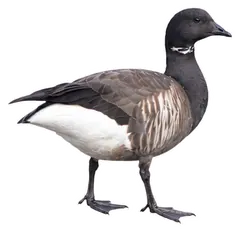 Brant GooseBranta bernicla
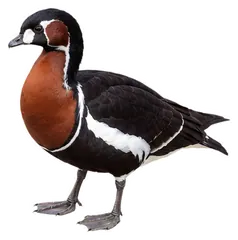 Red-breasted GooseBranta ruficollis
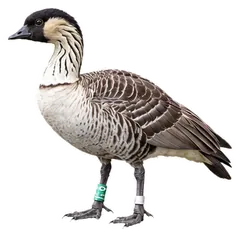 NeneBranta sandvicensis
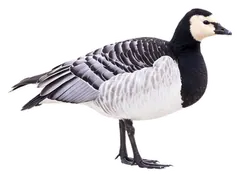 Barnacle GooseBranta leucopsis
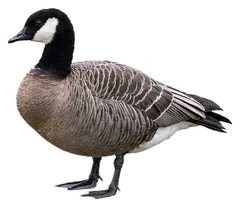 Cackling GooseBranta hutchinsii
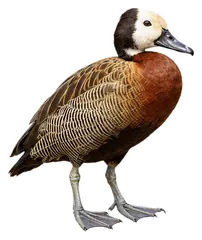 White-faced Whistling DuckDendrocygna viduata
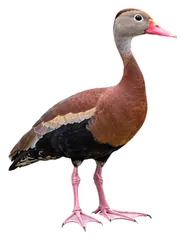 Black-bellied Whistling DuckDendrocygna autumnalis
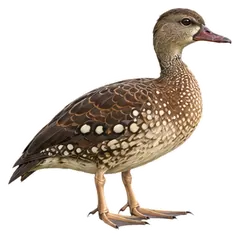 Spotted Whistling DuckDendrocygna guttata
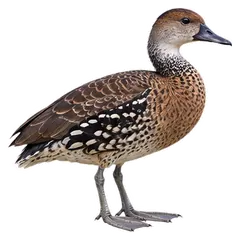 West Indian Whistling DuckDendrocygna arborea
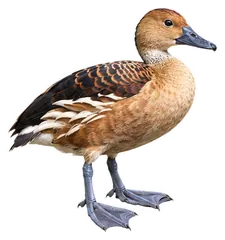 Fulvous Whistling DuckDendrocygna bicolor
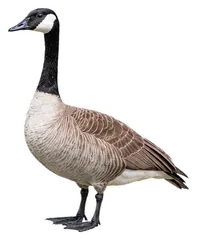
Download illustration
Free to use with credit: “Illustration: Bird Album (birdalbum.com)”. Drawn by AI from a reference photo by Grendelkhan. ↗

Heard it but can't see it? Mingji identifies birds by sound and photo, on your phone.