 Bird Album
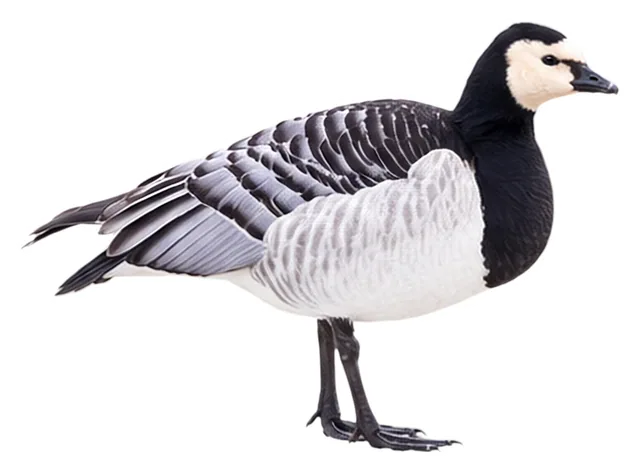
Barnacle Goose
Branta leucopsis (Bechstein, 1803)
≈58 cmLength108 cmWingspan1.7 kgWeight
This medium-sized goose has a white face, black head and neck, and a striped silver-gray back.
Busiest months: April–May and October · Most records: United Kingdom, Sweden, Finland
Looks like Cackling Goose, Canada Goose
How to identify
Field marks
- Face white; head, neck and upper breast black
- Belly white; back and wings silver-gray with black-and-white stripes
- Bill small, short and stout; bill, legs and feet black
- V-shaped white patch on the rump in flight; underwing coverts silver-gray
Male, female and young
Juvenile resembles adult, but feathers on the upper back and flanks have rounded rather than square tips.
Similar species
Where and when it's recorded
Busiest months: April–May and October · Most records: United Kingdom, Sweden, Finland

Barnacle Goose has been recorded at 713 of the 8,276 birding hotspots we track, in 43 countries and regions.
Records by month Northern Hemisphere
Where it's recorded most
- Minsmere RSPB ReserveUnited Kingdom3,761 records
- WWT Slimbridge Wetland CentreUnited Kingdom2,693 records
- Espoo – Laajalahti MaariFinland1,338 records
More places
- Ottenby – södra uddeSweden981 records
- Saltholme RSPB ReserveUnited Kingdom834 records
- Rutland WaterUnited Kingdom797 records
- ØstensjøvannetNorway766 records
- Hjälstaviken NRSweden740 records
- Frampton Marsh RSPB ReserveUnited Kingdom726 records
- Walthamstow WetlandsUnited Kingdom715 records
Countries and regions with the most records
eBird records via GBIF up to 2024-12-31. A record means someone listed it; more records partly mean more birders, not more birds.
About
The barnacle goose (Branta leucopsis) is a species of goose that belongs to the genus Branta of black geese, which contains species with extensive black in the plumage, distinguishing them from the grey Anser species. Despite its superficial similarity to the brant goose, genetic analysis has shown its closest relative is the cackling goose.
Excerpt from Wikipedia, CC BY-SA 4.0 · authors · Read more on Wikipedia
Questions
How big is the Barnacle Goose?
The Barnacle Goose is about ≈58 cm long, with a wingspan of 108 cm and weighs around 1.7 kg.
Where does the Barnacle Goose live?
Its breeding range: Palearctic: high Arctic eastern Greenland, Svalbard (north of Norway), Novaya Zemlya and nearby Kolguyev and Vaygach islands (northwestern Russia). It is most often recorded in United Kingdom, Sweden and Finland.
When is the best time to see the Barnacle Goose?
At the hotspots we track, it is recorded most in April, May and October (Northern Hemisphere).
Is the Barnacle Goose endangered?
The IUCN Red List classifies the Barnacle Goose as Least Concern.
What does the Barnacle Goose eat?
Main food: Land plants.
What family is the Barnacle Goose in?
It belongs to the family Ducks, Geese, Swans (Anatidae), order Anseriformes.
At a glance
- Length
- ≈58 cm
- Wingspan
- 108 cm
- Weight
- 1.7 kg
- Habitat
- Grassland
- Diet
- Land plants
- Lifestyle
- Active on the ground
- Migration
- Migratory
- Conservation
- Least Concern
More measurements
- Wing
- 382 mm
- Tail
- 121 mm
- Bill
- 39 mm
- Tarsus
- 64 mm
Averages from the AVONET dataset; length from field guides where available.
Range
Palearctic: high Arctic eastern Greenland, Svalbard (north of Norway), Novaya Zemlya and nearby Kolguyev and Vaygach islands (northwestern Russia)
Breeding range, IOC World Bird List 15.2
Classification
- Order
- Anseriformes
- Family
- Ducks, Geese, Swans Anatidae
- Genus
- Branta
Other birds in the genus Branta
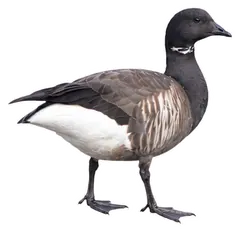 Brant GooseBranta bernicla
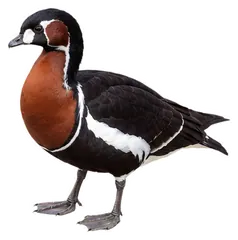 Red-breasted GooseBranta ruficollis
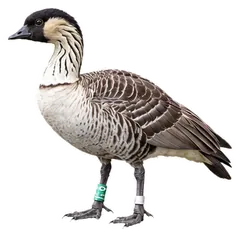 NeneBranta sandvicensis
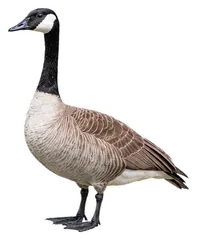 Canada GooseBranta canadensis
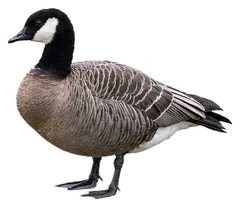 Cackling GooseBranta hutchinsii
 White-faced Whistling DuckDendrocygna viduata
 Black-bellied Whistling DuckDendrocygna autumnalis
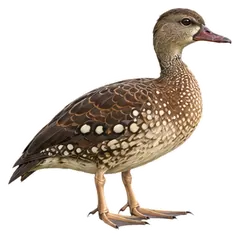 Spotted Whistling DuckDendrocygna guttata
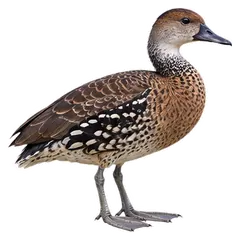 West Indian Whistling DuckDendrocygna arborea
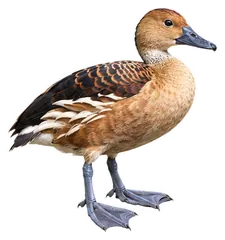 Fulvous Whistling DuckDendrocygna bicolor
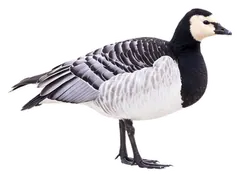
Download illustration
Free to use with credit: “Illustration: Bird Album (birdalbum.com)”. Drawn by AI from a reference photo by egorbirder. ↗
Heard it but can't see it? Mingji identifies birds by sound and photo, on your phone.