 Bird Album
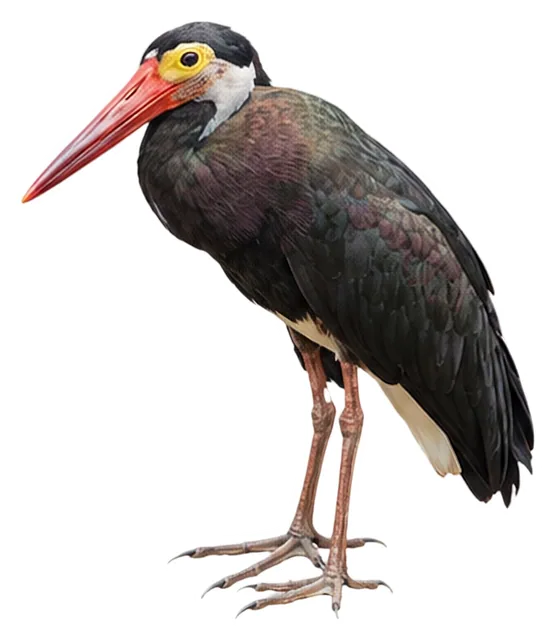
Storm's Stork
Ciconia stormi (Blasius, W, 1896)
2.1 kgWeight
Storm's stork (Ciconia stormi) is a medium-sized stork species that occurs primarily in lowland tropical forests of Malaysia, Indonesia and southern Thailand.
Busiest months: March, July–August and October · Most records: Malaysia, Indonesia
Where and when it's recorded

Storm's Stork has been recorded at 27 of the 8,171 birding hotspots we track, in 2 countries and regions.
Records by month Northern Hemisphere
Where it's recorded most
- Kinabatangan River – SukauMalaysia678 records
- Menanggol RiverMalaysia304 records
- Kinabatangan Wildlife SanctuaryMalaysia295 records
More places
- Kinabatangan River – Sukau Rainforest LodgeMalaysia273 records
- Silau TenegangMalaysia165 records
- Kinabatangan River – Tenegang to MenanggolMalaysia163 records
- Kinabatangan – Sukau LodgesMalaysia151 records
- Kinabatangan River – Kinabatangan Jungle CampMalaysia126 records
- Kinabatangan River – Bilit LodgesMalaysia121 records
- Tabin Wildlife ReserveMalaysia108 records
Countries and regions with the most records
eBird records via GBIF up to 2024-12-31. A record means someone listed it; more records partly mean more birders, not more birds.
About
Storm's stork (Ciconia stormi) is a medium-sized stork species that occurs primarily in lowland tropical forests of Malaysia, Indonesia and southern Thailand. It is considered to be the rarest of all storks, and is estimated to number at most 1,750 wild individuals across its geographic range. The population has long been in decline and the primary cause is widely considered to be deforestation of its native habitat.
Excerpt from Wikipedia, CC BY-SA 4.0 · authors · Read more on Wikipedia
Questions
How big is the Storm's Stork?
The Storm's Stork weighs around 2.1 kg.
Where does the Storm's Stork live?
Its breeding range: Oriental: Malay Peninsula, Sumatra, Mentawai and Pagai islands (west of central Sumatra) and Borneo. It is most often recorded in Malaysia and Indonesia.
When is the best time to see the Storm's Stork?
At the hotspots we track, it is recorded most in March, July, August and October (Northern Hemisphere).
Is the Storm's Stork endangered?
The IUCN Red List classifies the Storm's Stork as Endangered.
What does the Storm's Stork eat?
Main food: Fish, shrimp & shellfish.
What family is the Storm's Stork in?
It belongs to the family Storks (Ciconiidae), order Ciconiiformes.
At a glance
- Weight
- 2.1 kg
- Habitat
- Wetland
- Diet
- Fish, shrimp & shellfish
- Lifestyle
- Active on the ground
- Migration
- Resident (barely migrates)
- Conservation
- Endangered
More measurements
- Wing
- 388 mm
- Tail
- 172 mm
- Bill
- 141 mm
- Tarsus
- 134 mm
Averages from the AVONET dataset; length from field guides where available.
Range
Oriental: Malay Peninsula, Sumatra, Mentawai and Pagai islands (west of central Sumatra) and Borneo
Breeding range, IOC World Bird List 15.2
Classification
- Order
- Ciconiiformes
- Family
- Storks Ciconiidae
- Genus
- Ciconia
Other birds in the genus Ciconia
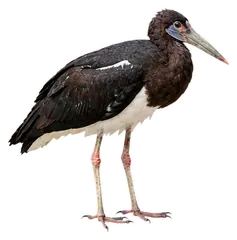 Abdim's StorkCiconia abdimii
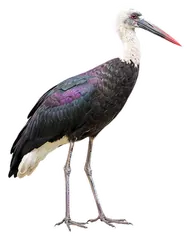 African Woolly-necked StorkCiconia microscelis
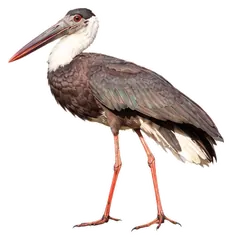 Asian Woolly-necked StorkCiconia episcopus
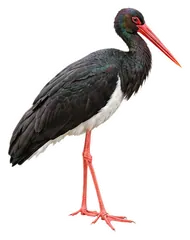 Black StorkCiconia nigra
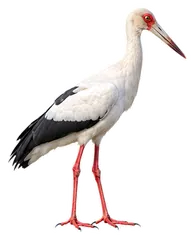 Maguari StorkCiconia maguari
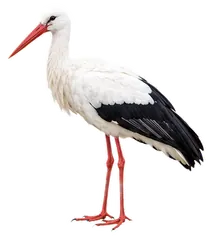 White StorkCiconia ciconia
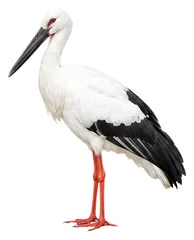 Oriental StorkCiconia boyciana
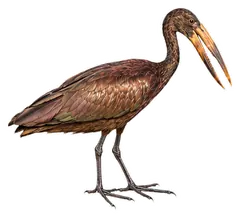 African OpenbillAnastomus lamelligerus
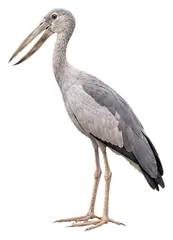 Asian OpenbillAnastomus oscitans
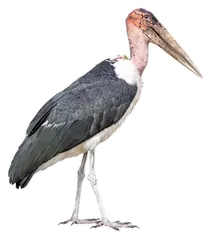 Marabou StorkLeptoptilos crumenifer
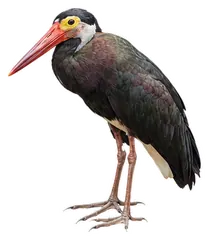
Download illustration
Free to use with credit: “Illustration: Bird Album (birdalbum.com)”. Drawn by AI from a reference photo by Chien Lee. ↗
Heard it but can't see it? Mingji identifies birds by sound and photo, on your phone.