 Bird Album
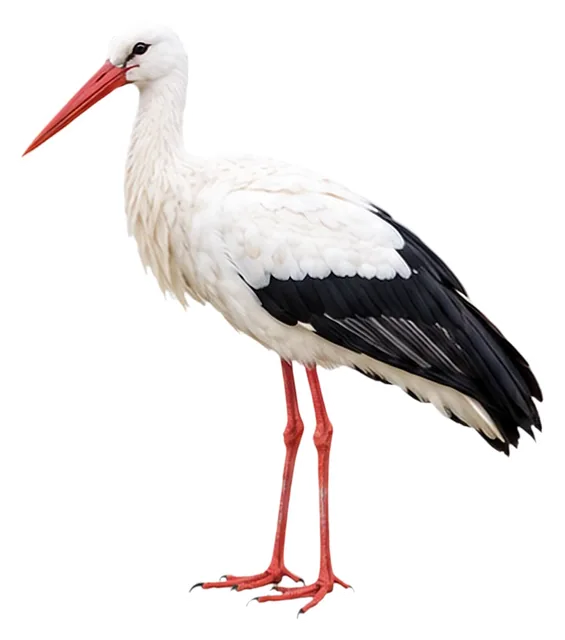
White Stork
Ciconia ciconia (Linnaeus, 1758)
100–125 cmLength191 cmWingspan3.4 kgWeight
This very large stork has a white body, black wings, a red bill and red legs and feet as an adult.
Busiest months: April–May · Most records: Spain, Portugal, Germany
Looks like Asian Openbill
How to identify
Field marks
- Mostly white; flight feathers and coverts black
- Adult bill long, pointed and bright red
- Adult legs and feet long and red
- Neck extended forward in flight; legs and feet extend beyond the tail
Male, female and young
Sexes similar in appearance; male averages larger; fledged juvenile has a darker bill and legs and feet, brownish-red or orange.
Voice
Adults communicate mainly with noisy bill-clattering, like distant machine-gun fire.
Similar species
Where and when it's recorded

White Stork has been recorded at 1,311 of the 8,171 birding hotspots we track, in 98 countries and regions.
Records by month Northern Hemisphere
To protect this bird from disturbance, we don't list exact sites.
Countries and regions with the most records
eBird records via GBIF up to 2024-12-31. A record means someone listed it; more records partly mean more birders, not more birds.
About
The white stork (Ciconia ciconia) is a large bird in the stork family, Ciconiidae. The two subspecies, which differ slightly in size, breed in Europe north to Finland, northwestern Africa, Palearctic east to southern Kazakhstan and southern Africa.
Excerpt from Wikipedia, CC BY-SA 4.0 · authors · Read more on Wikipedia
Questions
How big is the White Stork?
The White Stork is about 100–125 cm long, with a wingspan of 191 cm and weighs around 3.4 kg.
Where does the White Stork live?
Its breeding range: Palearctic, Africa: widespread. It is most often recorded in Spain, Portugal and Germany.
When is the best time to see the White Stork?
At the hotspots we track, it is recorded most in April and May (Northern Hemisphere).
Is the White Stork endangered?
The IUCN Red List classifies the White Stork as Least Concern.
What does the White Stork eat?
Main food: Omnivore.
What family is the White Stork in?
It belongs to the family Storks (Ciconiidae), order Ciconiiformes.
At a glance
- Length
- 100–125 cm
- Wingspan
- 191 cm
- Weight
- 3.4 kg
- Habitat
- Grassland
- Diet
- Omnivore
- Lifestyle
- Active on the ground
- Migration
- Migratory
- Conservation
- Least Concern
More measurements
- Wing
- 566 mm
- Tail
- 250 mm
- Bill
- 189 mm
- Tarsus
- 217 mm
Averages from the AVONET dataset; length from field guides where available.
Range
Palearctic, Africa: widespread
Breeding range, IOC World Bird List 15.2
Classification
- Order
- Ciconiiformes
- Family
- Storks Ciconiidae
- Genus
- Ciconia
Other birds in the genus Ciconia
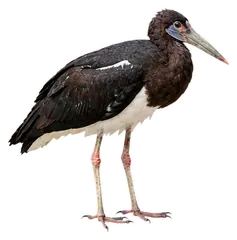 Abdim's StorkCiconia abdimii
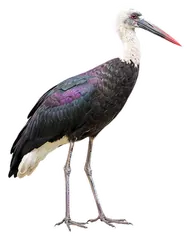 African Woolly-necked StorkCiconia microscelis
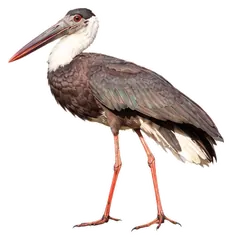 Asian Woolly-necked StorkCiconia episcopus
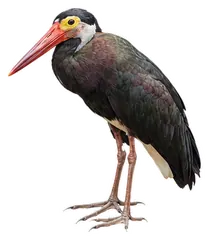 Storm's StorkCiconia stormi
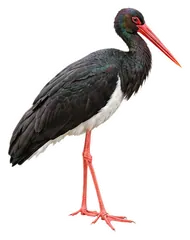 Black StorkCiconia nigra
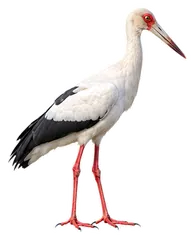 Maguari StorkCiconia maguari
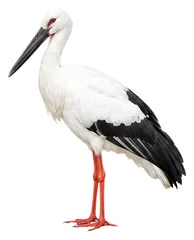 Oriental StorkCiconia boyciana
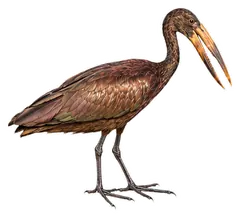 African OpenbillAnastomus lamelligerus
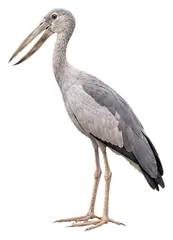 Asian OpenbillAnastomus oscitans
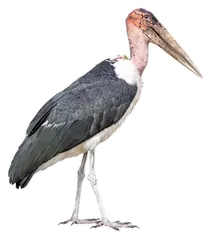 Marabou StorkLeptoptilos crumenifer
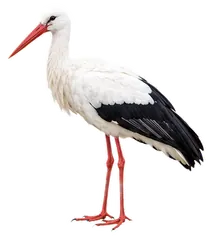
Download illustration
Free to use with credit: “Illustration: Bird Album (birdalbum.com)”. Drawn by AI from a reference photo by Вячеслав Юсупов. ↗
Heard it but can't see it? Mingji identifies birds by sound and photo, on your phone.