 Bird Album
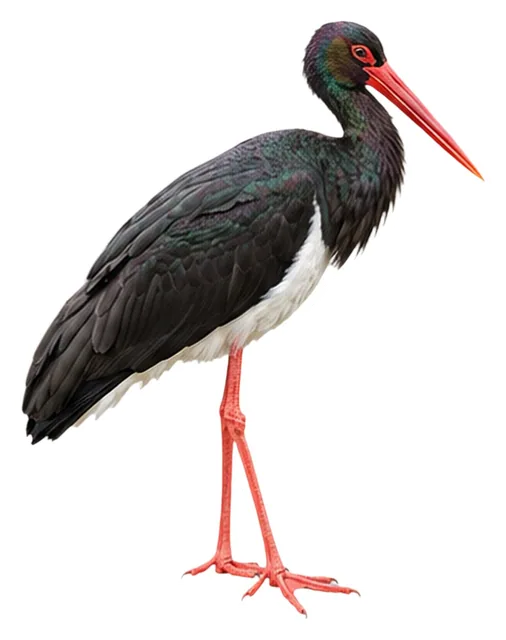
Black Stork
Ciconia nigra (Linnaeus, 1758)
95–100 cmLength150 cmWingspan2.9 kgWeight
This large wader has a black body, white belly, slender red legs and feet and a long, slender red bill.
Busiest months: September · Most records: Spain, Israel, India
How to identify
Field marks
- Black feathers with purple and green metallic gloss
- Lower breast and belly white
- Legs and feet long, slender and red; bill long, straight and red
- Bare skin around the eye red
Male, female and young
Sexes identical in appearance; male averages larger. Juvenile has similar plumage, but the black areas are browner with less metallic gloss; legs and feet, bill and bare skin around the eye are gray-green.
Voice
Main call is “chee leee”, like a deep intake of breath; hisses in warning or threat.
Where and when it's recorded
Busiest months: September · Most records: Spain, Israel, India

Black Stork has been recorded at 1,271 of the 8,276 birding hotspots we track, in 99 countries and regions.
Records by month Northern Hemisphere
To protect this bird from disturbance, we don't list exact sites.
Countries and regions with the most records
eBird records via GBIF up to 2024-12-31. A record means someone listed it; more records partly mean more birders, not more birds.
About
The black stork (Ciconia nigra) is a large bird in the stork family Ciconiidae. It was first described by Carl Linnaeus in the 10th edition of his Systema Naturae. Measuring on average 95 to 100 cm (37 to 39 in) from beak tip to end of tail with a 145-to-155 cm (57-to-61 in) wingspan, the adult black stork has mainly black plumage, with white underparts, long red legs and a long pointed red beak.
Excerpt from Wikipedia, CC BY-SA 4.0 · authors · Read more on Wikipedia
Questions
How big is the Black Stork?
The Black Stork is about 95–100 cm long, with a wingspan of 150 cm and weighs around 2.9 kg.
Where does the Black Stork live?
Its breeding range: Africa, Palearctic: Namibia and Malawi to South Africa, central Europe to northern China. It is most often recorded in Spain, Israel and India.
When is the best time to see the Black Stork?
At the hotspots we track, it is recorded most in September (Northern Hemisphere).
Is the Black Stork endangered?
The IUCN Red List classifies the Black Stork as Least Concern.
What does the Black Stork eat?
Main food: Fish, shrimp & shellfish.
What family is the Black Stork in?
It belongs to the family Storks (Ciconiidae), order Ciconiiformes.
At a glance
- Length
- 95–100 cm
- Wingspan
- 150 cm
- Weight
- 2.9 kg
- Habitat
- Woodland
- Diet
- Fish, shrimp & shellfish
- Lifestyle
- Active on the ground
- Migration
- Migratory
- Conservation
- Least Concern
More measurements
- Wing
- 530 mm
- Tail
- 236 mm
- Bill
- 184 mm
- Tarsus
- 193 mm
Averages from the AVONET dataset; length from field guides where available.
Range
Africa, Palearctic: Namibia and Malawi to South Africa, central Europe to northern China
Breeding range, IOC World Bird List 15.2
Classification
- Order
- Ciconiiformes
- Family
- Storks Ciconiidae
- Genus
- Ciconia
Other birds in the genus Ciconia
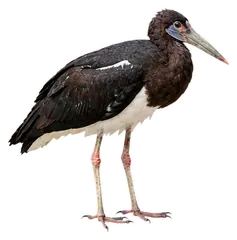 Abdim's StorkCiconia abdimii
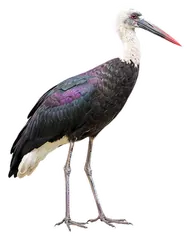 African Woolly-necked StorkCiconia microscelis
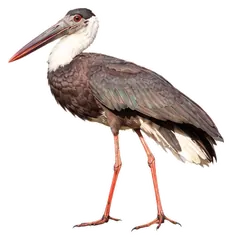 Asian Woolly-necked StorkCiconia episcopus
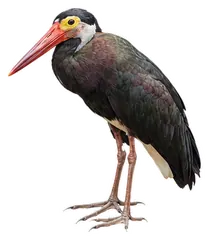 Storm's StorkCiconia stormi
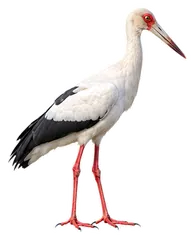 Maguari StorkCiconia maguari
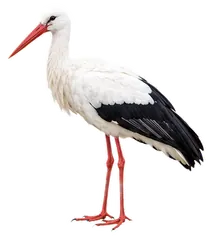 White StorkCiconia ciconia
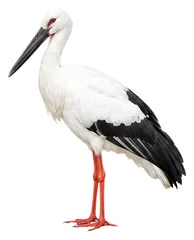 Oriental StorkCiconia boyciana
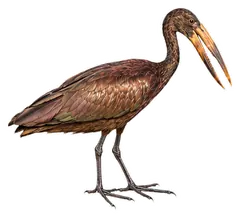 African OpenbillAnastomus lamelligerus
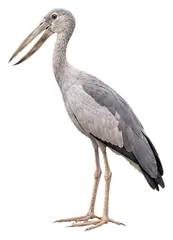 Asian OpenbillAnastomus oscitans
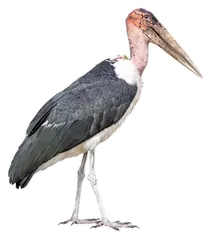 Marabou StorkLeptoptilos crumenifer
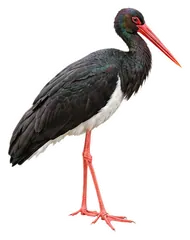
Download illustration
Free to use with credit: “Illustration: Bird Album (birdalbum.com)”. Drawn by AI from a reference photo by Chris Eason. ↗

Heard it but can't see it? Mingji identifies birds by sound and photo, on your phone.