 Bird Album
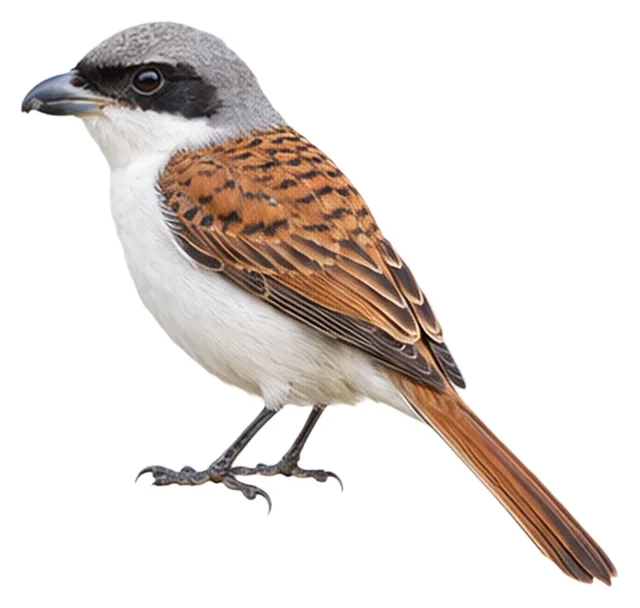
Tiger Shrike
Lanius tigrinus Drapiez, 1828
17–19 cmLength30 gWeight
This small shrike has a reddish-brown, black-barred back like a tiger's coat and is more secretive than most shrikes.
Busiest months: May and September–October · Most records: Singapore, China, Malaysia
Looks like Brown Shrike, Bull-headed Shrike, Burmese Shrike
How to identify
Field marks
- Back, rump and scapulars reddish-brown with black barring
- Male has a black forehead and mask
- Male has a gray crown and nape
- Bill thick and blue-black
Male, female and young
Female is darker and more rufous, with a smaller black mask and a narrow white stripe above the eye; juvenile lacks gray and black on the head and has dark, scale-like markings on the body.
Voice
Song is melodious and lilting; also gives harsh calls, including a loud, repeated territorial call, quacking alarm calls and softer trills.
Similar species
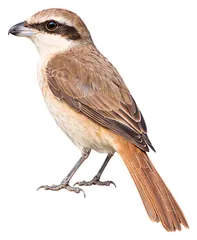
Brown Shrike is larger, with a longer tail and a more slender bill; adult has a rufous crown and nape, a plain rufous back and a white stripe above the eye.
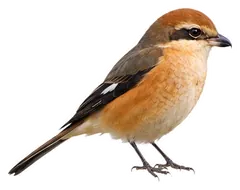
Bull-headed Shrike is also larger and longer-tailed; adult has a reddish-brown crown and nape, and male has a white wing patch.
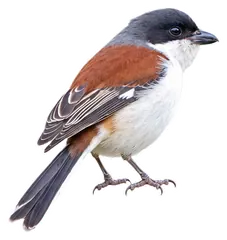
Burmese Shrike is slimmer and longer-tailed, with a white wing patch and a plain chestnut back.
Where and when it's recorded

Tiger Shrike has been recorded at 537 of the 8,171 birding hotspots we track, in 11 countries and regions.
Records by month Northern Hemisphere
Where it's recorded most
- BidadariSingapore512 records
- Man Nai IslandThailand301 records
- Nanhui DongtanChina294 records
More places
- Gunung Panti Recreational Forest – Panti Bird Sanctuary and North AreaMalaysia197 records
- Singapore Botanic GardensSingapore178 records
- Dairy Farm Nature ParkSingapore136 records
- Bukit FraserMalaysia111 records
- Bukit TinggiMalaysia94 records
- Taman Alam Kuala SelangorMalaysia89 records
- Taman Botani Negara Shah AlamMalaysia88 records
Countries and regions with the most records
eBird records via GBIF up to 2024-12-31. A record means someone listed it; more records partly mean more birders, not more birds.
About
The tiger shrike or thick-billed shrike (Lanius tigrinus) is a small passerine bird which belongs to the genus Lanius in the shrike family, Laniidae. It is found in wooded habitats across eastern Asia. It is a shy, often solitary bird which is less conspicuous than most other shrikes.
Excerpt from Wikipedia, CC BY-SA 4.0 · authors · Read more on Wikipedia
Questions
How big is the Tiger Shrike?
The Tiger Shrike is about 17–19 cm long and weighs around 30 g.
Where does the Tiger Shrike live?
Its breeding range: Palearctic: southeastern Siberia, eastern, northeastern China, Korean Peninsula and Japan. It is most often recorded in Singapore, China and Malaysia.
When is the best time to see the Tiger Shrike?
At the hotspots we track, it is recorded most in May, September and October (Northern Hemisphere).
Is the Tiger Shrike endangered?
The IUCN Red List classifies the Tiger Shrike as Least Concern.
What does the Tiger Shrike eat?
Main food: Insects & other invertebrates.
What family is the Tiger Shrike in?
It belongs to the family Shrikes (Laniidae), order Passerines (Passeriformes).
At a glance
- Length
- 17–19 cm
- Weight
- 30 g
- Habitat
- Woodland
- Diet
- Insects & other invertebrates
- Lifestyle
- Perches in trees
- Migration
- Migratory
- Conservation
- Least Concern
More measurements
- Wing
- 82 mm
- Tail
- 67 mm
- Bill
- 20 mm
- Tarsus
- 23 mm
Averages from the AVONET dataset; length from field guides where available.
Range
Palearctic: southeastern Siberia, eastern, northeastern China, Korean Peninsula and Japan
Breeding range, IOC World Bird List 15.2
Classification
- Order
- Passerines Passeriformes
- Family
- Shrikes Laniidae
- Genus
- Lanius
Other birds in the genus Lanius
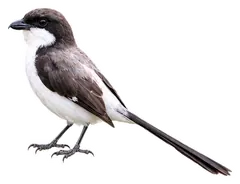 Long-tailed FiscalLanius cabanisi
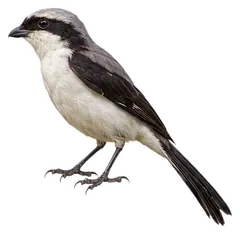 Grey-backed FiscalLanius excubitoroides
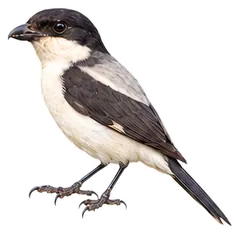 Taita FiscalLanius dorsalis
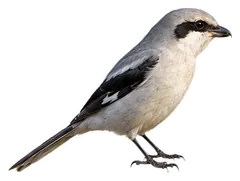 Great Grey ShrikeLanius excubitor
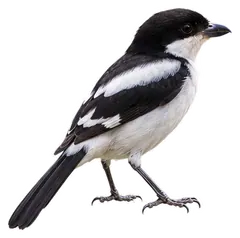 Somali FiscalLanius somalicus
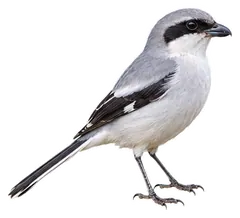 Loggerhead ShrikeLanius ludovicianus
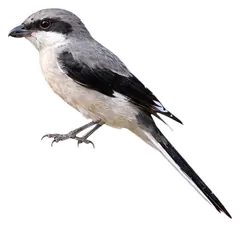 Giant Grey ShrikeLanius giganteus
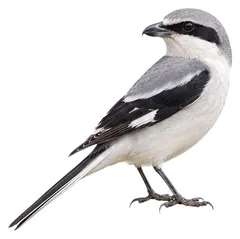 Chinese Grey ShrikeLanius sphenocercus
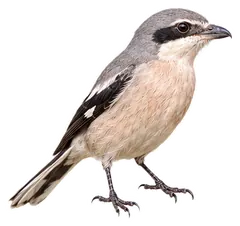 Iberian Grey ShrikeLanius meridionalis
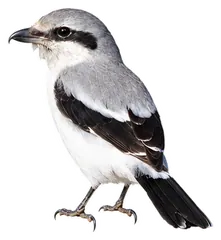 Northern ShrikeLanius borealis
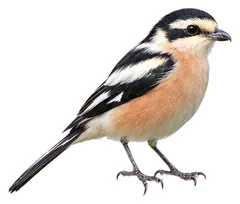 Masked ShrikeLanius nubicus
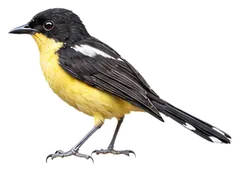 Sao Tome FiscalLanius newtoni
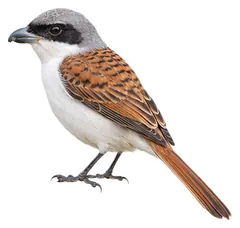
Download illustration
Free to use with credit: “Illustration: Bird Album (birdalbum.com)”. Drawn by AI from a reference photo by Lip Kee. ↗

Heard it but can't see it? Mingji identifies birds by sound and photo, on your phone.