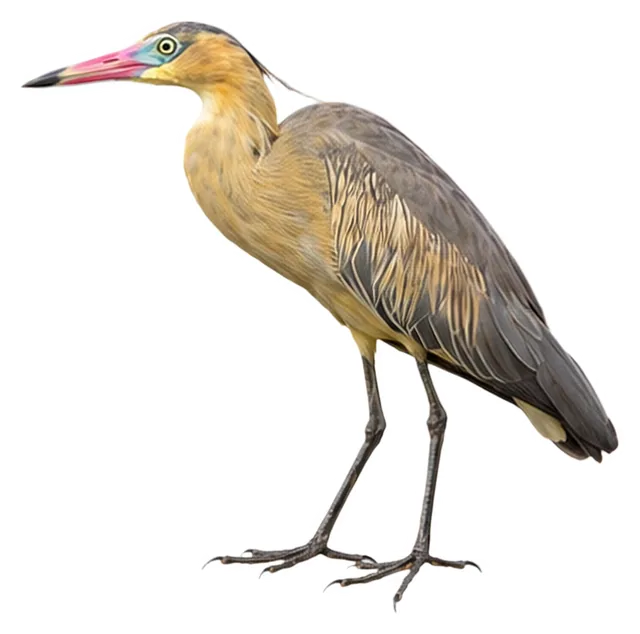
Whistling Heron
Syrigma sibilatrix (Temminck, 1824)
53–64 cmLength463 gWeight
The whistling heron (Syrigma sibilatrix) is a medium-sized, often terrestrial heron of South America.
Busiest months: October · Most records: Argentina, Brazil, Venezuela
Where and when it's recorded
Busiest months: October · Most records: Argentina, Brazil, Venezuela

Whistling Heron has been recorded at 337 of the 8,276 birding hotspots we track, in 13 countries and regions.
Records by month Southern Hemisphere
Where it's recorded most
- Reserva Ecológica Costanera SurArgentina2,576 records
- Poconé – Pousada PiuvalBrazil1,418 records
- Parque del EsteVenezuela570 records
More places
- Aquidauana – Pousada AguapéBrazil534 records
- PN Iberá – Portal Laguna IberáArgentina502 records
- Parque Simon BolivarVenezuela449 records
- Refúgio Ecológico CaimanBrazil446 records
- Punta IndioArgentina431 records
- Barba Azul Nature ReserveBolivia413 records
- Universidad de Los LlanosColombia408 records
Countries and regions with the most records
eBird records via GBIF up to 2024-12-31. A record means someone listed it; more records partly mean more birders, not more birds.
About
The whistling heron (Syrigma sibilatrix) is a medium-sized, often terrestrial heron of South America. It is the only species placed in the genus Syrigma. There are two subspecies, the southern S. s. sibilatrix and the northern S. s. fostersmithi.
Excerpt from Wikipedia, CC BY-SA 4.0 · authors · Read more on Wikipedia
Questions
How big is the Whistling Heron?
The Whistling Heron is about 53–64 cm long and weighs around 463 g.
Where does the Whistling Heron live?
Its breeding range: South America: northern, south-central, southeastern. It is most often recorded in Argentina, Brazil and Venezuela.
When is the best time to see the Whistling Heron?
At the hotspots we track, it is recorded most in October (Southern Hemisphere).
Is the Whistling Heron endangered?
The IUCN Red List classifies the Whistling Heron as Least Concern.
What does the Whistling Heron eat?
Main food: Omnivore.
What family is the Whistling Heron in?
It belongs to the family Herons, Bitterns (Ardeidae), order Pelecaniformes.
At a glance
- Length
- 53–64 cm
- Weight
- 463 g
- Habitat
- Wetland
- Diet
- Omnivore
- Lifestyle
- Active on the ground
- Migration
- Partial migrant
- Conservation
- Least Concern
More measurements
- Wing
- 290 mm
- Tail
- 104 mm
- Bill
- 69 mm
- Tarsus
- 88 mm
Averages from the AVONET dataset; length from field guides where available.
Range
South America: northern, south-central, southeastern
Breeding range, IOC World Bird List 15.2
Classification
- Order
- Pelecaniformes
- Family
- Herons, Bitterns Ardeidae
- Genus
- Syrigma
More from the family Herons, Bitterns
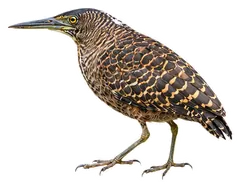 White-crested Tiger HeronTigriornis leucolopha
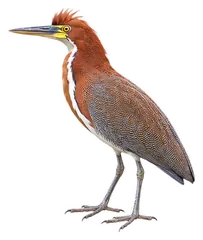 Rufescent Tiger HeronTigrisoma lineatum
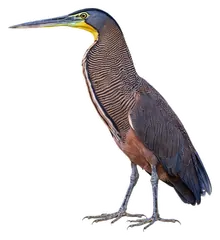 Bare-throated Tiger HeronTigrisoma mexicanum
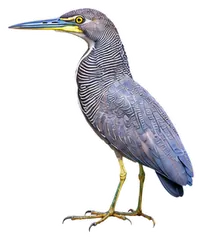 Fasciated Tiger HeronTigrisoma fasciatum
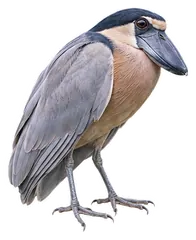 Boat-billed HeronCochlearius cochlearius
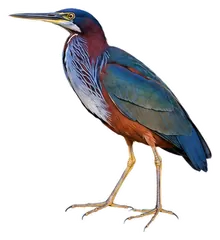 Agami HeronAgamia agami
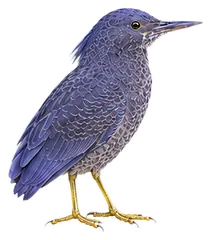 Zigzag HeronZebrilus undulatus
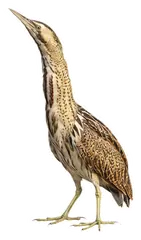 Eurasian BitternBotaurus stellaris
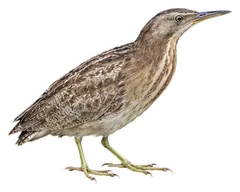 Australasian BitternBotaurus poiciloptilus
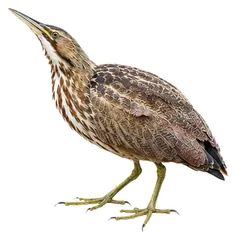 American BitternBotaurus lentiginosus
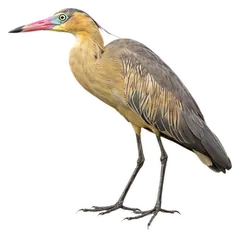
Download illustration
Free to use with credit: “Illustration: Bird Album (birdalbum.com)”. Drawn by AI from a reference photo by Oswaldo Hernández. ↗
Heard it but can't see it? Mingji identifies birds by sound and photo, on your phone.