 Bird Album
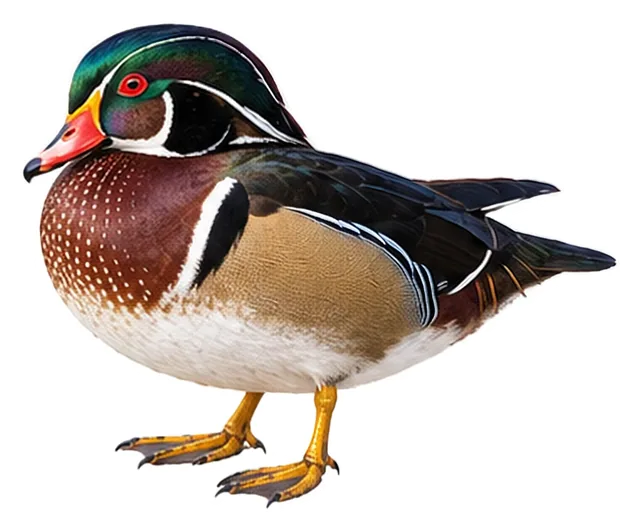
Wood Duck
Aix sponsa (Linnaeus, 1758)
47–54 cmLength71 cmWingspan658 gWeight
The male has glossy, multicolored plumage, red eyes and a single white stripe on the neck.
Busiest months: May · Most records: United States, Canada, Bermuda
How to identify
Field marks
- Male has red eyes and glossy, multicolored plumage
- A single conspicuous white stripe on neck
- Female has a white eye-ring and a whitish throat
- Both sexes have a crest on head
Male, female and young
Female more plainly colored, with a white eye-ring and whitish throat; both sexes have a crest.
Voice
Male gives a rising “jeeeeee” whistle; female gives a drawn-out, rising “do weep do weep” shriek when flushed, and a sharp “cr-r-ek” in alarm.
Where and when it's recorded

Wood Duck has been recorded at 875 of the 8,171 birding hotspots we track, in 38 countries and regions.
Records by month Northern Hemisphere
Where it's recorded most
- Prospect ParkUnited States22,822 records
- John Heinz NWR – impoundmentUnited States16,779 records
- Reifel Bird SanctuaryCanada16,696 records
More places
- Great Meadows NWR – Concord UnitUnited States15,241 records
- Union Bay Natural Area/Montlake FillUnited States15,010 records
- Rio Grande Nature Center SPUnited States13,999 records
- Calgary – Inglewood Bird SanctuaryCanada10,782 records
- Magee Marsh – BoardwalkUnited States10,619 records
- Tommy Thompson ParkCanada9,981 records
- Toronto – High ParkCanada9,864 records
Countries and regions with the most records
eBird records via GBIF up to 2024-12-31. A record means someone listed it; more records partly mean more birders, not more birds.
About
The wood duck or Carolina duck (Aix sponsa) is a partially migratory species of perching duck found in North America. The male is one of the most colorful North American waterfowls.
Excerpt from Wikipedia, CC BY-SA 4.0 · authors · Read more on Wikipedia
Questions
How big is the Wood Duck?
The Wood Duck is about 47–54 cm long, with a wingspan of 71 cm and weighs around 658 g.
Where does the Wood Duck live?
Its breeding range: North America: widespread. It is most often recorded in United States, Canada and Bermuda.
When is the best time to see the Wood Duck?
At the hotspots we track, it is recorded most in May (Northern Hemisphere).
Is the Wood Duck endangered?
The IUCN Red List classifies the Wood Duck as Least Concern.
What does the Wood Duck eat?
Main food: Omnivore.
What family is the Wood Duck in?
It belongs to the family Ducks, Geese, Swans (Anatidae), order Anseriformes.
At a glance
- Length
- 47–54 cm
- Wingspan
- 71 cm
- Weight
- 658 g
- Habitat
- Wetland
- Diet
- Omnivore
- Lifestyle
- Varied
- Migration
- Resident (barely migrates)
- Conservation
- Least Concern
More measurements
- Wing
- 220 mm
- Tail
- 107 mm
- Bill
- 39 mm
- Tarsus
- 33 mm
Averages from the AVONET dataset; length from field guides where available.
Range
North America: widespread
Breeding range, IOC World Bird List 15.2
Classification
- Order
- Anseriformes
- Family
- Ducks, Geese, Swans Anatidae
- Genus
- Aix
Other birds in the genus Aix
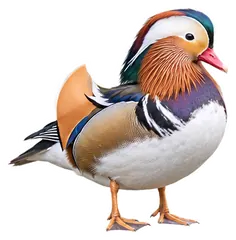 Mandarin DuckAix galericulata
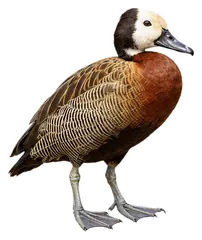 White-faced Whistling DuckDendrocygna viduata
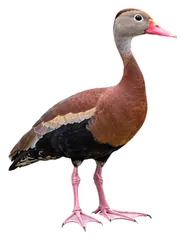 Black-bellied Whistling DuckDendrocygna autumnalis
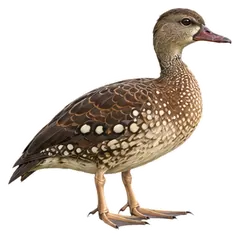 Spotted Whistling DuckDendrocygna guttata
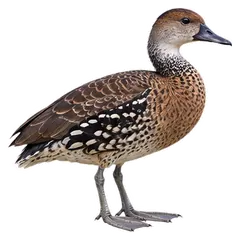 West Indian Whistling DuckDendrocygna arborea
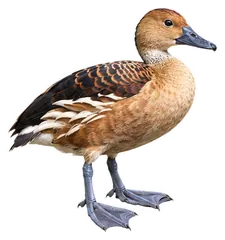 Fulvous Whistling DuckDendrocygna bicolor
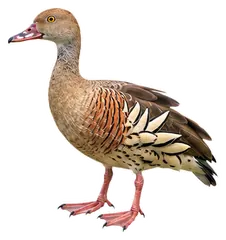 Plumed Whistling DuckDendrocygna eytoni
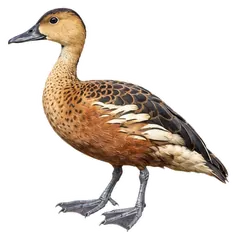 Wandering Whistling DuckDendrocygna arcuata
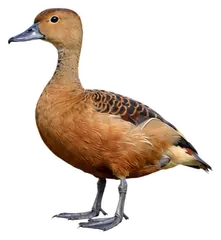 Lesser Whistling DuckDendrocygna javanica
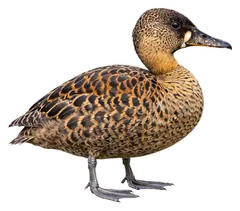 White-backed DuckThalassornis leuconotus
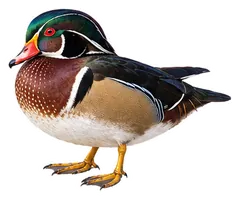
Download illustration
Free to use with credit: “Illustration: Bird Album (birdalbum.com)”. Drawn by AI from a reference photo by Mike R. Jackson. ↗
Heard it but can't see it? Mingji identifies birds by sound and photo, on your phone.