 Bird Album
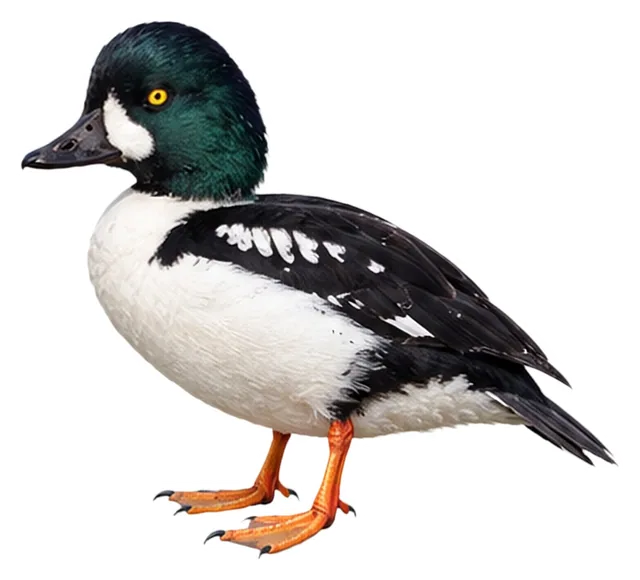
Barrow's Goldeneye
Bucephala islandica (Gmelin, JF, 1789)
921 gWeight
Barrow's goldeneye (Bucephala islandica) is a medium-sized sea duck of the genus Bucephala, the goldeneyes.
Busiest months: January and March–April · Most records: Canada, United States, Iceland
Where and when it's recorded
Busiest months: January and March–April · Most records: Canada, United States, Iceland

Barrow's Goldeneye has been recorded at 251 of the 8,276 birding hotspots we track, in 4 countries and regions.
Records by month Northern Hemisphere
Where it's recorded most
- North Vancouver – Maplewood Flats Conservation AreaCanada3,282 records
- Quai, Pointe-au-PèreCanada2,823 records
- Stanley ParkCanada2,560 records
More places
- Calgary – Carburn ParkCanada2,287 records
- Carkeek ParkUnited States1,749 records
- Edmonds WaterfrontUnited States1,527 records
- Pointe-au-PèreCanada1,526 records
- Castlegar – Selkirk College TrailsCanada1,410 records
- PN du Bic – Belvédère Raoul-RoyCanada1,373 records
- Vancouver – Jericho ParkCanada1,345 records
Countries and regions with the most records
eBird records via GBIF up to 2024-12-31. A record means someone listed it; more records partly mean more birders, not more birds.
About
Barrow's goldeneye (Bucephala islandica) is a medium-sized sea duck of the genus Bucephala, the goldeneyes. This bird was named after Sir John Barrow. The genus name is derived from Ancient Greek boukephalos, "bullheaded", from bous, "bull" and kephale, "head", a reference to the bulbous head shape of the bufflehead.
Excerpt from Wikipedia, CC BY-SA 4.0 · authors · Read more on Wikipedia
Questions
How big is the Barrow's Goldeneye?
The Barrow's Goldeneye weighs around 921 g.
Where does the Barrow's Goldeneye live?
Its breeding range: North America, Palearctic: central, southwestern Alaska through western Canada south to northwestern USA southeast to Oregon and Colorado; northeastern Quebec and southwestern, northern Labrador; Iceland. It is most often recorded in Canada, United States and Iceland.
When is the best time to see the Barrow's Goldeneye?
At the hotspots we track, it is recorded most in January, March and April (Northern Hemisphere).
Is the Barrow's Goldeneye endangered?
The IUCN Red List classifies the Barrow's Goldeneye as Least Concern.
What does the Barrow's Goldeneye eat?
Main food: Fish, shrimp & shellfish.
What family is the Barrow's Goldeneye in?
It belongs to the family Ducks, Geese, Swans (Anatidae), order Anseriformes.
At a glance
- Weight
- 921 g
- Habitat
- Wetland
- Diet
- Fish, shrimp & shellfish
- Lifestyle
- On the water surface
- Migration
- Partial migrant
- Conservation
- Least Concern
More measurements
- Wing
- 222 mm
- Tail
- 86 mm
- Bill
- 35 mm
- Tarsus
- 38 mm
Averages from the AVONET dataset; length from field guides where available.
Range
North America, Palearctic: central, southwestern Alaska through western Canada south to northwestern USA southeast to Oregon and Colorado; northeastern Quebec and southwestern, northern Labrador; Iceland
Breeding range, IOC World Bird List 15.2
Classification
- Order
- Anseriformes
- Family
- Ducks, Geese, Swans Anatidae
- Genus
- Bucephala
Other birds in the genus Bucephala
 BuffleheadBucephala albeola
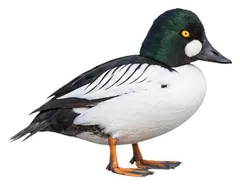 Common GoldeneyeBucephala clangula
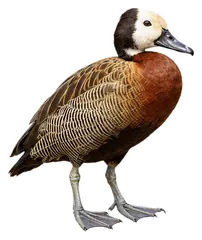 White-faced Whistling DuckDendrocygna viduata
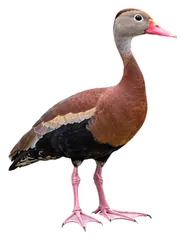 Black-bellied Whistling DuckDendrocygna autumnalis
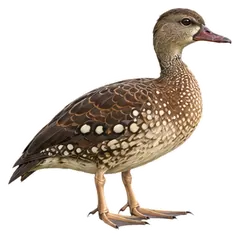 Spotted Whistling DuckDendrocygna guttata
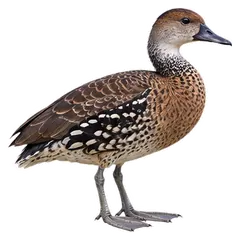 West Indian Whistling DuckDendrocygna arborea
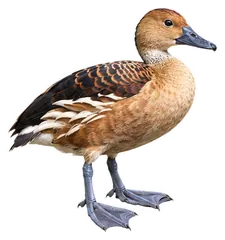 Fulvous Whistling DuckDendrocygna bicolor
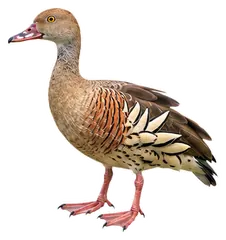 Plumed Whistling DuckDendrocygna eytoni
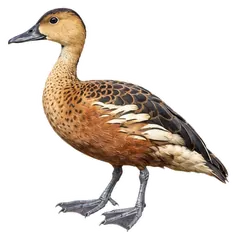 Wandering Whistling DuckDendrocygna arcuata
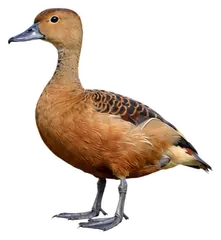 Lesser Whistling DuckDendrocygna javanica
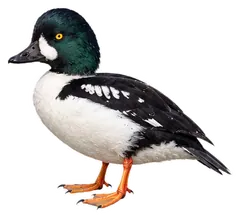
Download illustration
Free to use with credit: “Illustration: Bird Album (birdalbum.com)”. Drawn by AI from a reference photo by John D Reynolds. ↗
Heard it but can't see it? Mingji identifies birds by sound and photo, on your phone.