 Bird Album
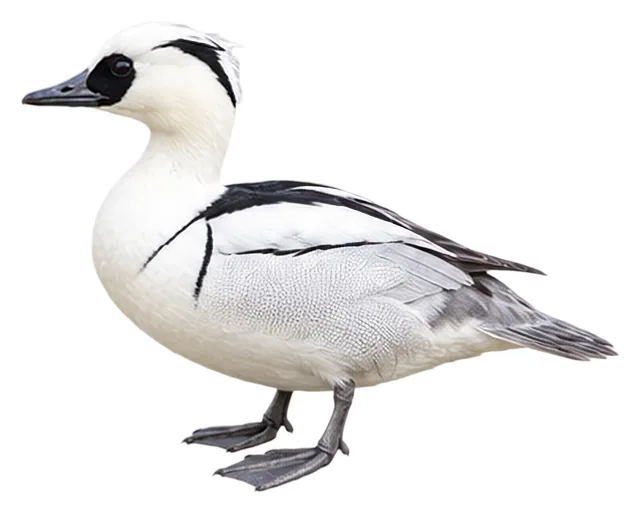
Smew
Mergellus albellus (Linnaeus, 1758)
38–44 cmLength62 cmWingspan609 gWeight
The male’s sharply contrasting black and white recalls broken ice or a panda.
Busiest months: January · Most records: United Kingdom, China, Finland
How to identify
Field marks
- Male snowy-white, with a sharp black-and-white contrast in flight
- Female has a gray body with a chestnut forehead and crown
- Female has a white chin and cheeks, and black lores
- Bill tip hooked, bill edges serrated
Male, female and young
Female and immature male gray with a chestnut forehead and crown; male molts into eclipse plumage in late summer and autumn, resembling female but with more white on the wings.
Where and when it's recorded

Smew has been recorded at 908 of the 8,171 birding hotspots we track, in 54 countries and regions.
Records by month Northern Hemisphere
Where it's recorded most
- Rutland WaterUnited Kingdom905 records
- Amwell HMWT NRUnited Kingdom880 records
- Ekeby våtmarkSweden705 records
More places
- Eyebrook ReservoirUnited Kingdom649 records
- Dungeness RSPB ReserveUnited Kingdom609 records
- Espoo – Laajalahti MaariFinland487 records
- Abberton ReservoirUnited Kingdom412 records
- Shahe ReservoirChina387 records
- Lotoshino Fish FarmRussia284 records
- Minsmere RSPB ReserveUnited Kingdom248 records
Countries and regions with the most records
eBird records via GBIF up to 2024-12-31. A record means someone listed it; more records partly mean more birders, not more birds.
About
The smew (Mergellus albellus) is a species of duck and is the only living member of the genus Mergellus. The genus is closely related to Mergus and is sometimes included in it; genetic studies have shown that it is the sister taxon to Mergus and Lophodytes. The smew has hybridised with the common goldeneye (Bucephala clangula).
Excerpt from Wikipedia, CC BY-SA 4.0 · authors · Read more on Wikipedia
Questions
How big is the Smew?
The Smew is about 38–44 cm long, with a wingspan of 62 cm and weighs around 609 g.
Where does the Smew live?
Its breeding range: Palearctic: subarctic from northern Scandinavia to Kamchatka (southeastern Russia). It is most often recorded in United Kingdom, China and Finland.
When is the best time to see the Smew?
At the hotspots we track, it is recorded most in January (Northern Hemisphere).
Is the Smew endangered?
The IUCN Red List classifies the Smew as Least Concern.
What does the Smew eat?
Main food: Fish, shrimp & shellfish.
What family is the Smew in?
It belongs to the family Ducks, Geese, Swans (Anatidae), order Anseriformes.
At a glance
- Length
- 38–44 cm
- Wingspan
- 62 cm
- Weight
- 609 g
- Habitat
- Wetland
- Diet
- Fish, shrimp & shellfish
- Lifestyle
- On the water surface
- Migration
- Migratory
- Conservation
- Least Concern
More measurements
- Wing
- 187 mm
- Tail
- 70 mm
- Bill
- 32 mm
- Tarsus
- 30 mm
Averages from the AVONET dataset; length from field guides where available.
Range
Palearctic: subarctic from northern Scandinavia to Kamchatka (southeastern Russia)
Breeding range, IOC World Bird List 15.2
Classification
- Order
- Anseriformes
- Family
- Ducks, Geese, Swans Anatidae
- Genus
- Mergellus
More from the family Ducks, Geese, Swans
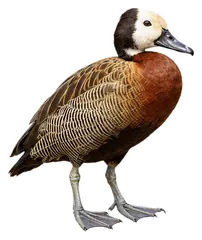 White-faced Whistling DuckDendrocygna viduata
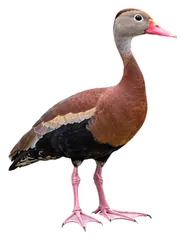 Black-bellied Whistling DuckDendrocygna autumnalis
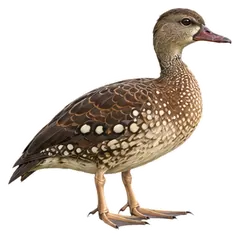 Spotted Whistling DuckDendrocygna guttata
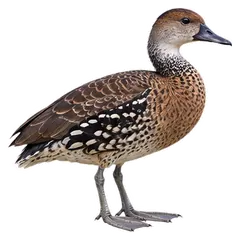 West Indian Whistling DuckDendrocygna arborea
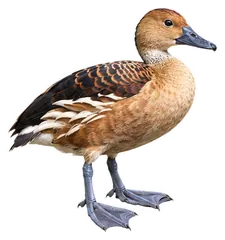 Fulvous Whistling DuckDendrocygna bicolor
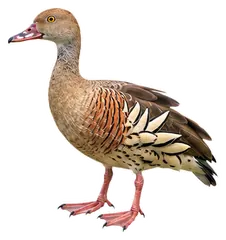 Plumed Whistling DuckDendrocygna eytoni
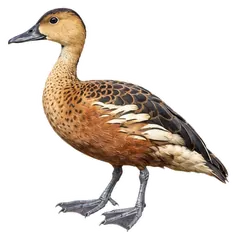 Wandering Whistling DuckDendrocygna arcuata
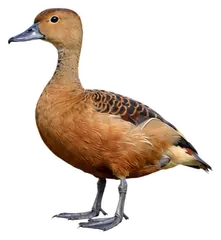 Lesser Whistling DuckDendrocygna javanica
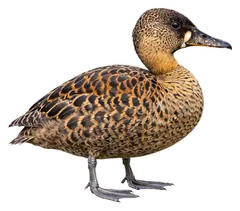 White-backed DuckThalassornis leuconotus
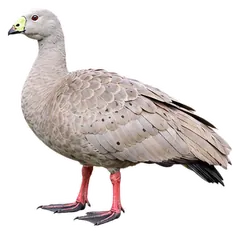 Cape Barren GooseCereopsis novaehollandiae
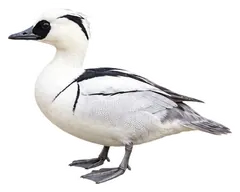
Download illustration
Free to use with credit: “Illustration: Bird Album (birdalbum.com)”. Drawn by AI from a reference photo by Andreas Trepte. ↗

Heard it but can't see it? Mingji identifies birds by sound and photo, on your phone.