 Bird Album
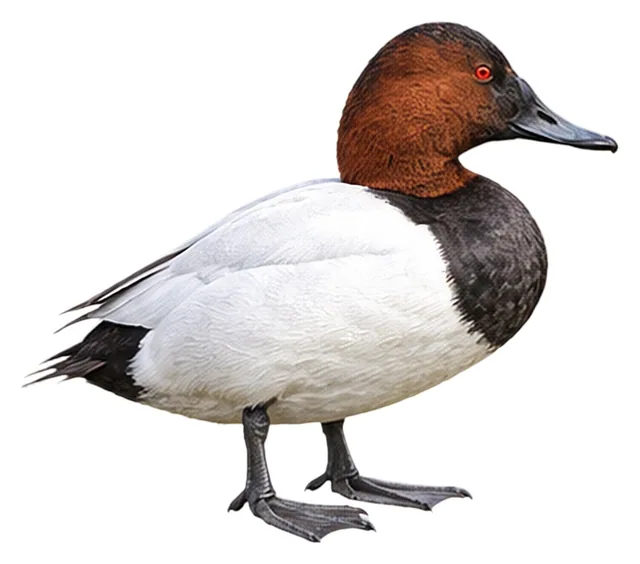
Canvasback
Aythya valisineria (Wilson, A, 1814)
48–56 cmLength82 cmWingspan1.2 kgWeight
Its wedge-shaped head has a profile that slopes forward.
Busiest months: January and March · Most records: United States, Canada, Mexico
How to identify
Field marks
- Head wedge-shaped, neck long
- Adult male has a chestnut head and neck, and black breast
- Adult male has a gray back and black bill
- Adult female has a pale brown head and neck, and gray-brown flanks and back
Male, female and young
Among adults, male has a chestnut head and neck, and black breast; female has a pale brown head and neck, shading into dark brown toward the breast.
Where and when it's recorded

Canvasback has been recorded at 617 of the 8,276 birding hotspots we track, in 11 countries and regions.
Records by month Northern Hemisphere
Where it's recorded most
- Tommy Thompson ParkCanada6,988 records
- Riverlands Migratory Bird SanctuaryUnited States4,660 records
- Reid ParkUnited States4,634 records
More places
- Burlington – LaSalle Park/MarinaCanada3,989 records
- Palo Alto BaylandsUnited States3,668 records
- Philomath Sewage PondsUnited States3,322 records
- Richard W. DeKorte ParkUnited States2,836 records
- Woodland WTPUnited States2,834 records
- Lee Kay PondsUnited States2,787 records
- Union Bay Natural Area/Montlake FillUnited States2,781 records
Countries and regions with the most records
eBird records via GBIF up to 2024-12-31. A record means someone listed it; more records partly mean more birders, not more birds.
Questions
How big is the Canvasback?
The Canvasback is about 48–56 cm long, with a wingspan of 82 cm and weighs around 1.2 kg.
Where does the Canvasback live?
Its breeding range: North America: widespread. It is most often recorded in United States, Canada and Mexico.
When is the best time to see the Canvasback?
At the hotspots we track, it is recorded most in January and March (Northern Hemisphere).
Is the Canvasback endangered?
The IUCN Red List classifies the Canvasback as Least Concern.
What does the Canvasback eat?
Main food: Aquatic plants.
What family is the Canvasback in?
It belongs to the family Ducks, Geese, Swans (Anatidae), order Anseriformes.
At a glance
- Length
- 48–56 cm
- Wingspan
- 82 cm
- Weight
- 1.2 kg
- Habitat
- Wetland
- Diet
- Aquatic plants
- Lifestyle
- On the water surface
- Migration
- Migratory
- Conservation
- Least Concern
More measurements
- Wing
- 224 mm
- Tail
- 53 mm
- Bill
- 58 mm
- Tarsus
- 38 mm
Averages from the AVONET dataset; length from field guides where available.
Range
North America: widespread
Breeding range, IOC World Bird List 15.2
Classification
- Order
- Anseriformes
- Family
- Ducks, Geese, Swans Anatidae
- Genus
- Aythya
Other birds in the genus Aythya
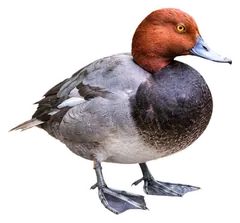 RedheadAythya americana
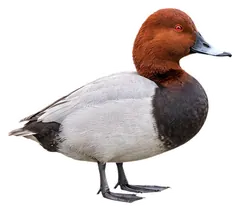 Common PochardAythya ferina
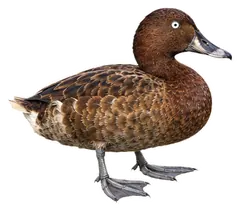 HardheadAythya australis
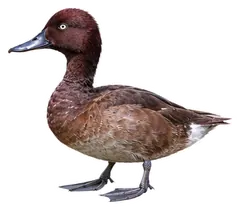 Madagascar PochardAythya innotata
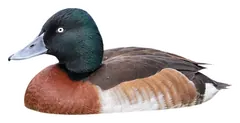 Baer's PochardAythya baeri
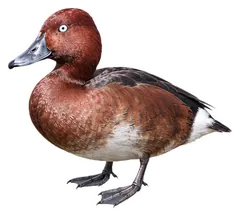 Ferruginous DuckAythya nyroca
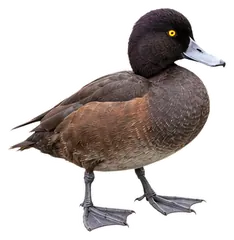 New Zealand ScaupAythya novaeseelandiae
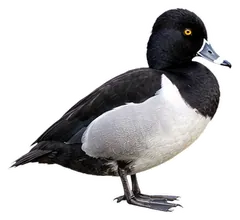 Ring-necked DuckAythya collaris
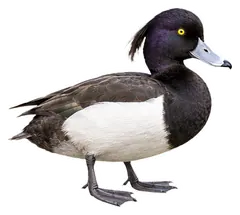 Tufted DuckAythya fuligula
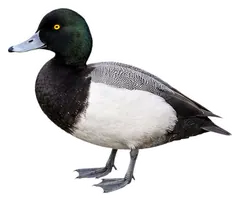 Greater ScaupAythya marila
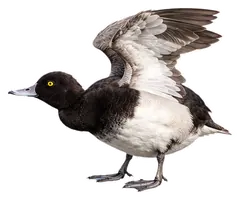 Lesser ScaupAythya affinis
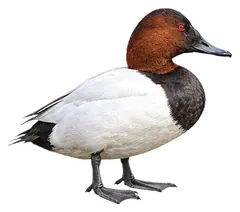
Download illustration
Free to use with credit: “Illustration: Bird Album (birdalbum.com)”. Drawn by AI from a reference photo by Chrissy McClarren and Andy Reago. ↗
Heard it but can't see it? Mingji identifies birds by sound and photo, on your phone.