 Bird Album
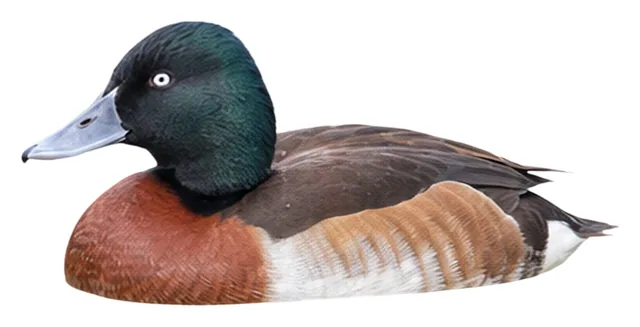
Baer's Pochard
Aythya baeri (Radde, 1863)
41–47 cmLength75 cmWingspan681 gWeight
The male has a blackish head and neck with a green metallic gloss, and white flanks visible above the water when floating.
Busiest months: January–February · Most records: China, Thailand, India
Looks like Ferruginous Duck
How to identify
Field marks
- Male has a blackish head and neck with a green metallic gloss
- Male has white or pale yellow eyes
- White on the belly extends onto the flanks, visible when floating
- Speculum and undertail-coverts white
Male, female and young
Female has a blackish-brown head and neck merging into the chestnut-brown breast and flanks, and rufous eyes; male has white or pale yellow eyes.
Voice
Usually very quiet; both sexes give a harsh “graaaak” during courtship.
Similar species
Where and when it's recorded

Baer's Pochard has been recorded at 216 of the 8,171 birding hotspots we track, in 13 countries and regions.
Records by month Northern Hemisphere
To protect this bird from disturbance, we don't list exact sites.
Countries and regions with the most records
eBird records via GBIF up to 2024-12-31. A record means someone listed it; more records partly mean more birders, not more birds.
About
Baer's pochard (Aythya baeri) is a diving duck found in eastern Asia. It is a resident bird in North and Central China, and formerly bred in southeast Russia and Northeast China, migrating in winter to southern China, Vietnam, Japan, and India. Baer's pochard is a monotypic species.
Excerpt from Wikipedia, CC BY-SA 4.0 · authors · Read more on Wikipedia
Questions
How big is the Baer's Pochard?
The Baer's Pochard is about 41–47 cm long, with a wingspan of 75 cm and weighs around 681 g.
Where does the Baer's Pochard live?
Its breeding range: Palearctic: southeastern Siberia and northern China. It is most often recorded in China, Thailand and India.
When is the best time to see the Baer's Pochard?
At the hotspots we track, it is recorded most in January and February (Northern Hemisphere).
Is the Baer's Pochard endangered?
The IUCN Red List classifies the Baer's Pochard as Critically Endangered.
What does the Baer's Pochard eat?
Main food: Aquatic plants.
What family is the Baer's Pochard in?
It belongs to the family Ducks, Geese, Swans (Anatidae), order Anseriformes.
At a glance
- Length
- 41–47 cm
- Wingspan
- 75 cm
- Weight
- 681 g
- Habitat
- Wetland
- Diet
- Aquatic plants
- Lifestyle
- On the water surface
- Migration
- Migratory
- Conservation
- Critically Endangered
More measurements
- Wing
- 202 mm
- Tail
- 58 mm
- Bill
- 45 mm
- Tarsus
- 32 mm
Averages from the AVONET dataset; length from field guides where available.
Range
Palearctic: southeastern Siberia and northern China
Breeding range, IOC World Bird List 15.2
Classification
- Order
- Anseriformes
- Family
- Ducks, Geese, Swans Anatidae
- Genus
- Aythya
Other birds in the genus Aythya
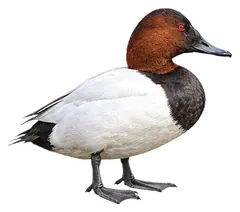 CanvasbackAythya valisineria
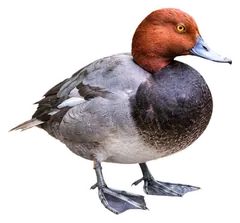 RedheadAythya americana
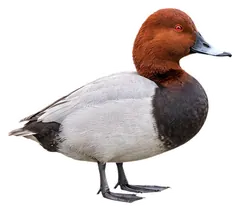 Common PochardAythya ferina
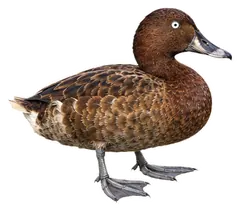 HardheadAythya australis
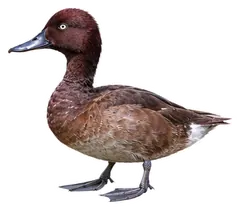 Madagascar PochardAythya innotata
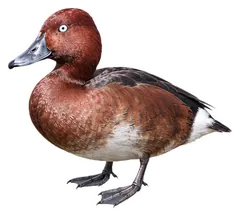 Ferruginous DuckAythya nyroca
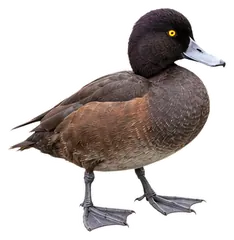 New Zealand ScaupAythya novaeseelandiae
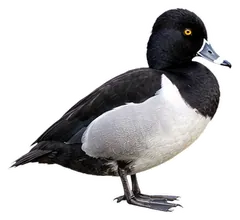 Ring-necked DuckAythya collaris
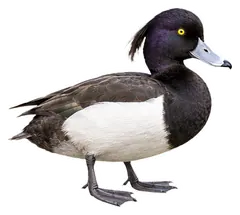 Tufted DuckAythya fuligula
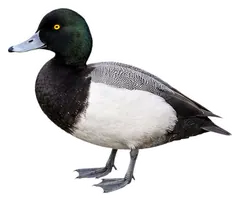 Greater ScaupAythya marila
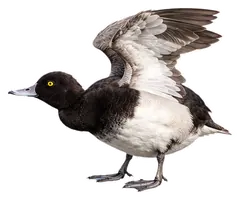 Lesser ScaupAythya affinis
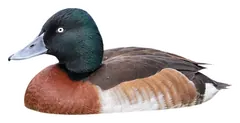
Download illustration
Free to use with credit: “Illustration: Bird Album (birdalbum.com)”. Drawn by AI from a reference photo by Sun Jiao (Interaccoonale). ↗

Heard it but can't see it? Mingji identifies birds by sound and photo, on your phone.