 Bird Album
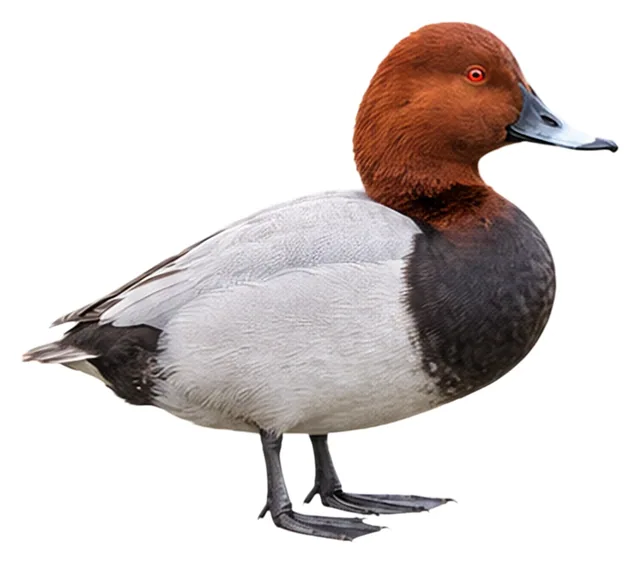
Common Pochard
Aythya ferina (Linnaeus, 1758)
42–49 cmLength77 cmWingspan823 gWeight
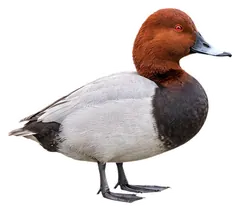
The male has a maroon head, black breast and tail, and a gray body.
Busiest months: December–January and March–May · Most records: United Kingdom, Spain, Germany
Looks like Canvasback
How to identify
Field marks
- Male has a maroon head and neck
- Male in the breeding season has a black breast and tail, and a gray body with vermiculations
- Male has a dark gray bill with a broad blue-gray band across the middle
- Plump and rounded, with a sloping forehead and rather long bill
Male, female and young
Female has a dark brown head and bill, a pale gray stripe behind the eye and a rufous-gray body; male outside the breeding season resembles female, but has a darker forebreast.
Voice
Male rarely calls, giving a soft whistle during courtship; female gives a soft “krrr” when flushed.
Similar species
Where and when it's recorded
Busiest months: December–January and March–May · Most records: United Kingdom, Spain, Germany

Common Pochard has been recorded at 1,846 of the 8,276 birding hotspots we track, in 97 countries and regions.
Records by month Northern Hemisphere
To protect this bird from disturbance, we don't list exact sites.
Countries and regions with the most records
eBird records via GBIF up to 2024-12-31. A record means someone listed it; more records partly mean more birders, not more birds.
About
The common pochard (Aythya ferina), known simply as pochard in the United Kingdom, is a medium-sized diving duck in the family Anatidae. It is widespread across the Palearctic. It breeds primarily in Scandinavia and the steppe regions of Siberia, and winters farther south and west.
Excerpt from Wikipedia, CC BY-SA 4.0 · authors · Read more on Wikipedia
Questions
How big is the Common Pochard?
The Common Pochard is about 42–49 cm long, with a wingspan of 77 cm and weighs around 823 g.
Where does the Common Pochard live?
Its breeding range: Palearctic: western Europe to Central Asia and northern China. It is most often recorded in United Kingdom, Spain and Germany.
When is the best time to see the Common Pochard?
At the hotspots we track, it is recorded most in January, March, April, May and December (Northern Hemisphere).
Is the Common Pochard endangered?
The IUCN Red List classifies the Common Pochard as Vulnerable.
What does the Common Pochard eat?
Main food: Aquatic plants.
What family is the Common Pochard in?
It belongs to the family Ducks, Geese, Swans (Anatidae), order Anseriformes.
At a glance
- Length
- 42–49 cm
- Wingspan
- 77 cm
- Weight
- 823 g
- Habitat
- Wetland
- Diet
- Aquatic plants
- Lifestyle
- On the water surface
- Migration
- Resident (barely migrates)
- Conservation
- Vulnerable
More measurements
- Wing
- 209 mm
- Tail
- 54 mm
- Bill
- 50 mm
- Tarsus
- 35 mm
Averages from the AVONET dataset; length from field guides where available.
Range
Palearctic: western Europe to Central Asia and northern China
Breeding range, IOC World Bird List 15.2
Classification
- Order
- Anseriformes
- Family
- Ducks, Geese, Swans Anatidae
- Genus
- Aythya
Other birds in the genus Aythya
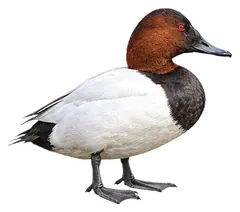 CanvasbackAythya valisineria
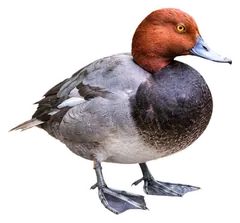 RedheadAythya americana
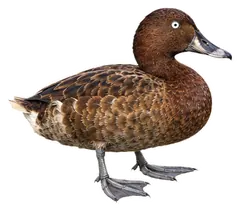 HardheadAythya australis
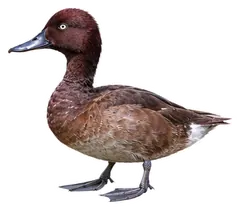 Madagascar PochardAythya innotata
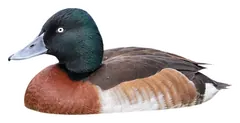 Baer's PochardAythya baeri
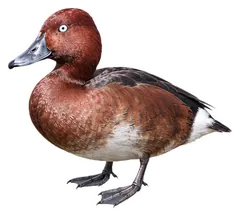 Ferruginous DuckAythya nyroca
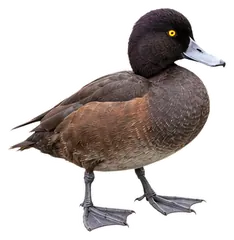 New Zealand ScaupAythya novaeseelandiae
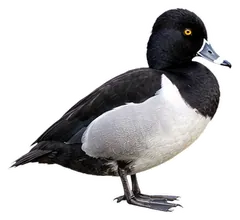 Ring-necked DuckAythya collaris
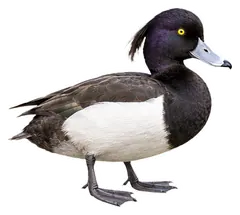 Tufted DuckAythya fuligula
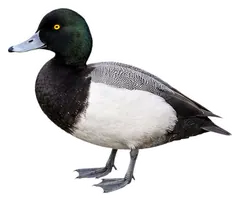 Greater ScaupAythya marila
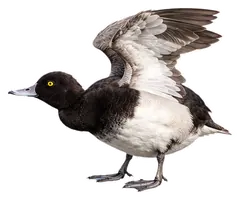 Lesser ScaupAythya affinis
Download illustration
Free to use with credit: “Illustration: Bird Album (birdalbum.com)”. Drawn by AI from a reference photo by Alexis Lours. ↗

Heard it but can't see it? Mingji identifies birds by sound and photo, on your phone.