 Bird Album
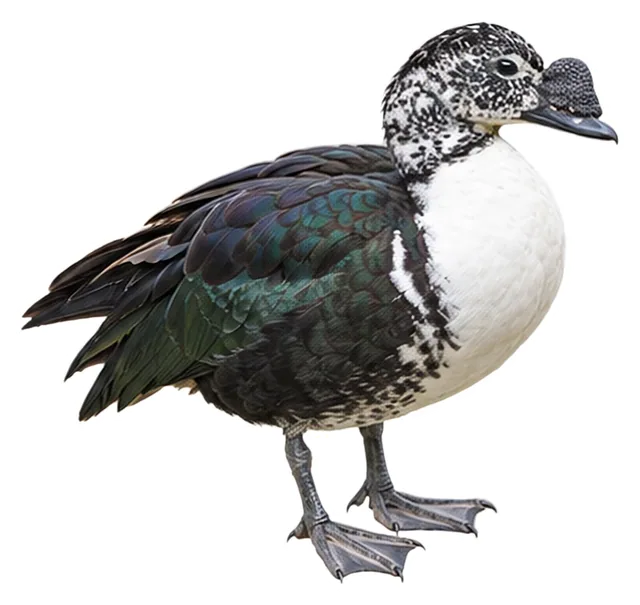
Comb Duck
Sarkidiornis sylvicola Ihering, HFA & Ihering, R, 1907
2.6 kgWeight
Busiest months: October · Most records: Peru, Ecuador, Brazil
Where and when it's recorded
Busiest months: October · Most records: Peru, Ecuador, Brazil

Comb Duck has been recorded at 92 of the 8,276 birding hotspots we track, in 15 countries and regions.
Records by month Southern Hemisphere
Where it's recorded most
- Laguna RicuricochaPeru484 records
- RE Manglares-Churute – La LagarteraEcuador300 records
- Reservorio de TinajonesPeru255 records
More places
- RN Laguna de SonsoColombia194 records
- Arrozais de Tremembé – Estrada do KanegaeBrazil111 records
- Pousada TrijunçãoBrazil72 records
- Piracicaba – TanquãBrazil59 records
- Reserva Jorupe y Urraca LodgeEcuador50 records
- Humedal de ChilcaPeru34 records
- Lomas de Arena Santa CruzBolivia30 records
Countries and regions with the most records
eBird records via GBIF up to 2024-12-31. A record means someone listed it; more records partly mean more birders, not more birds.
About
The comb duck or American comb duck (Sarkidiornis sylvicola), is an unusual duck found in tropical wetlands in continental South America south to the Paraguay River region in eastern Paraguay, southeastern Brazil and extreme northeastern Argentina, and as a vagrant on Trinidad.
Excerpt from Wikipedia, CC BY-SA 4.0 · authors · Read more on Wikipedia
Questions
How big is the Comb Duck?
The Comb Duck weighs around 2.6 kg.
Where does the Comb Duck live?
Its breeding range: South America: northern Colombia and Venezuela to northern Argentina. It is most often recorded in Peru, Ecuador and Brazil.
When is the best time to see the Comb Duck?
At the hotspots we track, it is recorded most in October (Southern Hemisphere).
Is the Comb Duck endangered?
The IUCN Red List classifies the Comb Duck as Least Concern.
What does the Comb Duck eat?
Main food: Aquatic plants.
What family is the Comb Duck in?
It belongs to the family Ducks, Geese, Swans (Anatidae), order Anseriformes.
At a glance
- Weight
- 2.6 kg
- Habitat
- Wetland
- Diet
- Aquatic plants
- Lifestyle
- Varied
- Migration
- Resident (barely migrates)
- Conservation
- Least Concern
More measurements
- Wing
- 304 mm
- Tail
- 99 mm
- Bill
- 52 mm
- Tarsus
- 54 mm
Averages from the AVONET dataset; length from field guides where available.
Range
South America: northern Colombia and Venezuela to northern Argentina
Breeding range, IOC World Bird List 15.2
Classification
- Order
- Anseriformes
- Family
- Ducks, Geese, Swans Anatidae
- Genus
- Sarkidiornis
Other birds in the genus Sarkidiornis
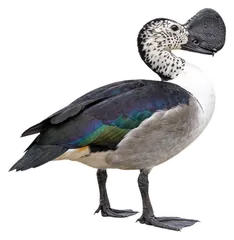 Knob-billed DuckSarkidiornis melanotos
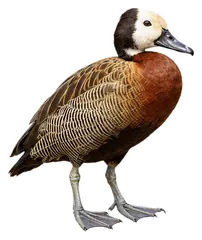 White-faced Whistling DuckDendrocygna viduata
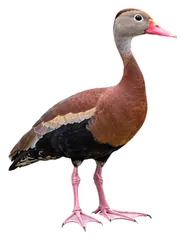 Black-bellied Whistling DuckDendrocygna autumnalis
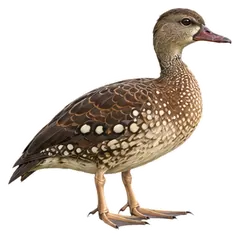 Spotted Whistling DuckDendrocygna guttata
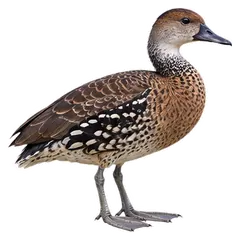 West Indian Whistling DuckDendrocygna arborea
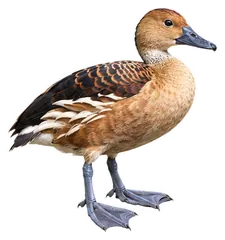 Fulvous Whistling DuckDendrocygna bicolor
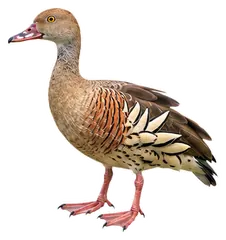 Plumed Whistling DuckDendrocygna eytoni
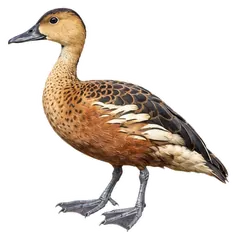 Wandering Whistling DuckDendrocygna arcuata
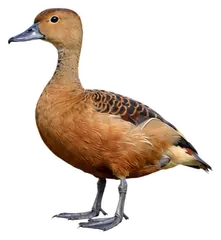 Lesser Whistling DuckDendrocygna javanica
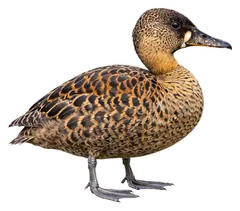 White-backed DuckThalassornis leuconotus
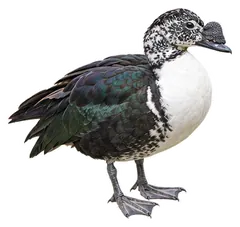
Download illustration
Free to use with credit: “Illustration: Bird Album (birdalbum.com)”. Drawn by AI from a reference photo by SandyCole. ↗
Heard it but can't see it? Mingji identifies birds by sound and photo, on your phone.