 Bird Album
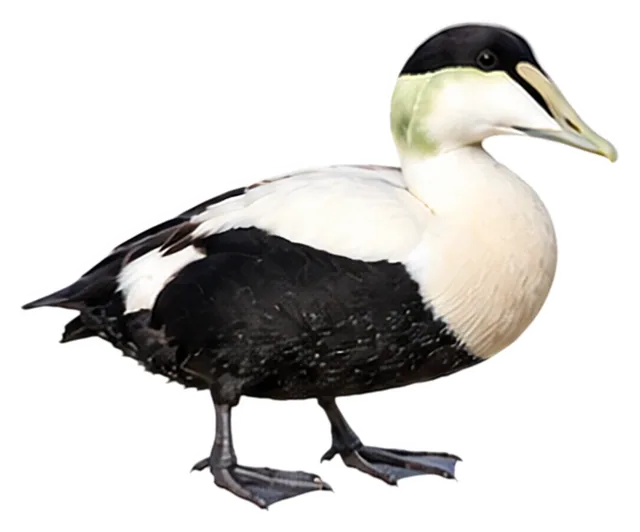
Common Eider
Somateria mollissima (Linnaeus, 1758)
2.1 kgWeight
The common eider (pronounced ) (Somateria mollissima), also called St.
Busiest months: May · Most records: United States, Canada, United Kingdom
Where and when it's recorded

Common Eider has been recorded at 509 of the 8,171 birding hotspots we track, in 41 countries and regions.
Records by month Northern Hemisphere
Where it's recorded most
- Parker River NWRUnited States10,793 records
- Quai, Pointe-au-PèreCanada6,664 records
- Monhegan IslandUnited States6,648 records
More places
- Pointe-au-PèreCanada6,060 records
- Húsavík – hafnarsvæðiIceland5,661 records
- Salisbury Beach State ReservationUnited States5,373 records
- Odiorne Point SP, RyeUnited States5,285 records
- Barnegat Lighthouse SPUnited States5,267 records
- Halibut Point SPUnited States5,117 records
- Hartlen PointCanada4,174 records
Countries and regions with the most records
eBird records via GBIF up to 2024-12-31. A record means someone listed it; more records partly mean more birders, not more birds.
About
The common eider (pronounced ) (Somateria mollissima), also called St. Cuthbert's duck or Cuddy's duck, is a large (50–71 cm (20–28 in) in body length) sea-duck that is distributed over the northern coasts of Europe, North America and eastern Siberia. It breeds in Arctic and some northern temperate regions, but winters somewhat farther south in temperate zones, when it can form large flocks on coastal waters.
Excerpt from Wikipedia, CC BY-SA 4.0 · authors · Read more on Wikipedia
Questions
How big is the Common Eider?
The Common Eider weighs around 2.1 kg.
Where does the Common Eider live?
Its breeding range: North America, Palearctic: central, southern coastal Greenland, Iceland, Faroe Islands, northwestern Europe to Chukotka Peninsula (northeastern Russia), Alaska through Arctic Canada to Massachusetts (northwestern Atlantic). It is most often recorded in United States, Canada and United Kingdom.
When is the best time to see the Common Eider?
At the hotspots we track, it is recorded most in May (Northern Hemisphere).
Is the Common Eider endangered?
The IUCN Red List classifies the Common Eider as Near Threatened.
What does the Common Eider eat?
Main food: Fish, shrimp & shellfish.
What family is the Common Eider in?
It belongs to the family Ducks, Geese, Swans (Anatidae), order Anseriformes.
At a glance
- Weight
- 2.1 kg
- Habitat
- Ocean
- Diet
- Fish, shrimp & shellfish
- Lifestyle
- On the water surface
- Migration
- Partial migrant
- Conservation
- Near Threatened
More measurements
- Wing
- 280 mm
- Tail
- 88 mm
- Bill
- 62 mm
- Tarsus
- 48 mm
Averages from the AVONET dataset; length from field guides where available.
Range
North America, Palearctic: central, southern coastal Greenland, Iceland, Faroe Islands, northwestern Europe to Chukotka Peninsula (northeastern Russia), Alaska through Arctic Canada to Massachusetts (northwestern Atlantic)
Breeding range, IOC World Bird List 15.2
Classification
- Order
- Anseriformes
- Family
- Ducks, Geese, Swans Anatidae
- Genus
- Somateria
Other birds in the genus Somateria
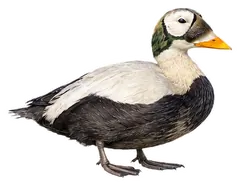 Spectacled EiderSomateria fischeri
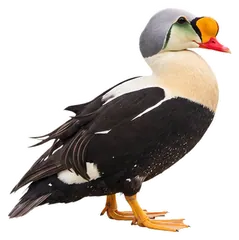 King EiderSomateria spectabilis
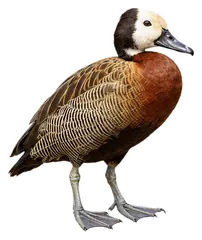 White-faced Whistling DuckDendrocygna viduata
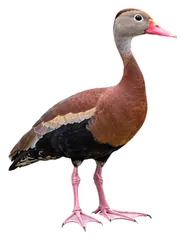 Black-bellied Whistling DuckDendrocygna autumnalis
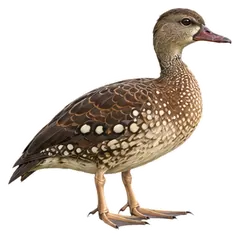 Spotted Whistling DuckDendrocygna guttata
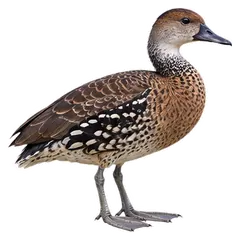 West Indian Whistling DuckDendrocygna arborea
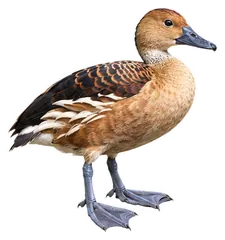 Fulvous Whistling DuckDendrocygna bicolor
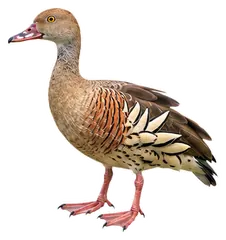 Plumed Whistling DuckDendrocygna eytoni
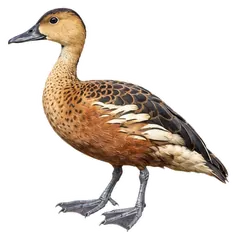 Wandering Whistling DuckDendrocygna arcuata
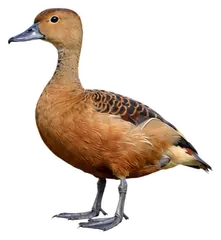 Lesser Whistling DuckDendrocygna javanica
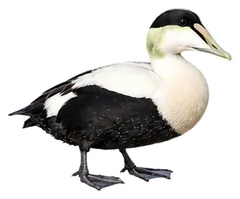
Download illustration
Free to use with credit: “Illustration: Bird Album (birdalbum.com)”. Drawn by AI from reference photos. ↗
Heard it but can't see it? Mingji identifies birds by sound and photo, on your phone.