 Bird Album
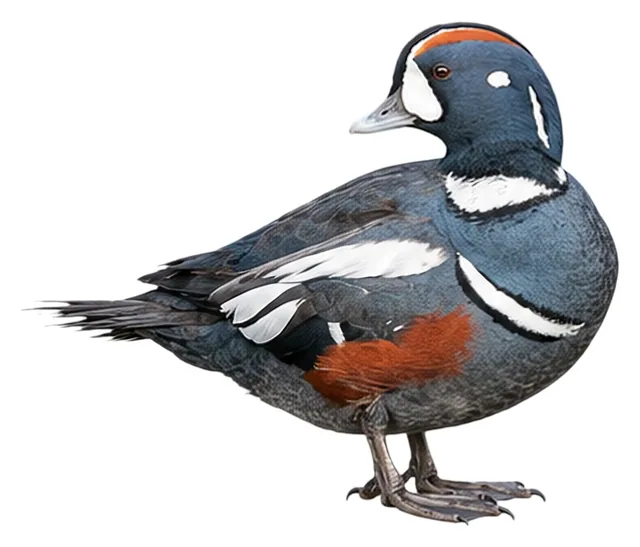
Harlequin Duck
Histrionicus histrionicus (Linnaeus, 1758)
≈37 cmLength562 gWeight
In the breeding season, the male has blue and chestnut feathers, with white patches on the face and neck.
Busiest months: January · Most records: United States, Canada, Iceland
How to identify
Field marks
- Breeding male has a white crescent-shaped patch in front of the eye
- Breeding male has a white collar edged with black
- Breeding male has a blue-gray body and chestnut flanks
- Adult female brownish-gray with three white patches on the head
Male, female and young
Breeding male has colorful, complex plumage; adult female brownish-gray with three white patches on the head.
Where and when it's recorded
Busiest months: January · Most records: United States, Canada, Iceland

Harlequin Duck has been recorded at 263 of the 8,276 birding hotspots we track, in 13 countries and regions.
Records by month Northern Hemisphere
Where it's recorded most
- Clover PointCanada7,414 records
- St. Paul IslandUnited States7,222 records
- Barnegat Lighthouse SPUnited States6,871 records
More places
- Halibut Point SPUnited States4,578 records
- Oak Bay – Cattle PointCanada3,868 records
- GambellUnited States3,855 records
- Calgary – Carburn ParkCanada3,479 records
- Ocean City InletUnited States2,484 records
- Tsawwassen Ferry Terminal JettyCanada2,225 records
- Sooke – Whiffin Spit ParkCanada2,126 records
Countries and regions with the most records
eBird records via GBIF up to 2024-12-31. A record means someone listed it; more records partly mean more birders, not more birds.
About
The harlequin duck (Histrionicus histrionicus) is a small sea duck. It takes its name from Harlequin (Italian Arlecchino, French Arlequin), a colourfully dressed character in the commedia dell'arte theatre of Italy. The species name comes from the Latin word histrio, meaning "actor".
Excerpt from Wikipedia, CC BY-SA 4.0 · authors · Read more on Wikipedia
Questions
How big is the Harlequin Duck?
The Harlequin Duck is about ≈37 cm long and weighs around 562 g.
Where does the Harlequin Duck live?
Its breeding range: North America, Palearctic: northeastern Siberia, Chukotka, Kamchatka, and Sakhalin peninsulas, Kuril Islands, Hokkaido and northern Honshu (central Japan); Aleutian Islands, Alaska, western Canada, Pacific Northwest and northern Rocky Mount states; northeastern Canada, southern Greenland and Iceland. It is most often recorded in United States, Canada and Iceland.
When is the best time to see the Harlequin Duck?
At the hotspots we track, it is recorded most in January (Northern Hemisphere).
Is the Harlequin Duck endangered?
The IUCN Red List classifies the Harlequin Duck as Least Concern.
What does the Harlequin Duck eat?
Main food: Fish, shrimp & shellfish.
What family is the Harlequin Duck in?
It belongs to the family Ducks, Geese, Swans (Anatidae), order Anseriformes.
At a glance
- Length
- ≈37 cm
- Weight
- 562 g
- Habitat
- Ocean
- Diet
- Fish, shrimp & shellfish
- Lifestyle
- On the water surface
- Migration
- Partial migrant
- Conservation
- Least Concern
More measurements
- Wing
- 194 mm
- Tail
- 88 mm
- Bill
- 27 mm
- Tarsus
- 33 mm
Averages from the AVONET dataset; length from field guides where available.
Range
North America, Palearctic: northeastern Siberia, Chukotka, Kamchatka, and Sakhalin peninsulas, Kuril Islands, Hokkaido and northern Honshu (central Japan); Aleutian Islands, Alaska, western Canada, Pacific Northwest and northern Rocky Mount states; northeastern Canada, southern Greenland and Iceland
Breeding range, IOC World Bird List 15.2
Classification
- Order
- Anseriformes
- Family
- Ducks, Geese, Swans Anatidae
- Genus
- Histrionicus
More from the family Ducks, Geese, Swans
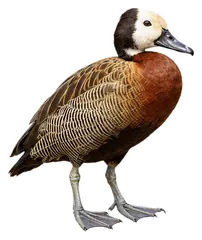 White-faced Whistling DuckDendrocygna viduata
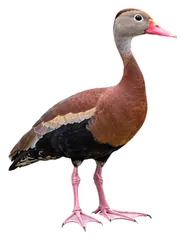 Black-bellied Whistling DuckDendrocygna autumnalis
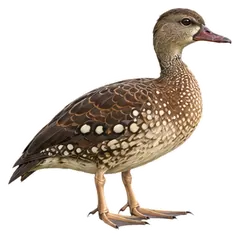 Spotted Whistling DuckDendrocygna guttata
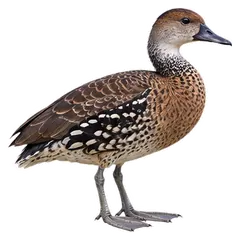 West Indian Whistling DuckDendrocygna arborea
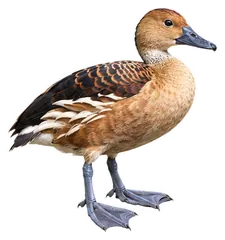 Fulvous Whistling DuckDendrocygna bicolor
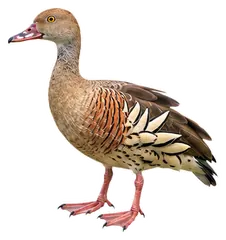 Plumed Whistling DuckDendrocygna eytoni
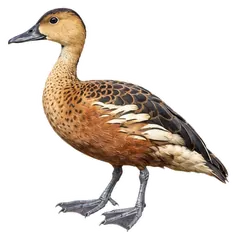 Wandering Whistling DuckDendrocygna arcuata
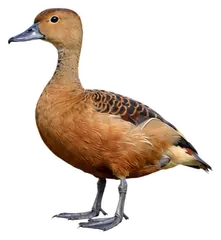 Lesser Whistling DuckDendrocygna javanica
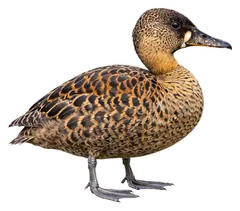 White-backed DuckThalassornis leuconotus
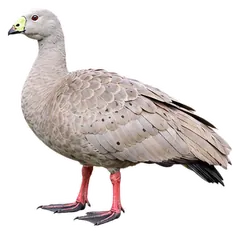 Cape Barren GooseCereopsis novaehollandiae
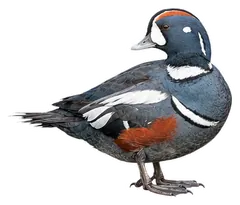
Download illustration
Free to use with credit: “Illustration: Bird Album (birdalbum.com)”. Drawn by AI from a reference photo by Clarence Holmes. ↗
Heard it but can't see it? Mingji identifies birds by sound and photo, on your phone.