 Bird Album
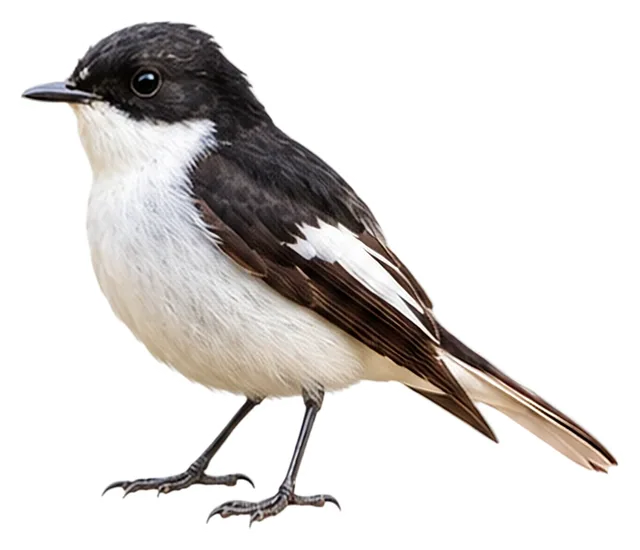
European Pied Flycatcher
Ficedula hypoleuca (Pallas, 1764)
12–14 cmLength22 cmWingspan14 gWeight
During the breeding season, the male has mostly black upperparts, white underparts, and large white wing patches.
Busiest months: September · Most records: Spain, Portugal, United Kingdom
How to identify
Field marks
- Male has mostly black upperparts and white underparts during the breeding season
- Male has large white wing patches during the breeding season
- Male has white tail sides and a small white forehead patch during the breeding season
- Black bill, broad and pointed
Male, female and young
In non-breeding-season males, females, and juveniles, the black is replaced by pale brown.
Voice
Contact and alarm calls are short whistles, “whit, whit, whit”.
Where and when it's recorded

European Pied Flycatcher has been recorded at 1,087 of the 8,171 birding hotspots we track, in 83 countries and regions.
Records by month Northern Hemisphere
Where it's recorded most
- Txingudi – PlaiaundiSpain1,060 records
- PN Sudoeste Alentejano e Costa Vicentina – CabranosaPortugal984 records
- Spurn Bird Observatory Recording AreaUnited Kingdom700 records
More places
- St Mary'sUnited Kingdom595 records
- St AgnesUnited Kingdom542 records
- Parque El Retiro-MadridSpain527 records
- Zamora – Río DueroSpain477 records
- ErtholmeneDenmark462 records
- Barrinha de EsmorizPortugal437 records
- Antikythira Bird ObservatoryGreece408 records
Countries and regions with the most records
eBird records via GBIF up to 2024-12-31. A record means someone listed it; more records partly mean more birders, not more birds.
About
The European pied flycatcher (Ficedula hypoleuca) is a small passerine bird in the Old World flycatcher family. It breeds in most of Europe and across the Western Palearctic. It is migratory, wintering mainly in tropical Africa.
Excerpt from Wikipedia, CC BY-SA 4.0 · authors · Read more on Wikipedia
Questions
How big is the European Pied Flycatcher?
The European Pied Flycatcher is about 12–14 cm long, with a wingspan of 22 cm and weighs around 14 g.
Where does the European Pied Flycatcher live?
Its breeding range: Palearctic: central, western. It is most often recorded in Spain, Portugal and United Kingdom.
When is the best time to see the European Pied Flycatcher?
At the hotspots we track, it is recorded most in September (Northern Hemisphere).
Is the European Pied Flycatcher endangered?
The IUCN Red List classifies the European Pied Flycatcher as Least Concern.
What does the European Pied Flycatcher eat?
Main food: Insects & other invertebrates.
What family is the European Pied Flycatcher in?
It belongs to the family Chats, Old World Flycatchers (Muscicapidae), order Passerines (Passeriformes).
At a glance
- Length
- 12–14 cm
- Wingspan
- 22 cm
- Weight
- 14 g
- Habitat
- Forest
- Diet
- Insects & other invertebrates
- Lifestyle
- Perches in trees
- Migration
- Migratory
- Conservation
- Least Concern
More measurements
- Wing
- 80 mm
- Tail
- 51 mm
- Bill
- 13 mm
- Tarsus
- 17 mm
Averages from the AVONET dataset; length from field guides where available.
Range
Palearctic: central, western
Breeding range, IOC World Bird List 15.2
Classification
- Order
- Passerines Passeriformes
- Family
- Chats, Old World Flycatchers Muscicapidae
- Genus
- Ficedula
Other birds in the genus Ficedula
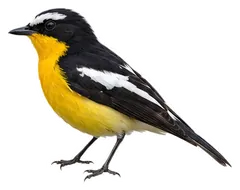 Yellow-rumped FlycatcherFicedula zanthopygia
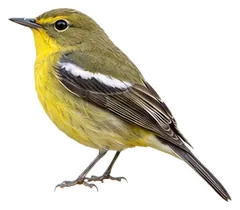 Green-backed FlycatcherFicedula elisae
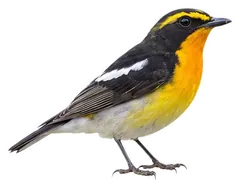 Narcissus FlycatcherFicedula narcissina
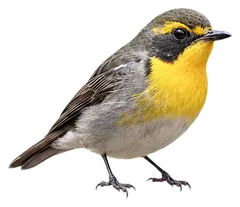 Ryukyu FlycatcherFicedula owstoni
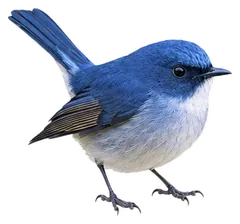 Slaty-blue FlycatcherFicedula tricolor
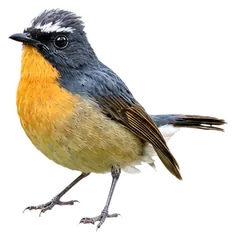 Snowy-browed FlycatcherFicedula hyperythra
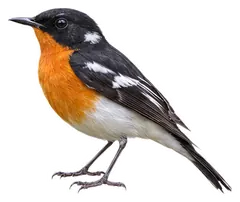 Mugimaki FlycatcherFicedula mugimaki
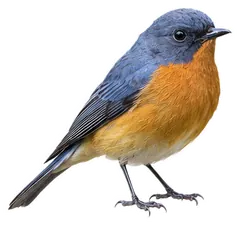 Slaty-backed FlycatcherFicedula erithacus
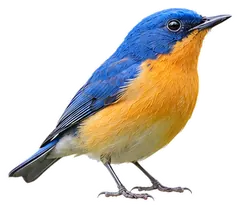 Pygmy FlycatcherFicedula hodgsoni
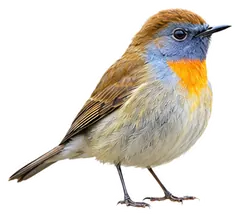 Rufous-gorgeted FlycatcherFicedula strophiata
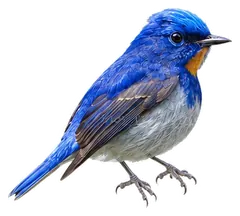 Sapphire FlycatcherFicedula sapphira
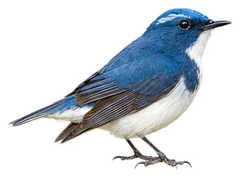 Ultramarine FlycatcherFicedula superciliaris
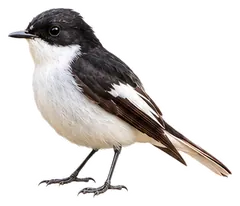
Download illustration
Free to use with credit: “Illustration: Bird Album (birdalbum.com)”. Drawn by AI from a reference photo by Ramunė Vakarė. ↗
Heard it but can't see it? Mingji identifies birds by sound and photo, on your phone.
In other languages
- EnglishEuropean Pied Flycatcher
- 简体中文斑姬鹟
- 繁體中文斑姬鶲
- 日本語マダラヒタキ
- 한국어유럽까치딱새
- DeutschTrauerschnäpper
- FrançaisGobemouche noir
- EspañolPapamoscas cerrojillo
- Portuguêspapa-moscas-preto
- ItalianoBalia nera
- NederlandsBonte Vliegenvanger
- РусскийМухоловка-пеструшка
- Svenskasvartvit flugsnappare
- DanskBroget Fluesnapper
- Polskimuchołówka żałobna