 Bird Album
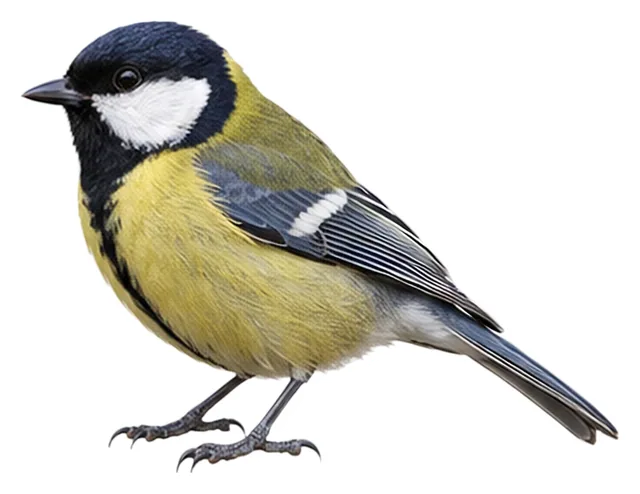
Great Tit
Parus major Linnaeus, 1758
≈14 cmLength23 cmWingspan16 gWeight
This tit has a black head, white cheeks and a single black line down the center of its yellow breast.
Busiest months: April · Most records: United Kingdom, Spain, Germany
How to identify
Field marks
- Head and neck black; cheeks white
- Breast bright yellow, with a single central black longitudinal band
- Back olive; wings blue-gray with white wing-bars
- Tail blue-gray, with white tips to outer feathers
Male, female and young
The female is duller overall, with a paler black bib and a paler, narrower, sometimes broken belly line; juveniles resemble the female, with a dark olive-brown nape and neck.
Voice
It has up to 40 types of call and song; one of the most familiar is “teacher, teacher”, often likened to a squeaky wheelbarrow and used to proclaim territory.
Where and when it's recorded
Busiest months: April · Most records: United Kingdom, Spain, Germany

Great Tit has been recorded at 1,425 of the 8,276 birding hotspots we track, in 70 countries and regions.
Records by month Northern Hemisphere
Where it's recorded most
- Amwell HMWT NRUnited Kingdom6,996 records
- Jerusalem Bird ObservatoryIsrael5,482 records
- Titchwell Marsh RSPB ReserveUnited Kingdom4,786 records
More places
- Minsmere RSPB ReserveUnited Kingdom4,724 records
- Txingudi – PlaiaundiSpain4,474 records
- Beddington FarmlandsUnited Kingdom4,364 records
- WWT London Wetland CentreUnited Kingdom3,582 records
- Urdaibai RB – bird center y laguna de OruetaSpain3,416 records
- Walthamstow WetlandsUnited Kingdom3,364 records
- South Downs NP – Pulborough Brooks RSPB ReserveUnited Kingdom3,172 records
Countries and regions with the most records
eBird records via GBIF up to 2024-12-31. A record means someone listed it; more records partly mean more birders, not more birds.
About
The great tit (Parus major) is a small passerine bird in the tit family Paridae. It is widespread and common throughout Europe, the Middle East, Central Asia and as far east as the Amur River. It also occurs in parts of North Africa where it is generally resident in any sort of woodland.
Excerpt from Wikipedia, CC BY-SA 4.0 · authors · Read more on Wikipedia
Questions
How big is the Great Tit?
The Great Tit is about ≈14 cm long, with a wingspan of 23 cm and weighs around 16 g.
Where does the Great Tit live?
Its breeding range: Palearctic: western, central EurAsia and northern Africa. It is most often recorded in United Kingdom, Spain and Germany.
When is the best time to see the Great Tit?
At the hotspots we track, it is recorded most in April (Northern Hemisphere).
Is the Great Tit endangered?
The IUCN Red List classifies the Great Tit as Least Concern.
What does the Great Tit eat?
Main food: Insects & other invertebrates.
What family is the Great Tit in?
It belongs to the family Tits, Chickadees (Paridae), order Passerines (Passeriformes).
At a glance
- Length
- ≈14 cm
- Wingspan
- 23 cm
- Weight
- 16 g
- Habitat
- Woodland
- Diet
- Insects & other invertebrates
- Lifestyle
- Perches in trees
- Migration
- Resident (barely migrates)
- Conservation
- Least Concern
More measurements
- Wing
- 74 mm
- Tail
- 65 mm
- Bill
- 12 mm
- Tarsus
- 18 mm
Averages from the AVONET dataset; length from field guides where available.
Range
Palearctic: western, central EurAsia and northern Africa
Breeding range, IOC World Bird List 15.2
Subspecies · 2
- Parus major kapustini se Kazakhstan and nw China to Mongolia and e Siberia
- Parus major ferghanensis Tajikistan and Kyrgyzstan to w China
Classification
- Order
- Passerines Passeriformes
- Family
- Tits, Chickadees Paridae
- Genus
- Parus
Other birds in the genus Parus
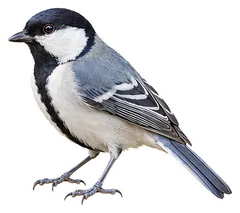 Cinereous TitParus cinereus
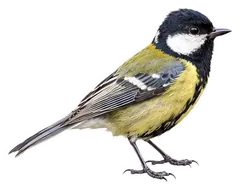 Green-backed TitParus monticolus
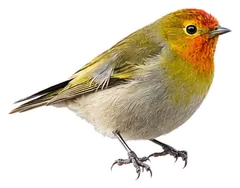 Fire-capped TitCephalopyrus flammiceps
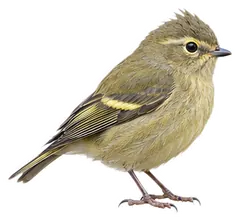 Yellow-browed TitSylviparus modestus
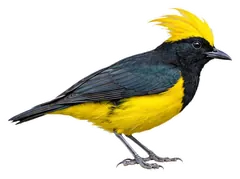 Sultan TitMelanochlora sultanea
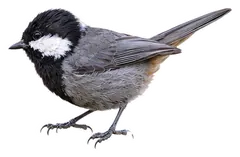 Rufous-naped TitPeriparus rufonuchalis
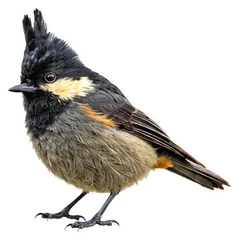 Rufous-vented TitPeriparus rubidiventris
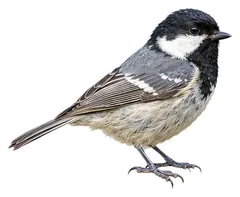 Coal TitPeriparus ater
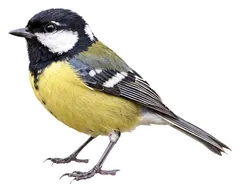 Yellow-bellied TitPeriparus venustulus
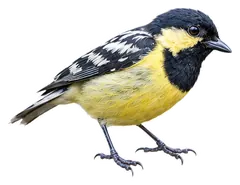 Elegant TitPeriparus elegans
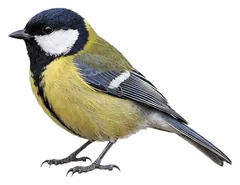
Download illustration
Free to use with credit: “Illustration: Bird Album (birdalbum.com)”. Drawn by AI from a reference photo by Frank Vassen. ↗

Heard it but can't see it? Mingji identifies birds by sound and photo, on your phone.