 Bird Album
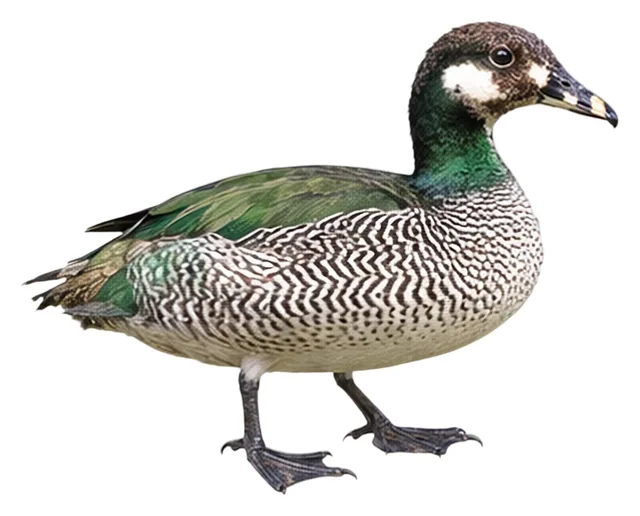
Green Pygmy Goose
Nettapus pulchellus Gould, 1842
30–36 cmLength307 gWeight
The green pygmy goose (Nettapus pulchellus) is a small perching duck which breeds in southern New Guinea and northern Australia.
Busiest months: August and October · Most records: Australia, Papua New Guinea, Timor-Leste
Where and when it's recorded
Busiest months: August and October · Most records: Australia, Papua New Guinea, Timor-Leste

Green Pygmy Goose has been recorded at 43 of the 8,276 birding hotspots we track, in 3 countries and regions.
Records by month Southern Hemisphere
Where it's recorded most
- Cattana WetlandsAustralia2,475 records
- Tyto WetlandsAustralia1,428 records
- Keatings Lagoon Conservation ParkAustralia1,211 records
More places
- Kakadu National Park – Yellow WaterAustralia1,181 records
- Fogg Dam Conservation ReserveAustralia915 records
- Townsville Town Common Conservation ParkAustralia885 records
- Cumberland DamAustralia509 records
- Taylors LagoonAustralia179 records
- Daintree Village Boat CruiseAustralia135 records
- Lake EdaAustralia108 records
Countries and regions with the most records
eBird records via GBIF up to 2024-12-31. A record means someone listed it; more records partly mean more birders, not more birds.
About
The green pygmy goose (Nettapus pulchellus) is a small perching duck which breeds in southern New Guinea and northern Australia.
Excerpt from Wikipedia, CC BY-SA 4.0 · authors · Read more on Wikipedia
Questions
How big is the Green Pygmy Goose?
The Green Pygmy Goose is about 30–36 cm long and weighs around 307 g.
Where does the Green Pygmy Goose live?
Its breeding range: Australasia: eastern Lesser Sundas, southern Moluccas, southern New Guinea and northeastern Western Australia to southeastern Queensland (northern, eastern Australia). It is most often recorded in Australia, Papua New Guinea and Timor-Leste.
When is the best time to see the Green Pygmy Goose?
At the hotspots we track, it is recorded most in August and October (Southern Hemisphere).
Is the Green Pygmy Goose endangered?
The IUCN Red List classifies the Green Pygmy Goose as Least Concern.
What does the Green Pygmy Goose eat?
Main food: Aquatic plants.
What family is the Green Pygmy Goose in?
It belongs to the family Ducks, Geese, Swans (Anatidae), order Anseriformes.
At a glance
- Length
- 30–36 cm
- Weight
- 307 g
- Habitat
- Wetland
- Diet
- Aquatic plants
- Lifestyle
- On the water surface
- Migration
- Resident (barely migrates)
- Conservation
- Least Concern
More measurements
- Wing
- 169 mm
- Tail
- 63 mm
- Bill
- 27 mm
- Tarsus
- 26 mm
Averages from the AVONET dataset; length from field guides where available.
Range
Australasia: eastern Lesser Sundas, southern Moluccas, southern New Guinea and northeastern Western Australia to southeastern Queensland (northern, eastern Australia)
Breeding range, IOC World Bird List 15.2
Classification
- Order
- Anseriformes
- Family
- Ducks, Geese, Swans Anatidae
- Genus
- Nettapus
Other birds in the genus Nettapus
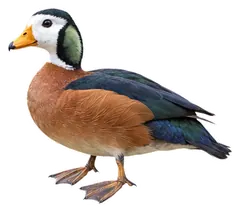 African Pygmy GooseNettapus auritus
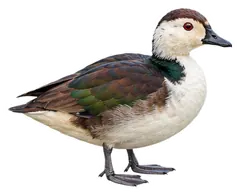 Cotton Pygmy GooseNettapus coromandelianus
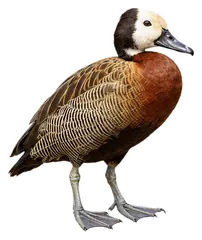 White-faced Whistling DuckDendrocygna viduata
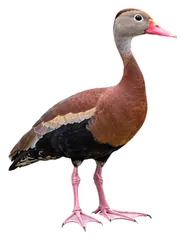 Black-bellied Whistling DuckDendrocygna autumnalis
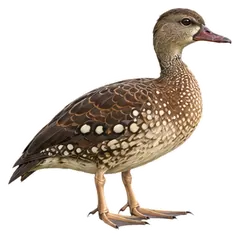 Spotted Whistling DuckDendrocygna guttata
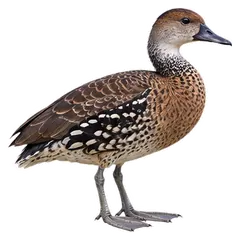 West Indian Whistling DuckDendrocygna arborea
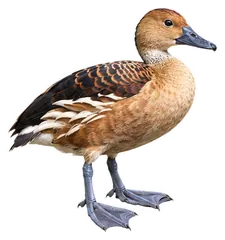 Fulvous Whistling DuckDendrocygna bicolor
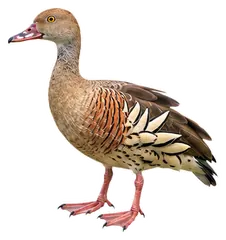 Plumed Whistling DuckDendrocygna eytoni
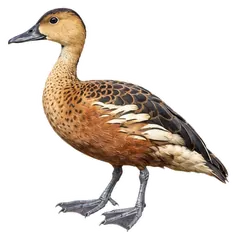 Wandering Whistling DuckDendrocygna arcuata
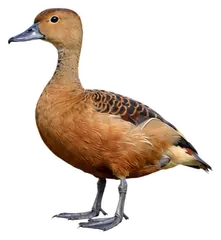 Lesser Whistling DuckDendrocygna javanica
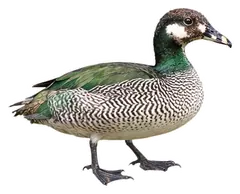
Download illustration
Free to use with credit: “Illustration: Bird Album (birdalbum.com)”. Drawn by AI from a reference photo by Mark Ayers. ↗
Heard it but can't see it? Mingji identifies birds by sound and photo, on your phone.
In other languages
- EnglishGreen Pygmy Goose
- 简体中文绿棉凫
- 繁體中文綠棉鴨
- 日本語アオマメガン
- DeutschSmaragdzwergente
- FrançaisAnserelle élégante
- EspañolGansito australiano
- Portuguêsgansinho-australiano
- ItalianoOca pigmea verde
- NederlandsGroene Dwergeend
- РусскийАвстралийский блестящий чирок
- Svenskagrön dvärgand
- DanskGrøn Dværgand
- Polskikaczuszka australijska