 Bird Album
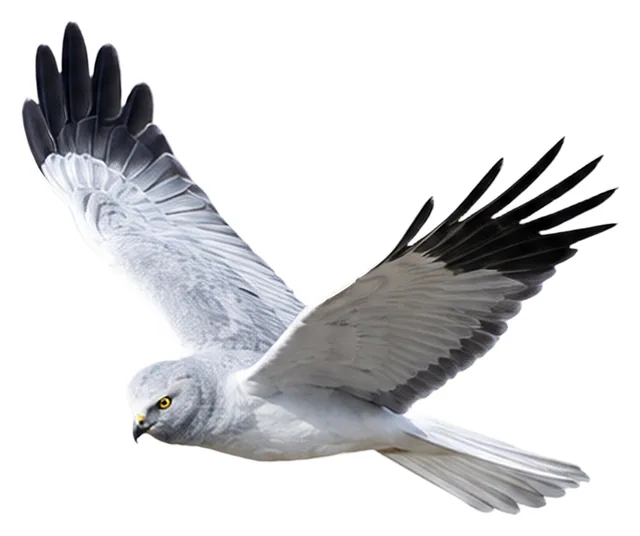
Hen Harrier
Circus cyaneus (Linnaeus, 1766)
41–52 cmLength110 cmWingspan393 gWeight
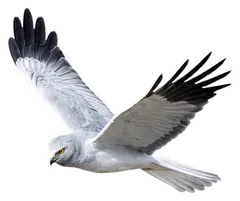
The male is grayish-white and the female rufous-brown, both with a white rump, hunting in low flight.
Busiest months: October–December · Most records: Spain, China, Portugal
How to identify
Field marks
- Male has a gray back, white belly and black wingtips
- Female has a rufous back and white uppertail-coverts
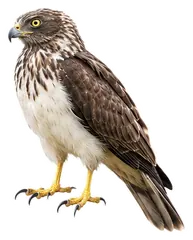
- Female underparts buff with brown barring
- Wings and tail relatively long; wings held in a shallow V in flight
Male, female and young
Sexes differ markedly in plumage. Juvenile resembles female, but has less distinct barring and fewer bars on the belly.
Voice
Male gives “chek-chek-chek”, changing to a more bouncing “chuk-uk-uk-uk” during display flight.
Where and when it's recorded
Busiest months: October–December · Most records: Spain, China, Portugal

Hen Harrier has been recorded at 1,629 of the 8,276 birding hotspots we track, in 84 countries and regions.
Records by month Northern Hemisphere
Where it's recorded most
- Lezíria Grande de Vila Franca de Xira – área geralPortugal1,602 records
- El Oso – Laguna y entornoSpain1,176 records
- LindusSpain865 records
More places
- Lagunas de Villafáfila RNat – ÁreaSpain865 records
- Azud de RiolobosSpain834 records
- PN Sudoeste Alentejano e Costa Vicentina – CabranosaPortugal763 records
- Besh Barmag bottleneckAzerbaijan611 records
- Laguna de la Nava ENat – ÁreaSpain544 records
- Titchwell Marsh RSPB ReserveUnited Kingdom489 records
- La Janda – ÁreaSpain487 records
Countries and regions with the most records
eBird records via GBIF up to 2024-12-31. A record means someone listed it; more records partly mean more birders, not more birds.
About
The hen harrier (Circus cyaneus) is a bird of prey. It breeds in open areas such as marshes and grasslands in Eurasia and is migratory, moving further south outside of the breeding season. Birds in milder regions, such as France and Great Britain, may be resident year-round, but the higher altitudes are largely deserted in winter.
Excerpt from Wikipedia, CC BY-SA 4.0 · authors · Read more on Wikipedia
Questions
How big is the Hen Harrier?
The Hen Harrier is about 41–52 cm long, with a wingspan of 110 cm and weighs around 393 g.
Where does the Hen Harrier live?
Its breeding range: Palearctic: Europe and central, North Asia. It is most often recorded in Spain, China and Portugal.
When is the best time to see the Hen Harrier?
At the hotspots we track, it is recorded most in October, November and December (Northern Hemisphere).
Is the Hen Harrier endangered?
The IUCN Red List classifies the Hen Harrier as Least Concern.
What does the Hen Harrier eat?
Main food: Vertebrate prey.
What family is the Hen Harrier in?
It belongs to the family Kites, Hawks, Eagles (Accipitridae), order Accipitriformes.
At a glance
- Length
- 41–52 cm
- Wingspan
- 110 cm
- Weight
- 393 g
- Habitat
- Grassland
- Diet
- Vertebrate prey
- Lifestyle
- Feeds in the air
- Migration
- Migratory
- Conservation
- Least Concern
More measurements
- Wing
- 352 mm
- Tail
- 132 mm
- Bill
- 30 mm
- Tarsus
- 72 mm
Averages from the AVONET dataset; length from field guides where available.
Range
Palearctic: Europe and central, North Asia
Breeding range, IOC World Bird List 15.2
Classification
- Order
- Accipitriformes
- Family
- Kites, Hawks, Eagles Accipitridae
- Genus
- Circus
Other birds in the genus Circus
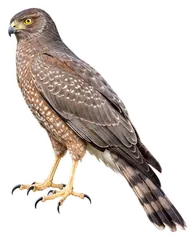 Spotted HarrierCircus assimilis
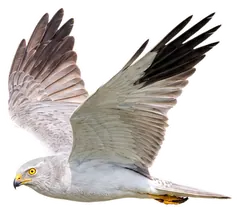 Pallid HarrierCircus macrourus
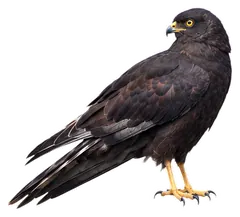 Black HarrierCircus maurus
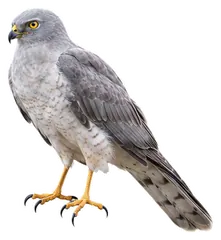 Northern HarrierCircus hudsonius
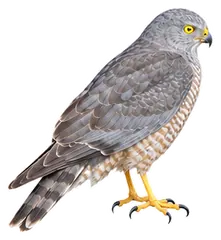 Cinereous HarrierCircus cinereus
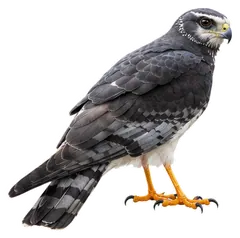 Long-winged HarrierCircus buffoni
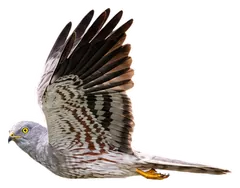 Montagu's HarrierCircus pygargus
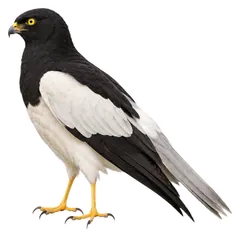 Pied HarrierCircus melanoleucos
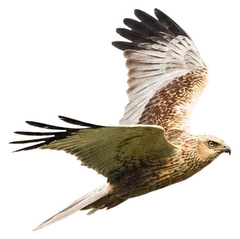 Western Marsh HarrierCircus aeruginosus
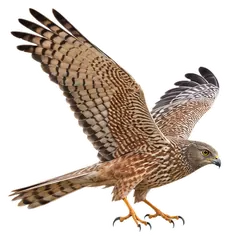 African Marsh HarrierCircus ranivorus
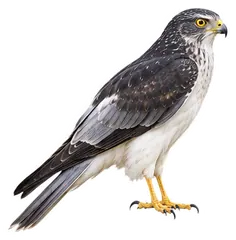 Eastern Marsh HarrierCircus spilonotus
 Papuan HarrierCircus spilothorax
Download illustration
Free to use with credit: “Illustration: Bird Album (birdalbum.com)”. Drawn by AI from a reference photo by Александр Чегодаев. ↗

Heard it but can't see it? Mingji identifies birds by sound and photo, on your phone.