 Bird Album
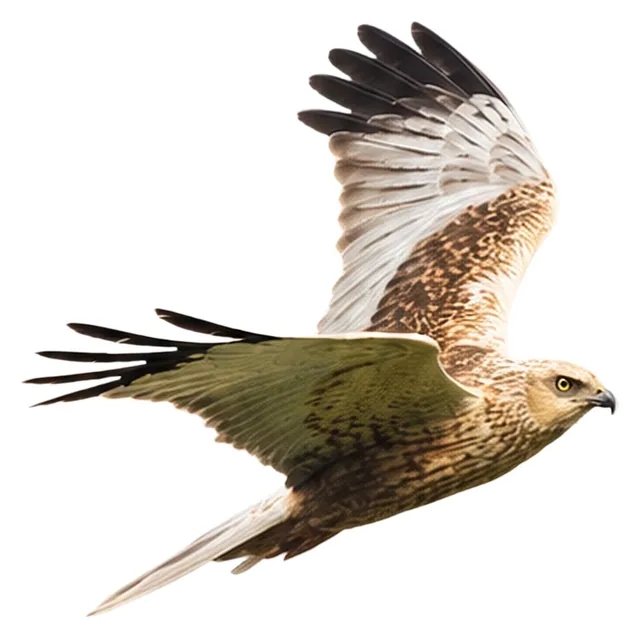
Western Marsh Harrier
Circus aeruginosus (Linnaeus, 1758)
48–56 cmLength116 cmWingspan704 gWeight
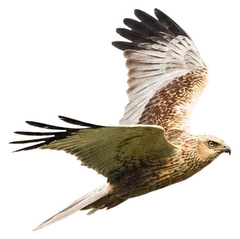
It often flies low over reed marshes, holding its wings in a V when gliding.
Busiest months: April–May and September · Most records: Spain, United Kingdom, India
How to identify
Field marks
- Male rufous, with silvery-gray midwings
- Male has a long gray tail and a pale gray head
- Female dark brown, with pale yellow crown and throat
- Stouter than other harriers, with a larger wingspan
Male, female and young
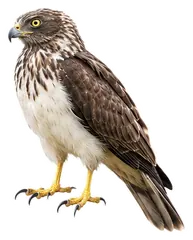
Female larger and heavier, dark brown; male rufous with silvery-gray midwings. Juvenile resembles female, usually with less yellow on scapulars.
Voice
Calls resemble those of Northern Lapwing and are heard only at breeding sites; male gives nasal “hijäe” and “quiä” calls when stooping.
Where and when it's recorded

Western Marsh Harrier has been recorded at 1,787 of the 8,171 birding hotspots we track, in 124 countries and regions.
Records by month Northern Hemisphere
Where it's recorded most
- Titchwell Marsh RSPB ReserveUnited Kingdom7,526 records
- Minsmere RSPB ReserveUnited Kingdom5,846 records
- Lezíria Grande de Vila Franca de Xira – área geralPortugal4,285 records
More places
- Cley & Salthouse Marshes NWT NR – Cley Marshes including Hides and Visitor CentreUnited Kingdom3,919 records
- International Birding and Research Center Eilat (IBRCE)Israel3,535 records
- Bharatpur – Keoladeo Ghana NPIndia2,887 records
- El Oso – Laguna y entornoSpain2,848 records
- Rainham Marshes RSPB Reserve, SSSI and LNRUnited Kingdom2,663 records
- Marjal dels Moros – ÁreaSpain2,527 records
- Azud de RiolobosSpain2,510 records
Countries and regions with the most records
eBird records via GBIF up to 2024-12-31. A record means someone listed it; more records partly mean more birders, not more birds.
About
The western marsh harrier (Circus aeruginosus) is a large harrier, a bird of prey from temperate and subtropical western Eurasia and adjacent Africa. It is also known as the Eurasian marsh harrier. Formerly, a number of relatives were included in C. aeruginosus, which was then known as "marsh harrier".
Excerpt from Wikipedia, CC BY-SA 4.0 · authors · Read more on Wikipedia
Questions
How big is the Western Marsh Harrier?
The Western Marsh Harrier is about 48–56 cm long, with a wingspan of 116 cm and weighs around 704 g.
Where does the Western Marsh Harrier live?
Its breeding range: Palearctic, Africa: western, west-central. It is most often recorded in Spain, United Kingdom and India.
When is the best time to see the Western Marsh Harrier?
At the hotspots we track, it is recorded most in April, May and September (Northern Hemisphere).
Is the Western Marsh Harrier endangered?
The IUCN Red List classifies the Western Marsh Harrier as Least Concern.
What does the Western Marsh Harrier eat?
Main food: Vertebrate prey.
What family is the Western Marsh Harrier in?
It belongs to the family Kites, Hawks, Eagles (Accipitridae), order Accipitriformes.
At a glance
- Length
- 48–56 cm
- Wingspan
- 116 cm
- Weight
- 704 g
- Habitat
- Wetland
- Diet
- Vertebrate prey
- Lifestyle
- Feeds in the air
- Migration
- Partial migrant
- Conservation
- Least Concern
More measurements
- Wing
- 406 mm
- Tail
- 234 mm
- Bill
- 37 mm
- Tarsus
- 79 mm
Averages from the AVONET dataset; length from field guides where available.
Range
Palearctic, Africa: western, west-central
Breeding range, IOC World Bird List 15.2
Classification
- Order
- Accipitriformes
- Family
- Kites, Hawks, Eagles Accipitridae
- Genus
- Circus
Other birds in the genus Circus
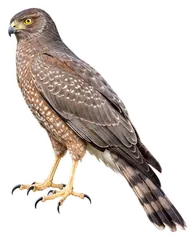 Spotted HarrierCircus assimilis
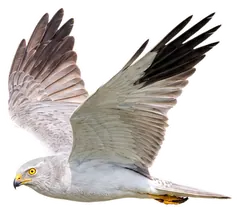 Pallid HarrierCircus macrourus
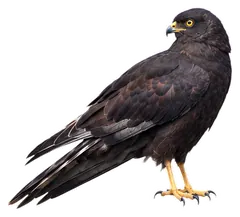 Black HarrierCircus maurus
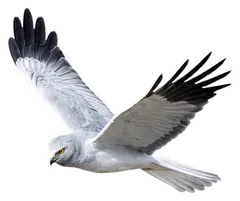 Hen HarrierCircus cyaneus
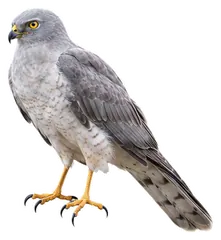 Northern HarrierCircus hudsonius
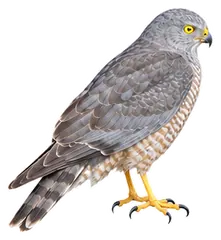 Cinereous HarrierCircus cinereus
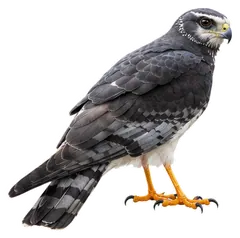 Long-winged HarrierCircus buffoni
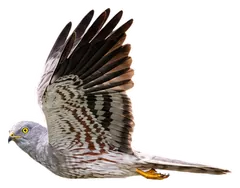 Montagu's HarrierCircus pygargus
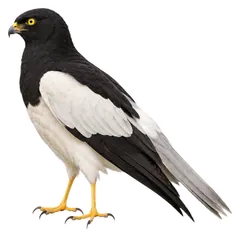 Pied HarrierCircus melanoleucos
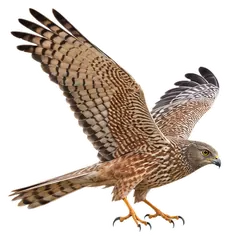 African Marsh HarrierCircus ranivorus
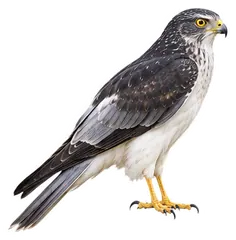 Eastern Marsh HarrierCircus spilonotus
 Papuan HarrierCircus spilothorax
Download illustration
Free to use with credit: “Illustration: Bird Album (birdalbum.com)”. Drawn by AI from a reference photo by Thomas Huisman. ↗
Heard it but can't see it? Mingji identifies birds by sound and photo, on your phone.