 Bird Album
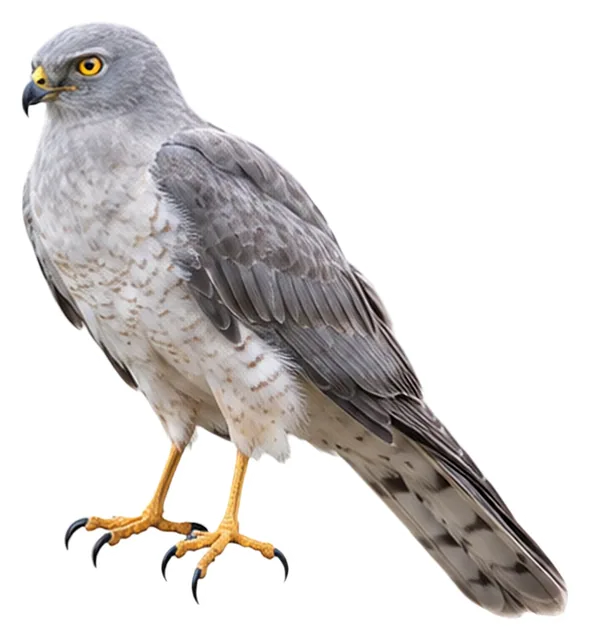
Northern Harrier
Circus hudsonius (Linnaeus, 1766)
393 gWeight
The northern harrier (Circus hudsonius), also known as the marsh hawk or ring-tailed hawk, is a bird of prey.
Busiest months: January and October–November · Most records: United States, Canada, Mexico
Where and when it's recorded
Busiest months: January and October–November · Most records: United States, Canada, Mexico

Northern Harrier has been recorded at 967 of the 8,276 birding hotspots we track, in 26 countries and regions.
Records by month Northern Hemisphere
Where it's recorded most
- Parker River NWRUnited States21,872 records
- Reifel Bird SanctuaryCanada14,146 records
- Edwin B. Forsythe NWRUnited States12,637 records
More places
- Bombay Hook National Wildlife RefugeUnited States11,378 records
- Billy Frank Jr. Nisqually NWRUnited States9,911 records
- Estero Llano Grande SP WBCUnited States9,645 records
- Edwin B. Forsythe NWR – Wildlife DriveUnited States8,479 records
- RNF du Cap-TourmenteCanada8,178 records
- Ridgefield NWR – River 'S' UnitUnited States7,753 records
- Bosque del Apache NWRUnited States7,556 records
Countries and regions with the most records
eBird records via GBIF up to 2024-12-31. A record means someone listed it; more records partly mean more birders, not more birds.
About
The northern harrier (Circus hudsonius), also known as the marsh hawk or ring-tailed hawk, is a bird of prey. It breeds throughout the northern parts of the Northern Hemisphere in Canada and the northernmost United States.
Excerpt from Wikipedia, CC BY-SA 4.0 · authors · Read more on Wikipedia
Questions
How big is the Northern Harrier?
The Northern Harrier weighs around 393 g.
Where does the Northern Harrier live?
Its breeding range: North America, Middle America: widespread. It is most often recorded in United States, Canada and Mexico.
When is the best time to see the Northern Harrier?
At the hotspots we track, it is recorded most in January, October and November (Northern Hemisphere).
Is the Northern Harrier endangered?
The IUCN Red List classifies the Northern Harrier as Least Concern.
What does the Northern Harrier eat?
Main food: Vertebrate prey.
What family is the Northern Harrier in?
It belongs to the family Kites, Hawks, Eagles (Accipitridae), order Accipitriformes.
At a glance
- Weight
- 393 g
- Habitat
- Grassland
- Diet
- Vertebrate prey
- Lifestyle
- Feeds in the air
- Migration
- Migratory
- Conservation
- Least Concern
More measurements
- Wing
- 361 mm
- Tail
- 213 mm
- Bill
- 31 mm
- Tarsus
- 82 mm
Averages from the AVONET dataset; length from field guides where available.
Range
North America, Middle America: widespread
Breeding range, IOC World Bird List 15.2
Classification
- Order
- Accipitriformes
- Family
- Kites, Hawks, Eagles Accipitridae
- Genus
- Circus
Other birds in the genus Circus
 Spotted HarrierCircus assimilis
 Pallid HarrierCircus macrourus
 Black HarrierCircus maurus
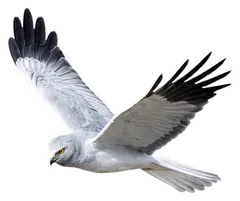 Hen HarrierCircus cyaneus
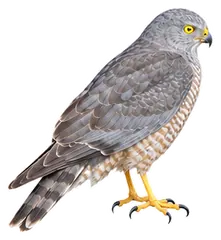 Cinereous HarrierCircus cinereus
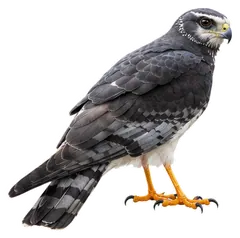 Long-winged HarrierCircus buffoni
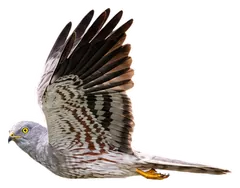 Montagu's HarrierCircus pygargus
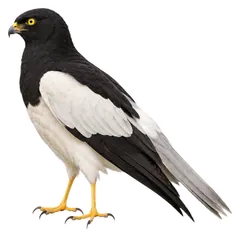 Pied HarrierCircus melanoleucos
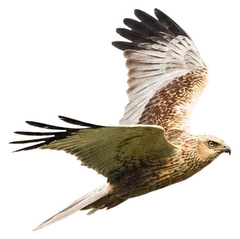 Western Marsh HarrierCircus aeruginosus
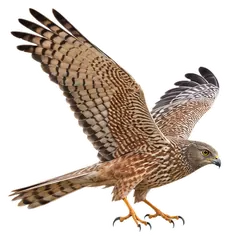 African Marsh HarrierCircus ranivorus
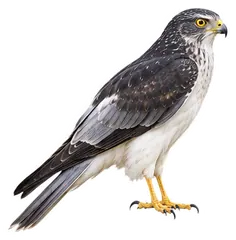 Eastern Marsh HarrierCircus spilonotus
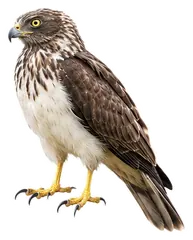 Papuan HarrierCircus spilothorax
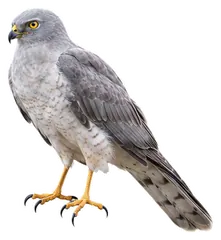
Download illustration
Free to use with credit: “Illustration: Bird Album (birdalbum.com)”. Drawn by AI from a reference photo by Cin-Ty Lee. ↗
Heard it but can't see it? Mingji identifies birds by sound and photo, on your phone.
In other languages
- EnglishNorthern Harrier
- 简体中文北鹞
- 繁體中文北方澤鵟
- 日本語アメリカハイイロチュウヒ
- DeutschHudsonweihe
- FrançaisBusard des marais
- EspañolAguilucho de Hudson
- Portuguêstartaranhão-cinzento-americano
- ItalianoAlbanella americana
- NederlandsAmerikaanse Blauwe Kiekendief
- РусскийАмериканский лунь
- Svenskaamerikansk kärrhök
- DanskAmerikansk Kærhøg
- Polskibłotniak amerykański