 Bird Album
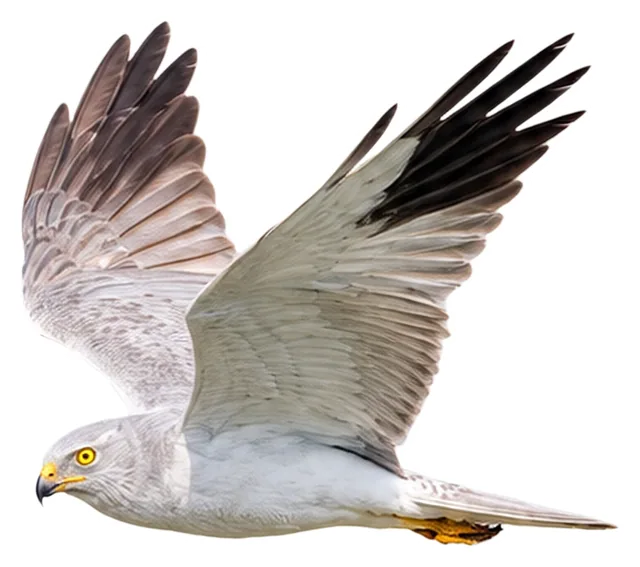
Pallid Harrier
Circus macrourus (Gmelin, SG, 1770)
40–48 cmLength109 cmWingspan384 gWeight
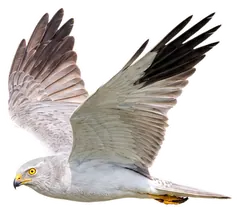
This harrier flies low with its long wings in a shallow V, the male grayish-white and the female brown.
Busiest months: September · Most records: India, Kenya, Tanzania
Looks like Hen Harrier, Montagu's Harrier
How to identify
Field marks
- Male upperparts grayish-white, underparts white, with a narrow black area at wingtips
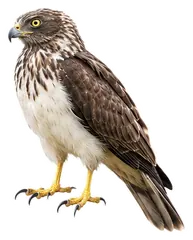
- Female upperparts brown, uppertail-coverts white
- Female underparts pale yellowish-brown with brown streaks
- Wings long, held in a shallow V in low flight
Male, female and young
Sexes differ in plumage; females and similar-looking juveniles are often called “ringtails”.
Similar species
Where and when it's recorded
Busiest months: September · Most records: India, Kenya, Tanzania

Pallid Harrier has been recorded at 778 of the 8,276 birding hotspots we track, in 94 countries and regions.
Records by month Northern Hemisphere
Where it's recorded most
- Tal Chhapar SanctuaryIndia775 records
- Bardena – Galugah Raptor Count SiteIran591 records
- Sakhalvasho Raptor WatchpointGeorgia531 records
More places
- Aras Kuş Halkalama İstasyonuTürkiye413 records
- Irakhiya FarmQatar403 records
- Besh Barmag bottleneckAzerbaijan322 records
- Al Jahra Reserve (Restricted access)Kuwait276 records
- Lezíria Grande de Vila Franca de Xira – área geralPortugal247 records
- Dubai Pivot FieldsUnited Arab Emirates245 records
- Nairobi NPKenya236 records
Countries and regions with the most records
eBird records via GBIF up to 2024-12-31. A record means someone listed it; more records partly mean more birders, not more birds.
About
The pallid harrier (Circus macrourus) is a species of harrier, a bird of prey in the family Accipitridae. It breeds in southern parts of eastern Europe and central Asia and Iran and winters mainly in India and southeast Asia. It is a rare but increasing vagrant to Great Britain and western Europe.
Excerpt from Wikipedia, CC BY-SA 4.0 · authors · Read more on Wikipedia
Questions
How big is the Pallid Harrier?
The Pallid Harrier is about 40–48 cm long, with a wingspan of 109 cm and weighs around 384 g.
Where does the Pallid Harrier live?
Its breeding range: Palearctic: eastern Europe to Central Asia. It is most often recorded in India, Kenya and Tanzania.
When is the best time to see the Pallid Harrier?
At the hotspots we track, it is recorded most in September (Northern Hemisphere).
Is the Pallid Harrier endangered?
The IUCN Red List classifies the Pallid Harrier as Near Threatened.
What does the Pallid Harrier eat?
Main food: Vertebrate prey.
What family is the Pallid Harrier in?
It belongs to the family Kites, Hawks, Eagles (Accipitridae), order Accipitriformes.
At a glance
- Length
- 40–48 cm
- Wingspan
- 109 cm
- Weight
- 384 g
- Habitat
- Grassland
- Diet
- Vertebrate prey
- Lifestyle
- Feeds in the air
- Migration
- Migratory
- Conservation
- Near Threatened
More measurements
- Wing
- 351 mm
- Tail
- 227 mm
- Bill
- 30 mm
- Tarsus
- 68 mm
Averages from the AVONET dataset; length from field guides where available.
Range
Palearctic: eastern Europe to Central Asia
Breeding range, IOC World Bird List 15.2
Classification
- Order
- Accipitriformes
- Family
- Kites, Hawks, Eagles Accipitridae
- Genus
- Circus
Other birds in the genus Circus
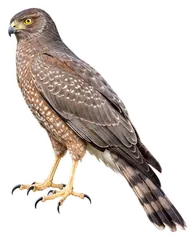 Spotted HarrierCircus assimilis
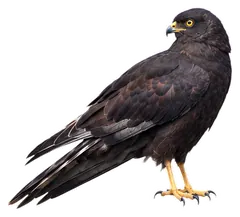 Black HarrierCircus maurus
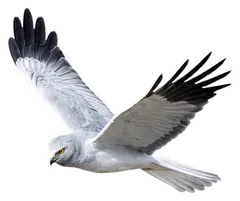 Hen HarrierCircus cyaneus
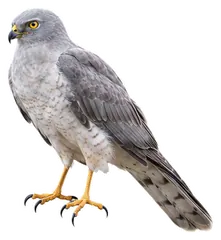 Northern HarrierCircus hudsonius
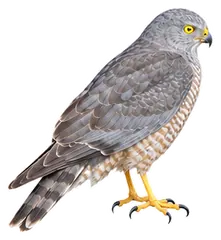 Cinereous HarrierCircus cinereus
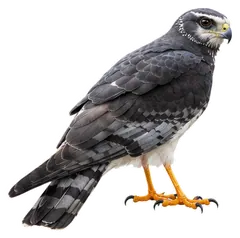 Long-winged HarrierCircus buffoni
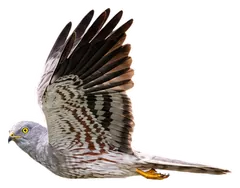 Montagu's HarrierCircus pygargus
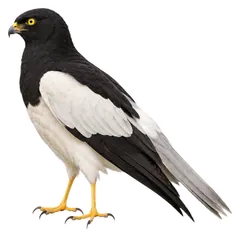 Pied HarrierCircus melanoleucos
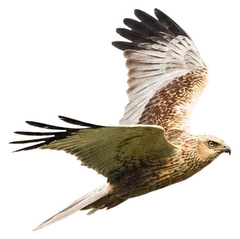 Western Marsh HarrierCircus aeruginosus
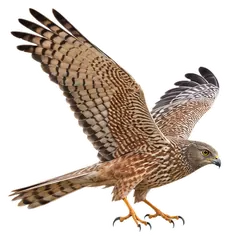 African Marsh HarrierCircus ranivorus
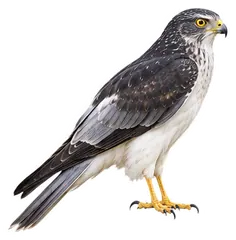 Eastern Marsh HarrierCircus spilonotus
 Papuan HarrierCircus spilothorax
Download illustration
Free to use with credit: “Illustration: Bird Album (birdalbum.com)”. Drawn by AI from a reference photo by Анна Голубева. ↗
Heard it but can't see it? Mingji identifies birds by sound and photo, on your phone.