 Bird Album
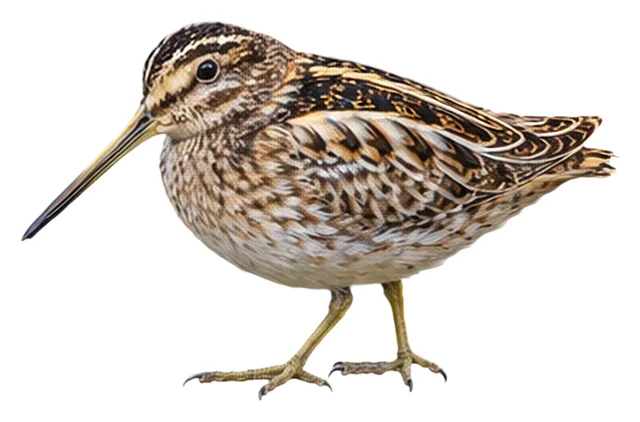
Jack Snipe
Lymnocryptes minimus (Brünnich, 1764)
18–25 cmLength40 cmWingspan50 gWeight
This small, stocky wader constantly bounces its body up and down as if on a spring.
Busiest months: October · Most records: United Kingdom, Spain, United Arab Emirates
How to identify
Field marks
- Upperparts mottled rufous; underparts paler
- One dark eyestripe through the eye
- No central crown stripe; two pale lateral crown stripes
- Wingtips narrow; yellow back markings visible in flight.
Voice
During aerial courtship displays it makes a sound like a galloping horse; silent in winter.
Where and when it's recorded

Jack Snipe has been recorded at 756 of the 8,171 birding hotspots we track, in 74 countries and regions.
Records by month Northern Hemisphere
Where it's recorded most
- Private estate near Green MubazzarahUnited Arab Emirates1,240 records
- St Mary'sUnited Kingdom474 records
- Beddington FarmlandsUnited Kingdom454 records
More places
- Fair IsleUnited Kingdom436 records
- WWT London Wetland CentreUnited Kingdom374 records
- HelgolandGermany348 records
- Poleg MarshIsrael296 records
- Titchwell Marsh RSPB ReserveUnited Kingdom249 records
- Spurn Bird Observatory Recording AreaUnited Kingdom246 records
- St. Paul IslandUnited States200 records
Countries and regions with the most records
eBird records via GBIF up to 2024-12-31. A record means someone listed it; more records partly mean more birders, not more birds.
About
The jack snipe or jacksnipe (Lymnocryptes minimus) is a small stocky wader. It is the smallest snipe, and the only member of the genus Lymnocryptes. Features such as its sternum and its continuous 'bobbing up and down' make it quite distinct from other snipes or woodcocks.
Excerpt from Wikipedia, CC BY-SA 4.0 · authors · Read more on Wikipedia
Questions
How big is the Jack Snipe?
The Jack Snipe is about 18–25 cm long, with a wingspan of 40 cm and weighs around 50 g.
Where does the Jack Snipe live?
Its breeding range: Palearctic: subarctic to temperate taiga wetlands of northern Palearctic: Scandinavia and northeastern Poland to eastern Sakha Republic (east-central Siberia). It is most often recorded in United Kingdom, Spain and United Arab Emirates.
When is the best time to see the Jack Snipe?
At the hotspots we track, it is recorded most in October (Northern Hemisphere).
Is the Jack Snipe endangered?
The IUCN Red List classifies the Jack Snipe as Least Concern.
What does the Jack Snipe eat?
Main food: Fish, shrimp & shellfish.
What family is the Jack Snipe in?
It belongs to the family Sandpipers, Snipes (Scolopacidae), order Charadriiformes.
At a glance
- Length
- 18–25 cm
- Wingspan
- 40 cm
- Weight
- 50 g
- Habitat
- Wetland
- Diet
- Fish, shrimp & shellfish
- Lifestyle
- Active on the ground
- Migration
- Migratory
- Conservation
- Least Concern
More measurements
- Wing
- 106 mm
- Tail
- 49 mm
- Bill
- 43 mm
- Tarsus
- 23 mm
Averages from the AVONET dataset; length from field guides where available.
Range
Palearctic: subarctic to temperate taiga wetlands of northern Palearctic: Scandinavia and northeastern Poland to eastern Sakha Republic (east-central Siberia)
Breeding range, IOC World Bird List 15.2
Classification
- Order
- Charadriiformes
- Family
- Sandpipers, Snipes Scolopacidae
- Genus
- Lymnocryptes
More from the family Sandpipers, Snipes
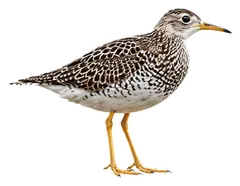 Upland SandpiperBartramia longicauda
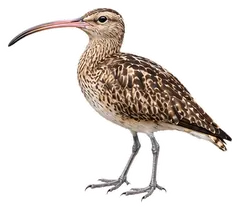 Bristle-thighed CurlewNumenius tahitiensis
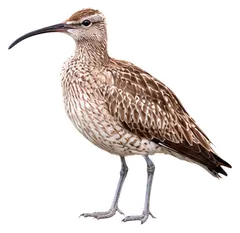 Eurasian WhimbrelNumenius phaeopus
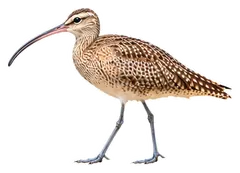 Hudsonian WhimbrelNumenius hudsonicus
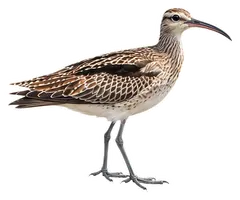 Little CurlewNumenius minutus
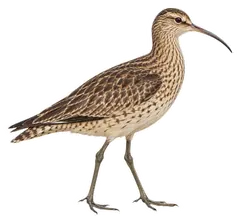 Eskimo CurlewNumenius borealis
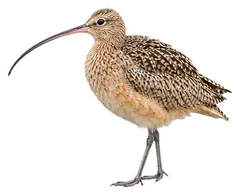 Long-billed CurlewNumenius americanus
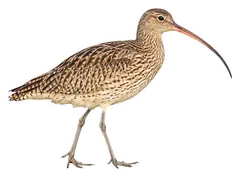 Far Eastern CurlewNumenius madagascariensis
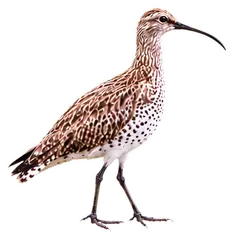 Slender-billed CurlewNumenius tenuirostris
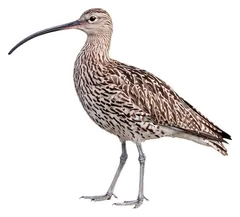 Eurasian CurlewNumenius arquata
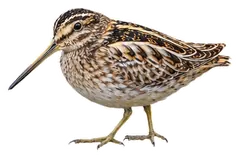
Download illustration
Free to use with credit: “Illustration: Bird Album (birdalbum.com)”. Drawn by AI from a reference photo by Dûrzan cîrano. ↗

Heard it but can't see it? Mingji identifies birds by sound and photo, on your phone.