 Bird Album
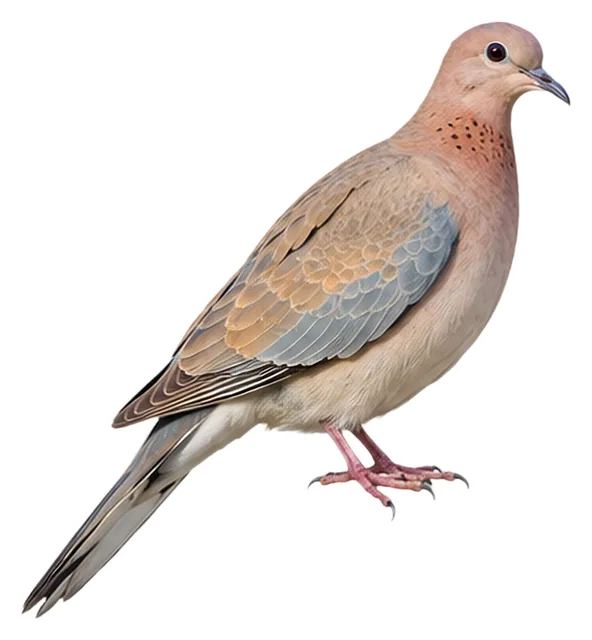
Laughing Dove
Spilopelia senegalensis (Linnaeus, 1766)
25 cmLength82 gWeight
It is a small, slender dove with a long tail and reddish-brown and gray checks on the side of the neck.
Busiest months: February–March and October–November · Most records: India, Israel, South Africa
Looks like Spotted Dove
How to identify
Field marks
- Side of neck checkered reddish-brown and gray
- Head and neck tinged lilac; underparts pinkish-brown
- A single blue-gray band on wing
- Outer tail feathers tipped white
Male, female and young
Sexes cannot be distinguished in the field; juvenile lacks the checkered neck patches.
Voice
A low, rolling “croo-doo-doo-doo-doo”, rising and falling in volume; described as more musical than the calls of most doves.
Similar species
Where and when it's recorded

Laughing Dove has been recorded at 993 of the 8,171 birding hotspots we track, in 81 countries and regions.
Records by month Northern Hemisphere
Where it's recorded most
- International Birding and Research Center Eilat (IBRCE)Israel5,669 records
- Jerusalem Bird ObservatoryIsrael5,232 records
- Bharatpur – Keoladeo Ghana NPIndia3,734 records
More places
- Private estate near Green MubazzarahUnited Arab Emirates3,242 records
- Vetal Tekdi/HillIndia3,172 records
- Gazelle ValleyIsrael2,894 records
- Eilat – KM20 Flamingo Pools 20Israel2,397 records
- Herdsman LakeAustralia1,993 records
- Fergusson College CampusIndia1,806 records
- Mushrif Palace GardensUnited Arab Emirates1,782 records
Countries and regions with the most records
eBird records via GBIF up to 2024-12-31. A record means someone listed it; more records partly mean more birders, not more birds.
About
The laughing dove (Spilopelia senegalensis) is a small pigeon that is a resident breeder in Africa, the Middle East, South Asia, and Western Australia where it has established itself in the wild after being released from Perth Zoo in 1898. This small long-tailed dove is found in dry scrub and semi-desert habitats where pairs can often be seen feeding on the ground.
Excerpt from Wikipedia, CC BY-SA 4.0 · authors · Read more on Wikipedia
Questions
How big is the Laughing Dove?
The Laughing Dove is about 25 cm long and weighs around 82 g.
Where does the Laughing Dove live?
Its breeding range: Africa, Palearctic, Oriental: India and Central Asia to southern Arabian Peninsula and Africa. It is most often recorded in India, Israel and South Africa.
When is the best time to see the Laughing Dove?
At the hotspots we track, it is recorded most in February, March, October and November (Northern Hemisphere).
Is the Laughing Dove endangered?
The IUCN Red List classifies the Laughing Dove as Least Concern.
What does the Laughing Dove eat?
Main food: Seeds.
What family is the Laughing Dove in?
It belongs to the family Pigeons, Doves (Columbidae), order Columbiformes.
At a glance
- Length
- 25 cm
- Weight
- 82 g
- Habitat
- Woodland
- Diet
- Seeds
- Lifestyle
- Active on the ground
- Migration
- Resident (barely migrates)
- Conservation
- Least Concern
More measurements
- Wing
- 132 mm
- Tail
- 108 mm
- Bill
- 18 mm
- Tarsus
- 19 mm
Averages from the AVONET dataset; length from field guides where available.
Range
Africa, Palearctic, Oriental: India and Central Asia to southern Arabian Peninsula and Africa
Breeding range, IOC World Bird List 15.2
Subspecies · 1
- Spilopelia senegalensis ermanni Kazakhstan, n Afghanistan, w China
Classification
- Order
- Columbiformes
- Family
- Pigeons, Doves Columbidae
- Genus
- Spilopelia
Other birds in the genus Spilopelia
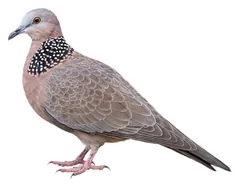 Spotted DoveSpilopelia chinensis
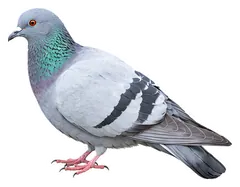 Rock DoveColumba livia
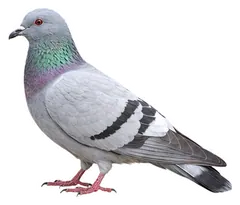 Hill PigeonColumba rupestris
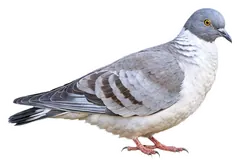 Snow PigeonColumba leuconota
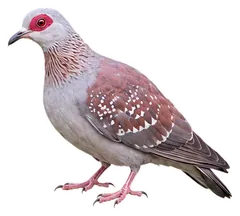 Speckled PigeonColumba guinea
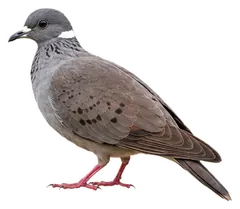 White-collared PigeonColumba albitorques
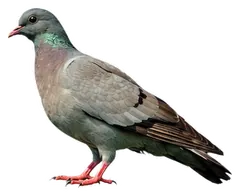 Stock DoveColumba oenas
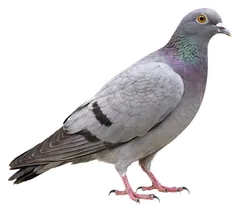 Yellow-eyed PigeonColumba eversmanni
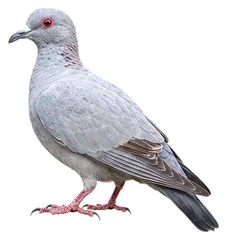 Somali PigeonColumba oliviae
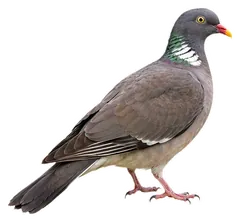 Common Wood PigeonColumba palumbus
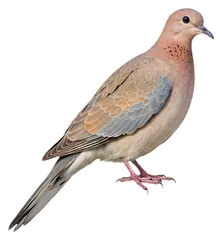
Download illustration
Free to use with credit: “Illustration: Bird Album (birdalbum.com)”. Drawn by AI from a reference photo by fahoodie1852. ↗
Heard it but can't see it? Mingji identifies birds by sound and photo, on your phone.