Spotted Dove
Spilopelia chinensis (Scopoli, 1786)
≈29 cmLength159 gWeight
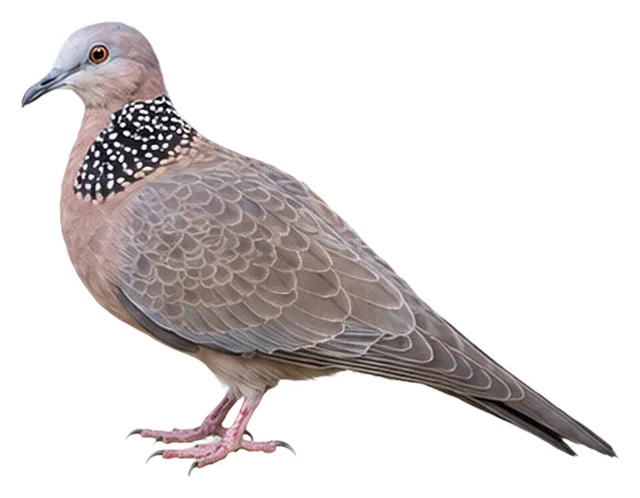
Its black nape is dotted white like a string of pearls, and its tail is relatively long.
Busiest months: December–February · Most records: China, India, Australia
How to identify
Field marks
- Nape black, covered in small white spots
- Tail relatively long, black along outer edges and white at tip
- Back and wings gray-brown; underparts rose-buff
- Bill dark brown; legs and feet red
Male, female and young
Sexes similar; juvenile is duller than adult and develops the neck spots only at maturity.
Voice
Low cooing with stress toward the end, in groups of three or four notes, with the third note drawn out in the four-note version.
Where and when it's recorded
Busiest months: December–February · Most records: China, India, Australia

Spotted Dove has been recorded at 2,639 of the 8,276 birding hotspots we track, in 25 countries and regions.
Records by month Northern Hemisphere
Where it's recorded most
- GKVK CampusIndia13,047 records
- Kanha NP – Mukki ZoneIndia5,680 records
- Kerala Agricultural UniversityIndia4,746 records
More places
- Royal ParkAustralia4,306 records
- Saul Kere / Sowl KereIndia4,214 records
- Mai Po Nature ReserveHong Kong (China)4,018 records
- Royal Botanic Gardens MelbourneAustralia3,759 records
- Singapore Botanic GardensSingapore3,687 records
- Huajiang IBA – Huajiang Wild Duck Nature Park (Huajiang to Zhongxing Bridge)Taiwan (China)3,633 records
- Oxley Creek CommonAustralia3,465 records
Countries and regions with the most records
eBird records via GBIF up to 2024-12-31. A record means someone listed it; more records partly mean more birders, not more birds.
About
The spotted dove or eastern spotted dove (Spilopelia chinensis) is a small and somewhat long-tailed pigeon that is a common resident breeding bird across its native range on the Indian subcontinent and in East and Southeast Asia. The species has been introduced to many parts of the world and feral populations have become established.
Excerpt from Wikipedia, CC BY-SA 4.0 · authors · Read more on Wikipedia
Questions
How big is the Spotted Dove?
The Spotted Dove is about ≈29 cm long and weighs around 159 g.
Where does the Spotted Dove live?
Its breeding range: Oriental: widespread. It is most often recorded in China, India and Australia.
When is the best time to see the Spotted Dove?
At the hotspots we track, it is recorded most in January, February and December (Northern Hemisphere).
Is the Spotted Dove endangered?
The IUCN Red List classifies the Spotted Dove as Least Concern.
What does the Spotted Dove eat?
Main food: Seeds.
What family is the Spotted Dove in?
It belongs to the family Pigeons, Doves (Columbidae), order Columbiformes.
At a glance
- Length
- ≈29 cm
- Weight
- 159 g
- Habitat
- Woodland
- Diet
- Seeds
- Lifestyle
- Active on the ground
- Migration
- Resident (barely migrates)
- Conservation
- Least Concern
More measurements
- Wing
- 139 mm
- Tail
- 127 mm
- Bill
- 20 mm
- Tarsus
- 20 mm
Averages from the AVONET dataset; length from field guides where available.
Range
Oriental: widespread
Breeding range, IOC World Bird List 15.2
Subspecies · 2
- Spilopelia chinensis chinensis ne Myanmar to c, e China and Taiwan (China)
- Spilopelia chinensis hainana Hainan (off se China)
Classification
- Order
- Columbiformes
- Family
- Pigeons, Doves Columbidae
- Genus
- Spilopelia
Other birds in the genus Spilopelia
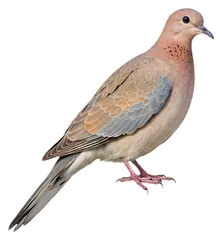 Laughing DoveSpilopelia senegalensis
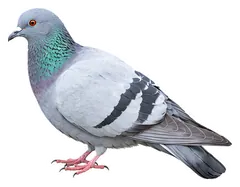 Rock DoveColumba livia
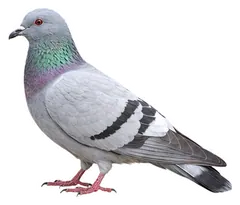 Hill PigeonColumba rupestris
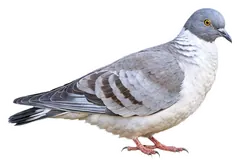 Snow PigeonColumba leuconota
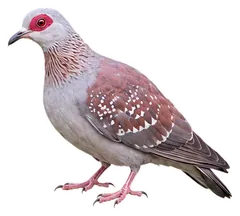 Speckled PigeonColumba guinea
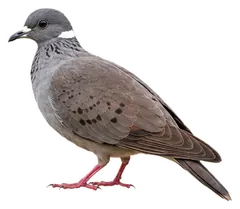 White-collared PigeonColumba albitorques
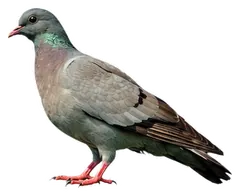 Stock DoveColumba oenas
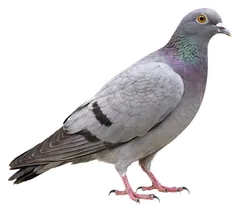 Yellow-eyed PigeonColumba eversmanni
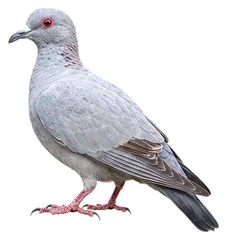 Somali PigeonColumba oliviae
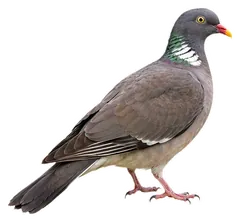 Common Wood PigeonColumba palumbus
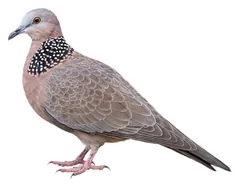
Download illustration
Free to use with credit: “Illustration: Bird Album (birdalbum.com)”. Drawn by AI from a reference photo by iNaturalist/zinogre. ↗

Heard it but can't see it? Mingji identifies birds by sound and photo, on your phone.