 Bird Album
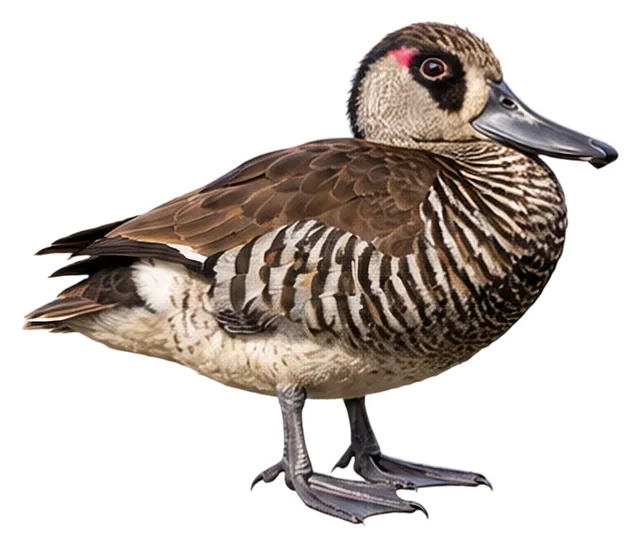
Pink-eared Duck
Malacorhynchus membranaceus (Latham, 1801)
373 gWeight
The pink-eared duck (Malacorhynchus membranaceus) is a species of duck found in Australia.
Busiest months: January · Most records: Australia, New Zealand
Where and when it's recorded
Busiest months: January · Most records: Australia, New Zealand

Pink-eared Duck has been recorded at 151 of the 8,276 birding hotspots we track, in 2 countries and regions.
Records by month Southern Hemisphere
Where it's recorded most
- Western Treatment PlantAustralia7,143 records
- Jerrabomberra Wetlands Nature ReserveAustralia3,769 records
- Alice Springs Sewage PondsAustralia2,097 records
More places
- Herdsman LakeAustralia2,092 records
- Banyule Flats ReserveAustralia1,604 records
- Lake GalletlyAustralia1,492 records
- Broome South Wastewater Treatment PlantAustralia1,399 records
- Hasties Swamp National ParkAustralia934 records
- Western Treatment Plant – T Section PondsAustralia861 records
- Fyshwick Sewage Treatment PlantAustralia848 records
Countries and regions with the most records
eBird records via GBIF up to 2024-12-31. A record means someone listed it; more records partly mean more birders, not more birds.
About
The pink-eared duck (Malacorhynchus membranaceus) is a species of duck found in Australia.
Excerpt from Wikipedia, CC BY-SA 4.0 · authors · Read more on Wikipedia
Questions
How big is the Pink-eared Duck?
The Pink-eared Duck weighs around 373 g.
Where does the Pink-eared Duck live?
Its breeding range: Australasia: Australia (except far northeastern, south-central, Tasmania). It is most often recorded in Australia and New Zealand.
When is the best time to see the Pink-eared Duck?
At the hotspots we track, it is recorded most in January (Southern Hemisphere).
Is the Pink-eared Duck endangered?
The IUCN Red List classifies the Pink-eared Duck as Least Concern.
What does the Pink-eared Duck eat?
Main food: Omnivore.
What family is the Pink-eared Duck in?
It belongs to the family Ducks, Geese, Swans (Anatidae), order Anseriformes.
At a glance
- Weight
- 373 g
- Habitat
- Wetland
- Diet
- Omnivore
- Lifestyle
- On the water surface
- Migration
- Partial migrant
- Conservation
- Least Concern
More measurements
- Wing
- 184 mm
- Tail
- 66 mm
- Bill
- 68 mm
- Tarsus
- 32 mm
Averages from the AVONET dataset; length from field guides where available.
Range
Australasia: Australia (except far northeastern, south-central, Tasmania)
Breeding range, IOC World Bird List 15.2
Classification
- Order
- Anseriformes
- Family
- Ducks, Geese, Swans Anatidae
- Genus
- Malacorhynchus
More from the family Ducks, Geese, Swans
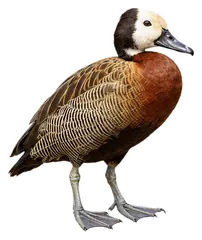 White-faced Whistling DuckDendrocygna viduata
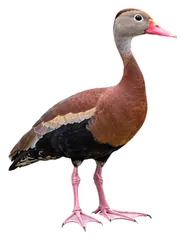 Black-bellied Whistling DuckDendrocygna autumnalis
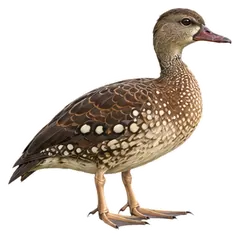 Spotted Whistling DuckDendrocygna guttata
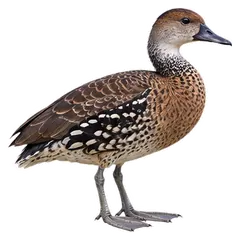 West Indian Whistling DuckDendrocygna arborea
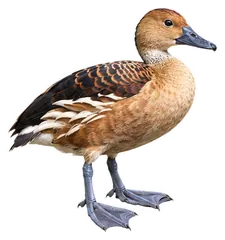 Fulvous Whistling DuckDendrocygna bicolor
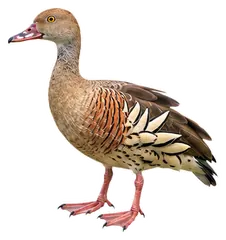 Plumed Whistling DuckDendrocygna eytoni
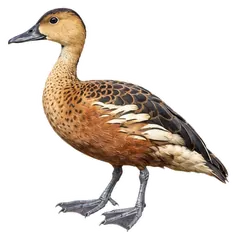 Wandering Whistling DuckDendrocygna arcuata
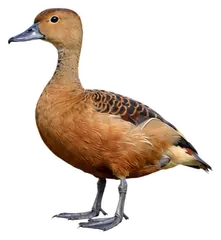 Lesser Whistling DuckDendrocygna javanica
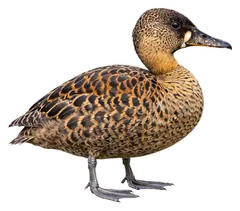 White-backed DuckThalassornis leuconotus
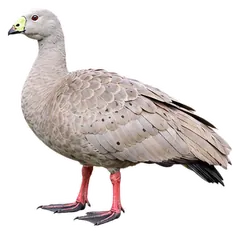 Cape Barren GooseCereopsis novaehollandiae
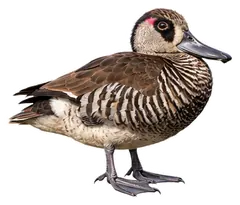
Download illustration
Free to use with credit: “Illustration: Bird Album (birdalbum.com)”. Drawn by AI from a reference photo by peterviragphoto. ↗
Heard it but can't see it? Mingji identifies birds by sound and photo, on your phone.