 Bird Album
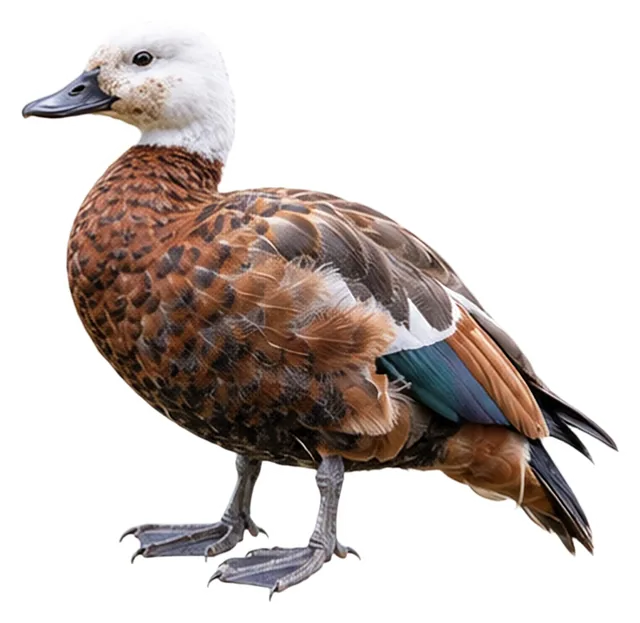
Paradise Shelduck
Tadorna variegata (Gmelin, JF, 1789)
1.5 kgWeight
The paradise shelduck (Tadorna variegata), also known as the paradise duck, or pūtangitangi in Māori, is a species of shelduck, a group of goose-like ducks, which is endemic to New Zealand.
Busiest months: November · Most records: New Zealand, Australia
Where and when it's recorded
Busiest months: November · Most records: New Zealand, Australia

Paradise Shelduck has been recorded at 116 of the 8,276 birding hotspots we track, in 2 countries and regions.
Records by month Southern Hemisphere
Where it's recorded most
- Zealandia Te Mara a Tane Wildlife SanctuaryNew Zealand833 records
- Christchurch – Botanic GardensNew Zealand769 records
- Tawharanui Regional ParkNew Zealand714 records
More places
- Mangere WTP – Puketutu CanalNew Zealand598 records
- Lake ElterwaterNew Zealand577 records
- Dunedin – Tomahawk LagoonNew Zealand550 records
- St Anne's Lagoon/Mata KopaeNew Zealand468 records
- Christchurch – Travis Wetland/ŌruapaeroaNew Zealand459 records
- Travis Wetland – New PondNew Zealand441 records
- Stewart Island – Oban & Halfmoon BayNew Zealand439 records
Countries and regions with the most records
eBird records via GBIF up to 2024-12-31. A record means someone listed it; more records partly mean more birders, not more birds.
About
The paradise shelduck (Tadorna variegata), also known as the paradise duck, or pūtangitangi in Māori, is a species of shelduck, a group of goose-like ducks, which is endemic to New Zealand. Johann Friedrich Gmelin placed it in the genus Anas with the ducks, geese, and swans. Both the male and female have striking plumages: the male has a black head and barred black body and the female has a white head with a chestnut body.
Excerpt from Wikipedia, CC BY-SA 4.0 · authors · Read more on Wikipedia
Questions
How big is the Paradise Shelduck?
The Paradise Shelduck weighs around 1.5 kg.
Where does the Paradise Shelduck live?
Its breeding range: Australasia: North, South, Stewart and satellites (New Zealand). It is most often recorded in New Zealand and Australia.
When is the best time to see the Paradise Shelduck?
At the hotspots we track, it is recorded most in November (Southern Hemisphere).
Is the Paradise Shelduck endangered?
The IUCN Red List classifies the Paradise Shelduck as Least Concern.
What does the Paradise Shelduck eat?
Main food: Omnivore.
What family is the Paradise Shelduck in?
It belongs to the family Ducks, Geese, Swans (Anatidae), order Anseriformes.
At a glance
- Weight
- 1.5 kg
- Habitat
- Grassland
- Diet
- Omnivore
- Lifestyle
- Active on the ground
- Migration
- Partial migrant
- Conservation
- Least Concern
More measurements
- Wing
- 351 mm
- Tail
- 131 mm
- Bill
- 49 mm
- Tarsus
- 61 mm
Averages from the AVONET dataset; length from field guides where available.
Range
Australasia: North, South, Stewart and satellites (New Zealand)
Breeding range, IOC World Bird List 15.2
Classification
- Order
- Anseriformes
- Family
- Ducks, Geese, Swans Anatidae
- Genus
- Tadorna
Other birds in the genus Tadorna
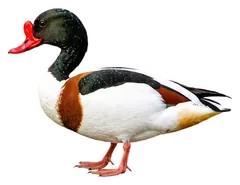 Common ShelduckTadorna tadorna
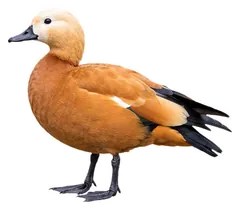 Ruddy ShelduckTadorna ferruginea
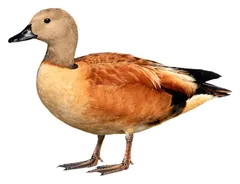 South African ShelduckTadorna cana
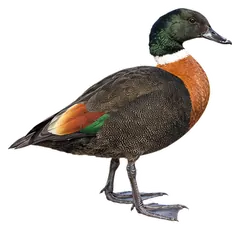 Australian ShelduckTadorna tadornoides
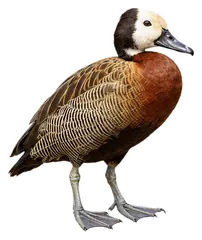 White-faced Whistling DuckDendrocygna viduata
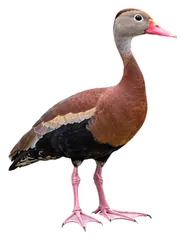 Black-bellied Whistling DuckDendrocygna autumnalis
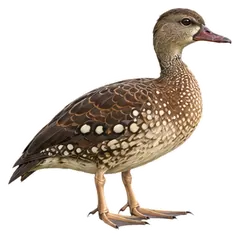 Spotted Whistling DuckDendrocygna guttata
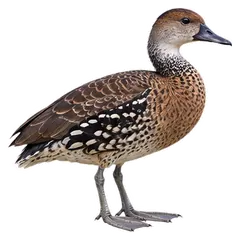 West Indian Whistling DuckDendrocygna arborea
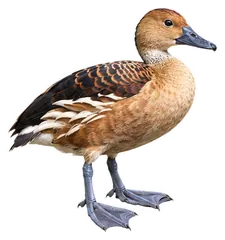 Fulvous Whistling DuckDendrocygna bicolor
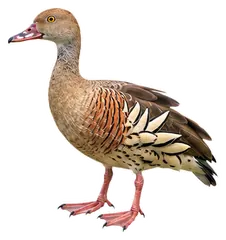 Plumed Whistling DuckDendrocygna eytoni
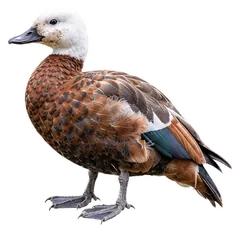
Download illustration
Free to use with credit: “Illustration: Bird Album (birdalbum.com)”. Drawn by AI from a reference photo by Samuel Amaris. ↗
Heard it but can't see it? Mingji identifies birds by sound and photo, on your phone.