 Bird Album
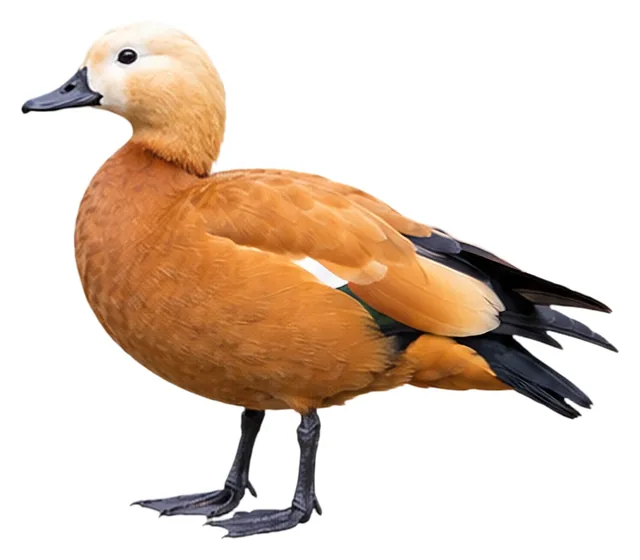
Ruddy Shelduck
Tadorna ferruginea (Pallas, 1764)
58–70 cmLength130 cmWingspan1.2 kgWeight
This large duck is orange-yellow overall, with conspicuous white, yellow and green wings in flight.
Busiest months: December–March · Most records: India, China, Spain
How to identify
Field marks
- Orange-yellow overall, with a paler, whitish head
- Tail feathers, uppertail-coverts and primaries black
- Tips of secondaries deep green, forming a green speculum
- Bill black, legs and feet dark gray to blackish
Male, female and young
Male in the breeding season has a narrow black collar; female has a whitish head and neck without a black collar; juvenile resembles female, but is darker brown.
Voice
A series of loud, nasal calls, with an audible difference between the sexes.
Where and when it's recorded

Ruddy Shelduck has been recorded at 1,480 of the 8,171 birding hotspots we track, in 71 countries and regions.
Records by month Northern Hemisphere
Where it's recorded most
- Bharatpur – Keoladeo Ghana NPIndia2,350 records
- Aras Kuş Halkalama İstasyonuTürkiye1,745 records
- Shahe ReservoirChina1,389 records
More places
- Klingnauer StauseeSwitzerland1,223 records
- Emb. Santillana – antigua crtaSpain1,106 records
- Gajoldoba Barrage JGIndia1,060 records
- Maguri BeelIndia939 records
- Mogan Gölü Sel KapanıTürkiye812 records
- Asan Conservation ReserveIndia799 records
- Chilika Lake – MangalajodiIndia797 records
Countries and regions with the most records
eBird records via GBIF up to 2024-12-31. A record means someone listed it; more records partly mean more birders, not more birds.
About
The ruddy shelduck (Tadorna ferruginea) is a bird species in the family Anatidae. It is a migratory bird, wintering in the Indian subcontinent and breeding in southeastern Europe and central Asia, though there are small resident populations in North Africa. It has a loud honking call.
Excerpt from Wikipedia, CC BY-SA 4.0 · authors · Read more on Wikipedia
Questions
How big is the Ruddy Shelduck?
The Ruddy Shelduck is about 58–70 cm long, with a wingspan of 130 cm and weighs around 1.2 kg.
Where does the Ruddy Shelduck live?
Its breeding range: Palearctic, Africa: southern Europe to Central Asia, northwestern Africa and Ethiopia. It is most often recorded in India, China and Spain.
When is the best time to see the Ruddy Shelduck?
At the hotspots we track, it is recorded most in January, February, March and December (Northern Hemisphere).
Is the Ruddy Shelduck endangered?
The IUCN Red List classifies the Ruddy Shelduck as Least Concern.
What does the Ruddy Shelduck eat?
Main food: Omnivore.
What family is the Ruddy Shelduck in?
It belongs to the family Ducks, Geese, Swans (Anatidae), order Anseriformes.
At a glance
- Length
- 58–70 cm
- Wingspan
- 130 cm
- Weight
- 1.2 kg
- Habitat
- Wetland
- Diet
- Omnivore
- Lifestyle
- Active on the ground
- Migration
- Partial migrant
- Conservation
- Least Concern
More measurements
- Wing
- 356 mm
- Tail
- 125 mm
- Bill
- 47 mm
- Tarsus
- 54 mm
Averages from the AVONET dataset; length from field guides where available.
Range
Palearctic, Africa: southern Europe to Central Asia, northwestern Africa and Ethiopia
Breeding range, IOC World Bird List 15.2
Classification
- Order
- Anseriformes
- Family
- Ducks, Geese, Swans Anatidae
- Genus
- Tadorna
Other birds in the genus Tadorna
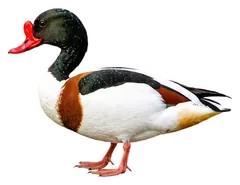 Common ShelduckTadorna tadorna
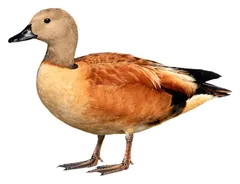 South African ShelduckTadorna cana
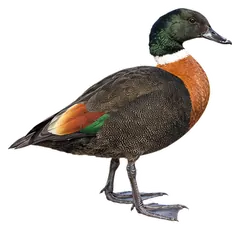 Australian ShelduckTadorna tadornoides
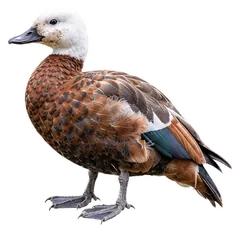 Paradise ShelduckTadorna variegata
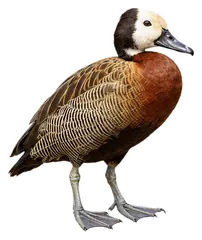 White-faced Whistling DuckDendrocygna viduata
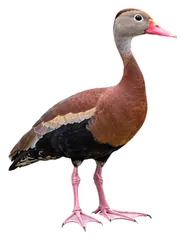 Black-bellied Whistling DuckDendrocygna autumnalis
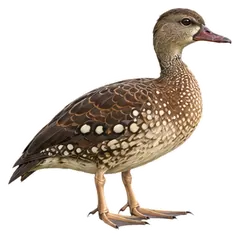 Spotted Whistling DuckDendrocygna guttata
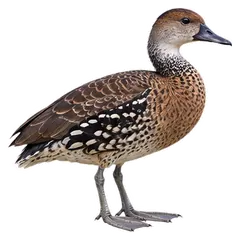 West Indian Whistling DuckDendrocygna arborea
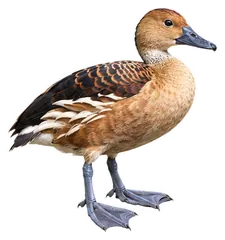 Fulvous Whistling DuckDendrocygna bicolor
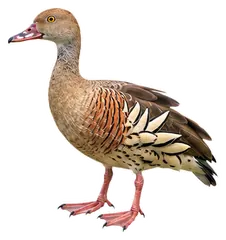 Plumed Whistling DuckDendrocygna eytoni
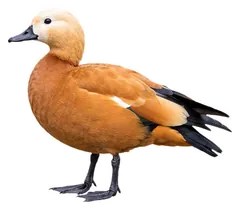
Download illustration
Free to use with credit: “Illustration: Bird Album (birdalbum.com)”. Drawn by AI from a reference photo by Original: Rohit Sharma, this edit: MPF. ↗

Heard it but can't see it? Mingji identifies birds by sound and photo, on your phone.