 Bird Album
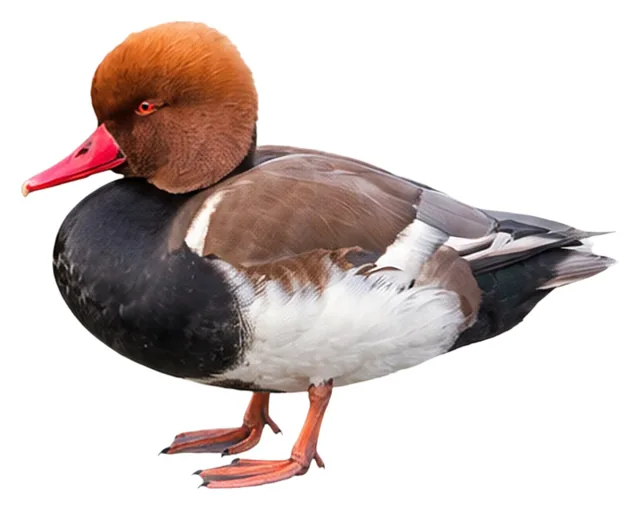
Red-crested Pochard
Netta rufina (Pallas, 1773)
≈47 cmLength87 cmWingspan1.1 kgWeight
The male is distinctive with a round orange head, red bill and black breast.
Busiest months: April–May · Most records: Spain, United Kingdom, India
How to identify
Field marks
- Male has a round, orange head
- Male has a red bill
- Male has a black breast and white flanks
- Male has a rufous back and black tail
Male, female and young
Female pale rufous with a darker back and crown, and whitish face; molting male resembles female, but has a red bill.
Voice
Male gives a wheezing “veht”; female gives a series of harsh “vrah-vrah-vrah” calls.
Where and when it's recorded
Busiest months: April–May · Most records: Spain, United Kingdom, India

Red-crested Pochard has been recorded at 1,035 of the 8,276 birding hotspots we track, in 79 countries and regions.
Records by month Northern Hemisphere
Where it's recorded most
- Marjal dels Moros – ÁreaSpain1,721 records
- Laguna de la VeguillaSpain1,661 records
- Dehesa de AbajoSpain1,571 records
More places
- Amwell HMWT NRUnited Kingdom1,435 records
- Balsa de Zolina/EzkorizSpain1,336 records
- L'Albufera PNat – El Raco de l'OllaSpain1,253 records
- Bharatpur – Keoladeo Ghana NPIndia1,203 records
- WagbachniederungGermany1,033 records
- Laguna de Pitillas RN – AreaSpain1,016 records
- El Hondo PNat – Centro de VisitantesSpain979 records
Countries and regions with the most records
eBird records via GBIF up to 2024-12-31. A record means someone listed it; more records partly mean more birders, not more birds.
About
The red-crested pochard (Netta rufina) is a large diving duck. The scientific name is derived from Greek Netta "duck", and Latin rufina, "golden-red" (from rufus, "ruddy"). Its breeding habitat is lowland marshes and lakes in southern Europe and it extends from the steppe and semi-desert areas on the Black Sea to Central Asia and Mongolia, wintering in the Indian subcontinent and Africa.
Excerpt from Wikipedia, CC BY-SA 4.0 · authors · Read more on Wikipedia
Questions
How big is the Red-crested Pochard?
The Red-crested Pochard is about ≈47 cm long, with a wingspan of 87 cm and weighs around 1.1 kg.
Where does the Red-crested Pochard live?
Its breeding range: Palearctic: central, southern Europe to northern China. It is most often recorded in Spain, United Kingdom and India.
When is the best time to see the Red-crested Pochard?
At the hotspots we track, it is recorded most in April and May (Northern Hemisphere).
Is the Red-crested Pochard endangered?
The IUCN Red List classifies the Red-crested Pochard as Least Concern.
What does the Red-crested Pochard eat?
Main food: Aquatic plants.
What family is the Red-crested Pochard in?
It belongs to the family Ducks, Geese, Swans (Anatidae), order Anseriformes.
At a glance
- Length
- ≈47 cm
- Wingspan
- 87 cm
- Weight
- 1.1 kg
- Habitat
- Wetland
- Diet
- Aquatic plants
- Lifestyle
- On the water surface
- Migration
- Partial migrant
- Conservation
- Least Concern
More measurements
- Wing
- 258 mm
- Tail
- 69 mm
- Bill
- 50 mm
- Tarsus
- 37 mm
Averages from the AVONET dataset; length from field guides where available.
Range
Palearctic: central, southern Europe to northern China
Breeding range, IOC World Bird List 15.2
Classification
- Order
- Anseriformes
- Family
- Ducks, Geese, Swans Anatidae
- Genus
- Netta
Other birds in the genus Netta
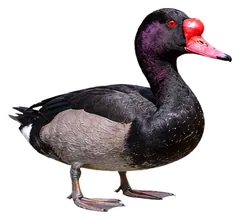 Rosy-billed PochardNetta peposaca
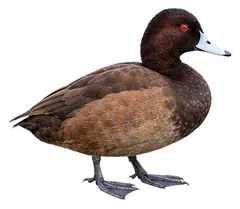 Southern PochardNetta erythrophthalma
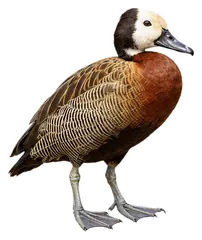 White-faced Whistling DuckDendrocygna viduata
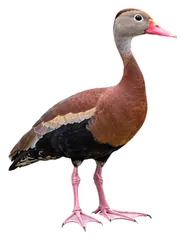 Black-bellied Whistling DuckDendrocygna autumnalis
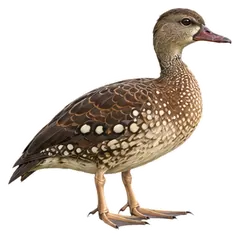 Spotted Whistling DuckDendrocygna guttata
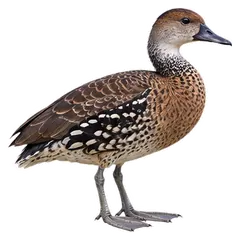 West Indian Whistling DuckDendrocygna arborea
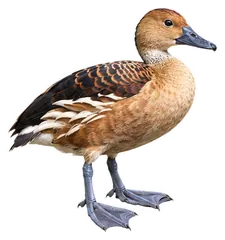 Fulvous Whistling DuckDendrocygna bicolor
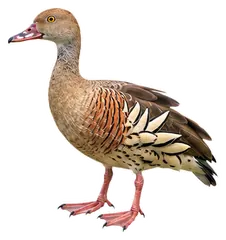 Plumed Whistling DuckDendrocygna eytoni
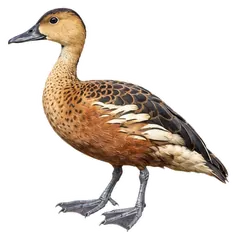 Wandering Whistling DuckDendrocygna arcuata
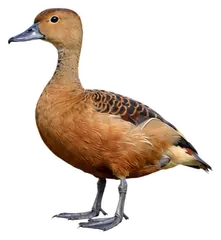 Lesser Whistling DuckDendrocygna javanica
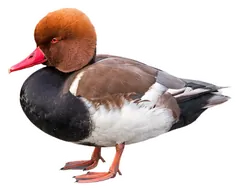
Download illustration
Free to use with credit: “Illustration: Bird Album (birdalbum.com)”. Drawn by AI from a reference photo by Diliff. ↗

Heard it but can't see it? Mingji identifies birds by sound and photo, on your phone.