 Bird Album
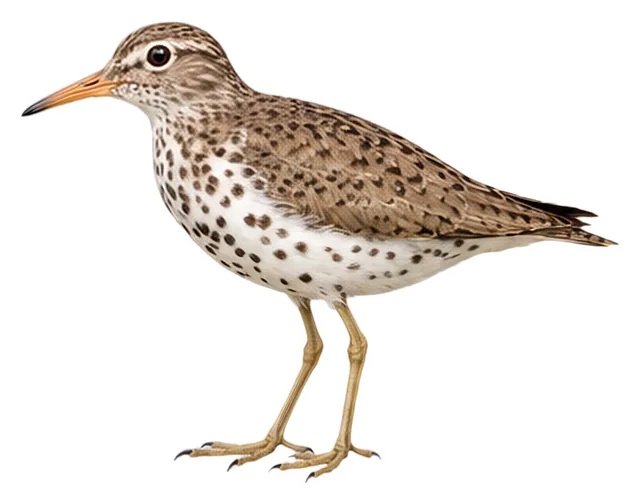
Spotted Sandpiper
Actitis macularius (Linnaeus, 1766)
18–20 cmLength40 gWeight
The spotted sandpiper (Actitis macularius) is a small shorebird.
Busiest months: May · Most records: United States, Canada, Costa Rica
Where and when it's recorded

Spotted Sandpiper has been recorded at 1,861 of the 8,171 birding hotspots we track, in 69 countries and regions.
Records by month Northern Hemisphere
Where it's recorded most
- Hornsby BendUnited States12,750 records
- Estero Llano Grande SP WBCUnited States12,721 records
- Montrose Point Bird Sanctuary, Lincoln Park, ChicagoUnited States11,686 records
More places
- Frank G. Bonelli RP/Puddingstone Reservoir and vicinityUnited States7,869 records
- Mitchell Lake Audubon CenterUnited States7,690 records
- IRWD San Joaquin Marsh & Wildlife Sanctuary, IrvineUnited States6,430 records
- Canoa Ranch Conservation ParkUnited States6,245 records
- Willcox – Lake Cochise and Twin Lakes Golf CourseUnited States6,225 records
- South Padre Is. – Birding and Nature CenterUnited States6,186 records
- Tommy Thompson ParkCanada5,834 records
Countries and regions with the most records
eBird records via GBIF up to 2024-12-31. A record means someone listed it; more records partly mean more birders, not more birds.
About
The spotted sandpiper (Actitis macularius) is a small shorebird. Together with its sister species the common sandpiper (A. hypoleucos), it makes up the genus Actitis. They replace each other geographically; stray birds may settle down with breeders of the other species and hybridize.
Excerpt from Wikipedia, CC BY-SA 4.0 · authors · Read more on Wikipedia
Questions
How big is the Spotted Sandpiper?
The Spotted Sandpiper is about 18–20 cm long and weighs around 40 g.
Where does the Spotted Sandpiper live?
Its breeding range: North America: widespread, low Arctic to temperate inland waterbody margins of Nearctic: Aleutian Islands, Alaska mainland except North Slope, Canada (except far northern and Arctic Archipelago) to Newfoundland, south to southwestern, east-central USA. It is most often recorded in United States, Canada and Costa Rica.
When is the best time to see the Spotted Sandpiper?
At the hotspots we track, it is recorded most in May (Northern Hemisphere).
Is the Spotted Sandpiper endangered?
The IUCN Red List classifies the Spotted Sandpiper as Least Concern.
What does the Spotted Sandpiper eat?
Main food: Fish, shrimp & shellfish.
What family is the Spotted Sandpiper in?
It belongs to the family Sandpipers, Snipes (Scolopacidae), order Charadriiformes.
At a glance
- Length
- 18–20 cm
- Weight
- 40 g
- Habitat
- Wetland
- Diet
- Fish, shrimp & shellfish
- Lifestyle
- Active on the ground
- Migration
- Migratory
- Conservation
- Least Concern
More measurements
- Wing
- 100 mm
- Tail
- 53 mm
- Bill
- 26 mm
- Tarsus
- 24 mm
Averages from the AVONET dataset; length from field guides where available.
Range
North America: widespread, low Arctic to temperate inland waterbody margins of Nearctic: Aleutian Islands, Alaska mainland except North Slope, Canada (except far northern and Arctic Archipelago) to Newfoundland, south to southwestern, east-central USA
Breeding range, IOC World Bird List 15.2
Classification
- Order
- Charadriiformes
- Family
- Sandpipers, Snipes Scolopacidae
- Genus
- Actitis
Other birds in the genus Actitis
 Common SandpiperActitis hypoleucos
 Upland SandpiperBartramia longicauda
 Bristle-thighed CurlewNumenius tahitiensis
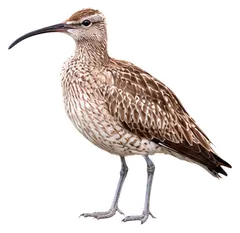 Eurasian WhimbrelNumenius phaeopus
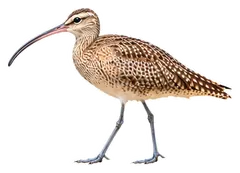 Hudsonian WhimbrelNumenius hudsonicus
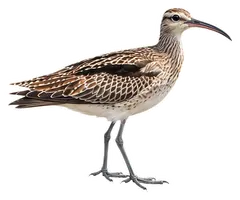 Little CurlewNumenius minutus
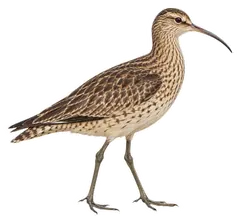 Eskimo CurlewNumenius borealis
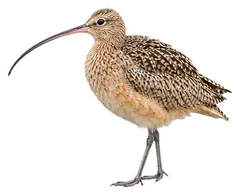 Long-billed CurlewNumenius americanus
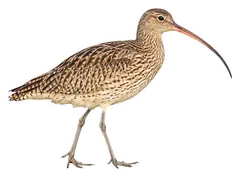 Far Eastern CurlewNumenius madagascariensis
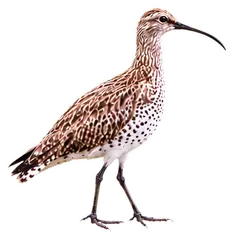 Slender-billed CurlewNumenius tenuirostris
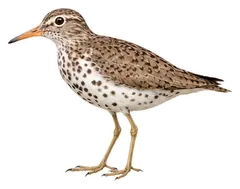
Download illustration
Free to use with credit: “Illustration: Bird Album (birdalbum.com)”. Drawn by AI from a reference photo by Jason Headley. ↗
Heard it but can't see it? Mingji identifies birds by sound and photo, on your phone.
In other languages
- EnglishSpotted Sandpiper
- 简体中文斑腹矶鹬
- 繁體中文斑鷸
- 日本語アメリカイソシギ
- DeutschDrosseluferläufer
- FrançaisChevalier grivelé
- EspañolAndarríos maculado
- Portuguêsmaçarico-pintado
- ItalianoPiro piro macchiato
- NederlandsAmerikaanse Oeverloper
- РусскийПятнистый перевозчик
- Svenskafläckdrillsnäppa
- DanskPlettet Mudderklire
- Polskibrodziec plamisty