 Bird Album
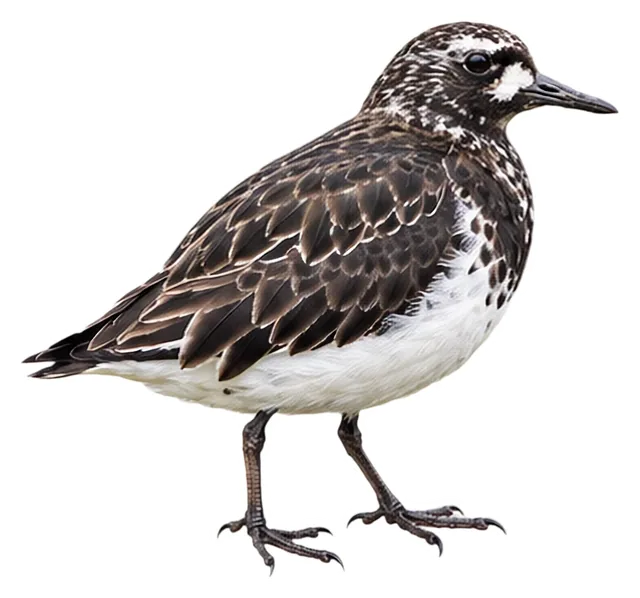
Black Turnstone
Arenaria melanocephala (Vigors, 1829)
22–25 cmLength126 gWeight
The black turnstone (Arenaria melanocephala) is a species of small wading bird.
Busiest months: September and November · Most records: United States, Canada, Mexico
Where and when it's recorded
Busiest months: September and November · Most records: United States, Canada, Mexico

Black Turnstone has been recorded at 83 of the 8,276 birding hotspots we track, in 3 countries and regions.
Records by month Northern Hemisphere
Where it's recorded most
- Southeast Farallon IslandUnited States16,609 records
- Pt. Pinos – seawatch onlyUnited States10,520 records
- Pillar Point HarborUnited States6,162 records
More places
- Clover PointCanada5,269 records
- Pt. PinosUnited States4,068 records
- Sooke – Whiffin Spit ParkCanada2,664 records
- Bodega Bay – harbor and immediate vicinityUnited States2,563 records
- Tsawwassen Ferry Terminal JettyCanada2,243 records
- Oak Bay – Cattle PointCanada2,078 records
- Neah Bay – town and bay onlyUnited States1,760 records
Countries and regions with the most records
eBird records via GBIF up to 2024-12-31. A record means someone listed it; more records partly mean more birders, not more birds.
About
The black turnstone (Arenaria melanocephala) is a species of small wading bird. It is one of two species of turnstone in the genus Arenaria, the ruddy turnstone (A. interpres) being the other. It is now classified in the sandpiper family, Scolopacidae, but was formerly sometimes placed in the plover family, Charadriidae.
Excerpt from Wikipedia, CC BY-SA 4.0 · authors · Read more on Wikipedia
Questions
How big is the Black Turnstone?
The Black Turnstone is about 22–25 cm long and weighs around 126 g.
Where does the Black Turnstone live?
Its breeding range: North America: coastal western Alaska, also along rivers, streambeds and lakes. It is most often recorded in United States, Canada and Mexico.
When is the best time to see the Black Turnstone?
At the hotspots we track, it is recorded most in September and November (Northern Hemisphere).
Is the Black Turnstone endangered?
The IUCN Red List classifies the Black Turnstone as Least Concern.
What does the Black Turnstone eat?
Main food: Fish, shrimp & shellfish.
What family is the Black Turnstone in?
It belongs to the family Sandpipers, Snipes (Scolopacidae), order Charadriiformes.
At a glance
- Length
- 22–25 cm
- Weight
- 126 g
- Habitat
- Coast & tidal flats
- Diet
- Fish, shrimp & shellfish
- Lifestyle
- Active on the ground
- Migration
- Migratory
- Conservation
- Least Concern
More measurements
- Wing
- 142 mm
- Tail
- 61 mm
- Bill
- 25 mm
- Tarsus
- 26 mm
Averages from the AVONET dataset; length from field guides where available.
Range
North America: coastal western Alaska, also along rivers, streambeds and lakes
Breeding range, IOC World Bird List 15.2
Classification
- Order
- Charadriiformes
- Family
- Sandpipers, Snipes Scolopacidae
- Genus
- Arenaria
Other birds in the genus Arenaria
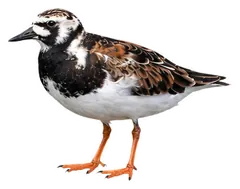 Ruddy TurnstoneArenaria interpres
 Upland SandpiperBartramia longicauda
 Bristle-thighed CurlewNumenius tahitiensis
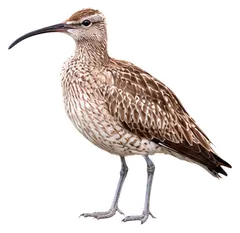 Eurasian WhimbrelNumenius phaeopus
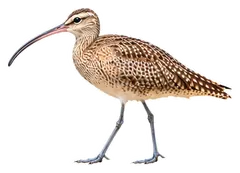 Hudsonian WhimbrelNumenius hudsonicus
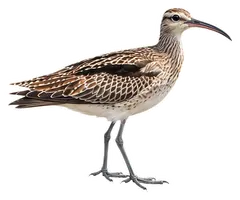 Little CurlewNumenius minutus
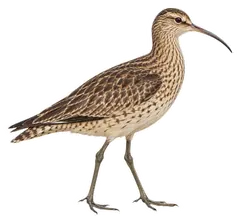 Eskimo CurlewNumenius borealis
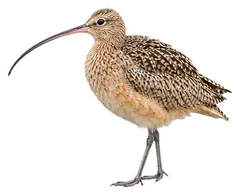 Long-billed CurlewNumenius americanus
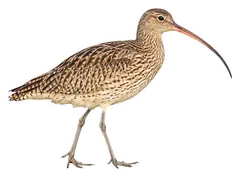 Far Eastern CurlewNumenius madagascariensis
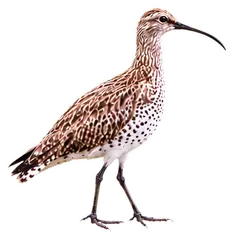 Slender-billed CurlewNumenius tenuirostris
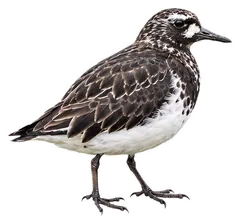
Download illustration
Free to use with credit: “Illustration: Bird Album (birdalbum.com)”. Drawn by AI from reference photos. ↗
Heard it but can't see it? Mingji identifies birds by sound and photo, on your phone.
In other languages
- EnglishBlack Turnstone
- 简体中文黑翻石鹬
- 繁體中文黑翻石鷸
- 日本語クロキョウジョシギ
- DeutschSchwarzkopf-Steinwälzer
- FrançaisTournepierre noir
- EspañolVuelvepiedras oscuro
- Portuguêsrola-do-mar-preta
- ItalianoVoltapietre nero
- NederlandsZwarte Steenloper
- РусскийЧёрная камнешарка
- Svenskasvart roskarl
- DanskSort Stenvender
- Polskikamusznik czarnogłowy