 Bird Album
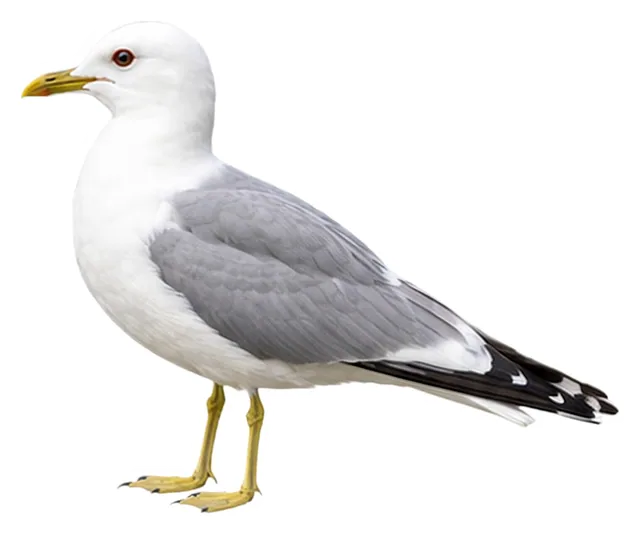
Common Gull
Larus canus Linnaeus, 1758
40–46 cmLength111 cmWingspan412 gWeight
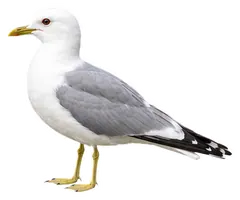
It has a gray back, white belly, greenish-yellow bill and black wingtips with white mirrors.
Busiest months: January, March and October · Most records: United Kingdom, Sweden, Norway
Looks like Ring-billed Gull
How to identify
Field marks
- Back gray; underparts white
- Bill shorter and more pointed than in Ring-billed Gull, greenish-yellow
- Wingtips black; large white mirrors on outer flight feathers
- Legs yellow in the breeding season, duller in winter
Male, female and young
Juvenile has scaly blackish-brown upperparts; legs are pink, turning gray in the second year and eventually yellow.
Voice
High-pitched “laughter”.
Similar species
Where and when it's recorded

Common Gull has been recorded at 1,343 of the 8,171 birding hotspots we track, in 78 countries and regions.
Records by month Northern Hemisphere
Where it's recorded most
- Amwell HMWT NRUnited Kingdom4,496 records
- Titchwell Marsh RSPB ReserveUnited Kingdom4,086 records
- Spurn Bird Observatory Recording AreaUnited Kingdom2,859 records
More places
- Rutland WaterUnited Kingdom2,578 records
- Minsmere RSPB ReserveUnited Kingdom2,388 records
- Beddington FarmlandsUnited Kingdom1,975 records
- Seaforth LWT NRUnited Kingdom1,886 records
- East Tilbury River and MarshesUnited Kingdom1,836 records
- GirdlenessUnited Kingdom1,783 records
- Whitburn Coastal ParkUnited Kingdom1,656 records
Countries and regions with the most records
eBird records via GBIF up to 2024-12-31. A record means someone listed it; more records partly mean more birders, not more birds.
About
The common gull (Larus canus) is a medium-sized gull that breeds in cool temperate regions of the Palearctic from Iceland and Scotland east to Kamchatka in the Russian Far East. Most common gulls migrate further south in winter, reaching the Mediterranean Sea, the southern Caspian Sea, and the seas around China and Japan; northwest European populations are at least partly resident. The closely related short-billed gull was formerly often included in this species, which was then sometimes known collectively as "mew gull".
Excerpt from Wikipedia, CC BY-SA 4.0 · authors · Read more on Wikipedia
Questions
How big is the Common Gull?
The Common Gull is about 40–46 cm long, with a wingspan of 111 cm and weighs around 412 g.
Where does the Common Gull live?
Its breeding range: North America, Palearctic: Iceland and northwestern, central Europe to Kamchatka (eastern Siberia). It is most often recorded in United Kingdom, Sweden and Norway.
When is the best time to see the Common Gull?
At the hotspots we track, it is recorded most in January, March and October (Northern Hemisphere).
Is the Common Gull endangered?
The IUCN Red List classifies the Common Gull as Least Concern.
What does the Common Gull eat?
Main food: Omnivore.
What family is the Common Gull in?
It belongs to the family Gulls, Terns, Skimmers (Laridae), order Charadriiformes.
At a glance
- Length
- 40–46 cm
- Wingspan
- 111 cm
- Weight
- 412 g
- Habitat
- Coast & tidal flats
- Diet
- Omnivore
- Lifestyle
- Active on the ground
- Migration
- Migratory
- Conservation
- Least Concern
More measurements
- Wing
- 351 mm
- Tail
- 134 mm
- Bill
- 48 mm
- Tarsus
- 49 mm
Averages from the AVONET dataset; length from field guides where available.
Range
North America, Palearctic: Iceland and northwestern, central Europe to Kamchatka (eastern Siberia)
Breeding range, IOC World Bird List 15.2
Subspecies · 1
- Larus canus kamtschatschensis ne Siberia and Kamchatka | non-breeding: Sea of Okhotsk (se Russia), Japan, Korean Pen. to se China and Taiwan (China)
Classification
- Order
- Charadriiformes
- Family
- Gulls, Terns, Skimmers Laridae
- Genus
- Larus
Other birds in the genus Larus
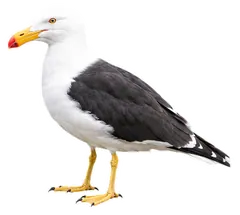 Pacific GullLarus pacificus
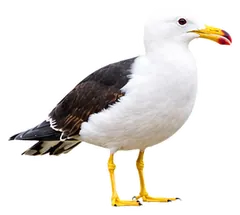 Belcher's GullLarus belcheri
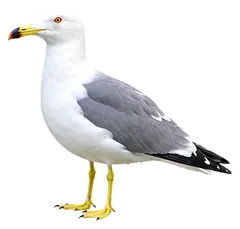 Black-tailed GullLarus crassirostris
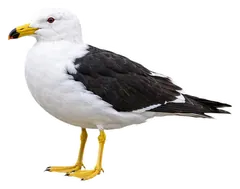 Olrog's GullLarus atlanticus
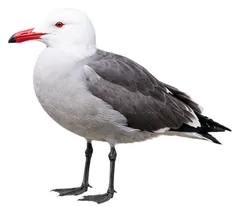 Heermann's GullLarus heermanni
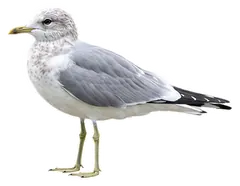 Short-billed GullLarus brachyrhynchus
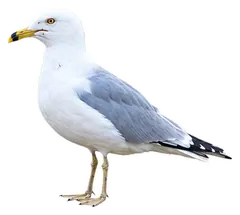 Ring-billed GullLarus delawarensis
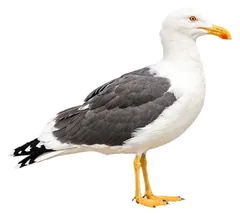 Yellow-footed GullLarus livens
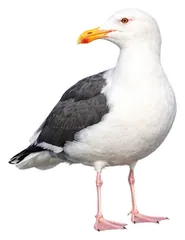 Western GullLarus occidentalis
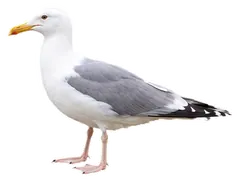 Caspian GullLarus cachinnans
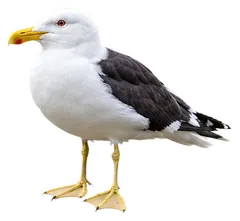 Kelp GullLarus dominicanus
 European Herring GullLarus argentatus
Download illustration
Free to use with credit: “Illustration: Bird Album (birdalbum.com)”. Drawn by AI from a reference photo by Andreas Trepte. ↗

Heard it but can't see it? Mingji identifies birds by sound and photo, on your phone.