 Bird Album
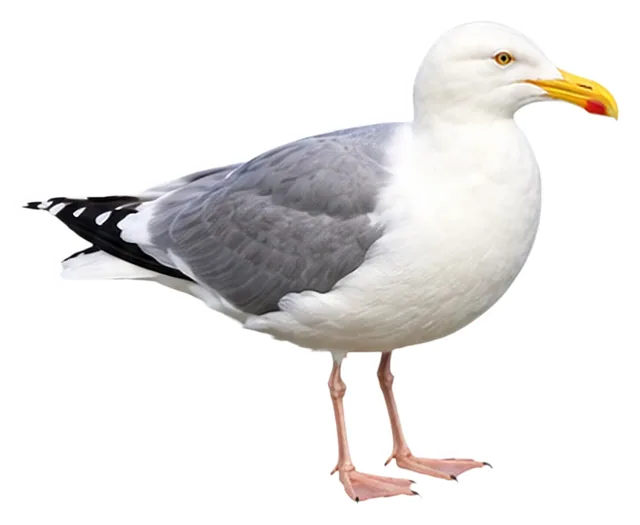
European Herring Gull
Larus argentatus Pontoppidan, 1763
60–67 cmLength1.1 kgWeight
The European herring gull or simply herring gull (Larus argentatus) is a large gull, up to 66 cm (26 in) long.
Busiest months: April–May and August–October · Most records: United Kingdom, Ireland, Iceland
Where and when it's recorded
Busiest months: April–May and August–October · Most records: United Kingdom, Ireland, Iceland

European Herring Gull has been recorded at 769 of the 8,276 birding hotspots we track, in 43 countries and regions.
Records by month Northern Hemisphere
Where it's recorded most
- Titchwell Marsh RSPB ReserveUnited Kingdom6,845 records
- Amwell HMWT NRUnited Kingdom6,065 records
- Húsavík – hafnarsvæðiIceland5,591 records
More places
- Minsmere RSPB ReserveUnited Kingdom4,988 records
- Beddington FarmlandsUnited Kingdom4,842 records
- Spurn Bird Observatory Recording AreaUnited Kingdom3,677 records
- Walthamstow WetlandsUnited Kingdom3,530 records
- Teesside South GareUnited Kingdom3,428 records
- Bempton Cliffs RSPB ReserveUnited Kingdom3,337 records
- WWT London Wetland CentreUnited Kingdom3,151 records
Countries and regions with the most records
eBird records via GBIF up to 2024-12-31. A record means someone listed it; more records partly mean more birders, not more birds.
About
The European herring gull or simply herring gull (Larus argentatus) is a large gull, up to 66 cm (26 in) long. It breeds throughout the northern and western coasts of Europe. Some European herring gulls, especially those resident in colder areas, migrate farther south in winter, but many are permanent residents, such as in Ireland, Britain, Iceland, or on the North Sea shores.
Excerpt from Wikipedia, CC BY-SA 4.0 · authors · Read more on Wikipedia
Questions
How big is the European Herring Gull?
The European Herring Gull is about 60–67 cm long and weighs around 1.1 kg.
Where does the European Herring Gull live?
Its breeding range: Palearctic: coastal and inland Iceland to western France and northwestern, southwestern Russia. It is most often recorded in United Kingdom, Ireland and Iceland.
When is the best time to see the European Herring Gull?
At the hotspots we track, it is recorded most in April, May, August, September and October (Northern Hemisphere).
Is the European Herring Gull endangered?
The IUCN Red List classifies the European Herring Gull as Least Concern.
What does the European Herring Gull eat?
Main food: Fish, shrimp & shellfish.
What family is the European Herring Gull in?
It belongs to the family Gulls, Terns, Skimmers (Laridae), order Charadriiformes.
At a glance
- Length
- 60–67 cm
- Weight
- 1.1 kg
- Habitat
- Coast & tidal flats
- Diet
- Fish, shrimp & shellfish
- Lifestyle
- Varied
- Migration
- Partial migrant
- Conservation
- Least Concern
More measurements
- Wing
- 429 mm
- Tail
- 168 mm
- Bill
- 70 mm
- Tarsus
- 65 mm
Averages from the AVONET dataset; length from field guides where available.
Range
Palearctic: coastal and inland Iceland to western France and northwestern, southwestern Russia
Breeding range, IOC World Bird List 15.2
Classification
- Order
- Charadriiformes
- Family
- Gulls, Terns, Skimmers Laridae
- Genus
- Larus
Other birds in the genus Larus
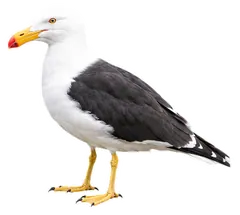 Pacific GullLarus pacificus
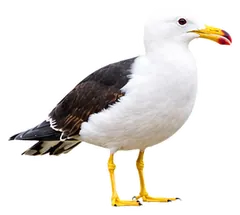 Belcher's GullLarus belcheri
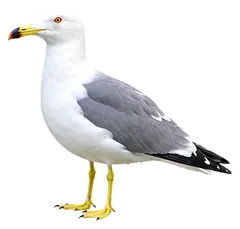 Black-tailed GullLarus crassirostris
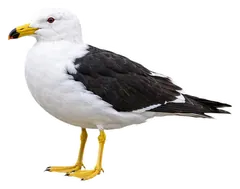 Olrog's GullLarus atlanticus
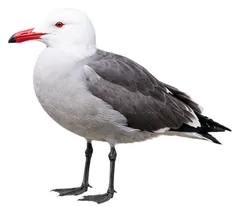 Heermann's GullLarus heermanni
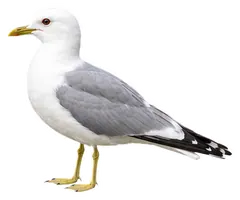 Common GullLarus canus
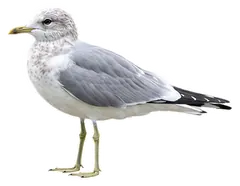 Short-billed GullLarus brachyrhynchus
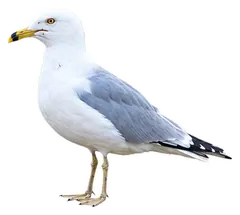 Ring-billed GullLarus delawarensis
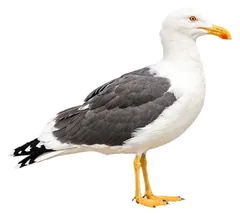 Yellow-footed GullLarus livens
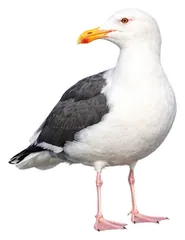 Western GullLarus occidentalis
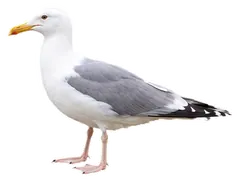 Caspian GullLarus cachinnans
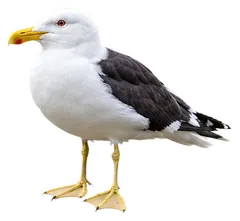 Kelp GullLarus dominicanus
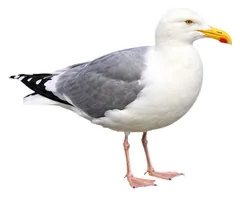
Download illustration
Free to use with credit: “Illustration: Bird Album (birdalbum.com)”. Drawn by AI from a reference photo by Andrew Thompson. ↗
Heard it but can't see it? Mingji identifies birds by sound and photo, on your phone.