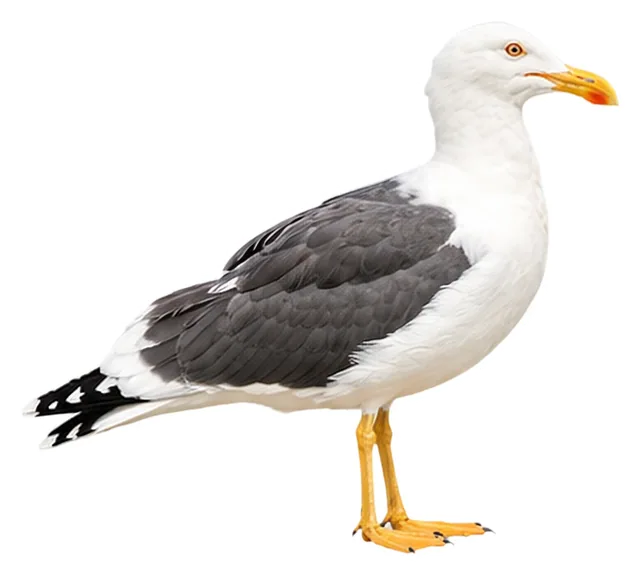
Yellow-footed Gull
Larus livens Dwight, 1919
1.3 kgWeight
The yellow-footed gull (Larus livens) is a large gull, closely related to the western gull and thought to be a subspecies until the 1960s.
Busiest months: April · Most records: United States, Mexico
Where and when it's recorded
Busiest months: April · Most records: United States, Mexico

Yellow-footed Gull has been recorded at 8 of the 8,276 birding hotspots we track, in 2 countries and regions.
Records by month Northern Hemisphere
Where it's recorded most
- Sonny Bono Salton Sea NWR – Union Tract / Visitor CenterUnited States202 records
- Reserva Ecológica Estero de San José del CaboMexico113 records
- Frank G. Bonelli RP/Puddingstone Reservoir and vicinityUnited States84 records
More places
- Planta de Tratamiento de Aguas Residuales de La PazMexico68 records
- Laguna San IgnacioMexico24 records
- Laguna MexicoMexico1 record
- Bahía de San QuintínMexico1 record
- Bear River MBR – Auto Tour LoopUnited States1 record
Countries and regions with the most records
eBird records via GBIF up to 2024-12-31. A record means someone listed it; more records partly mean more birders, not more birds.
About
The yellow-footed gull (Larus livens) is a large gull, closely related to the western gull and thought to be a subspecies until the 1960s. It is endemic to the Gulf of California.
Excerpt from Wikipedia, CC BY-SA 4.0 · authors · Read more on Wikipedia
Questions
How big is the Yellow-footed Gull?
The Yellow-footed Gull weighs around 1.3 kg.
Where does the Yellow-footed Gull live?
Its breeding range: North America, Middle America: islets in Gulf of California, from Roca Consag to La Paz Bay. It is most often recorded in United States and Mexico.
When is the best time to see the Yellow-footed Gull?
At the hotspots we track, it is recorded most in April (Northern Hemisphere).
Is the Yellow-footed Gull endangered?
The IUCN Red List classifies the Yellow-footed Gull as Least Concern.
What does the Yellow-footed Gull eat?
Main food: Omnivore.
What family is the Yellow-footed Gull in?
It belongs to the family Gulls, Terns, Skimmers (Laridae), order Charadriiformes.
At a glance
- Weight
- 1.3 kg
- Habitat
- Ocean
- Diet
- Omnivore
- Lifestyle
- Varied
- Migration
- Partial migrant
- Conservation
- Least Concern
More measurements
- Wing
- 404 mm
- Tail
- 151 mm
- Bill
- 70 mm
- Tarsus
- 67 mm
Averages from the AVONET dataset; length from field guides where available.
Range
North America, Middle America: islets in Gulf of California, from Roca Consag to La Paz Bay
Breeding range, IOC World Bird List 15.2
Classification
- Order
- Charadriiformes
- Family
- Gulls, Terns, Skimmers Laridae
- Genus
- Larus
Other birds in the genus Larus
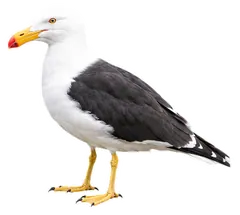 Pacific GullLarus pacificus
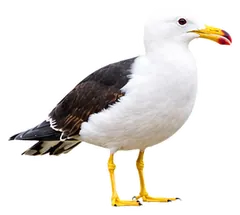 Belcher's GullLarus belcheri
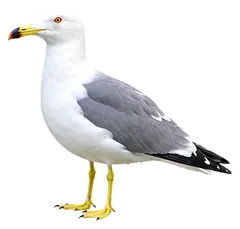 Black-tailed GullLarus crassirostris
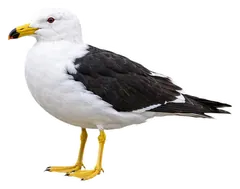 Olrog's GullLarus atlanticus
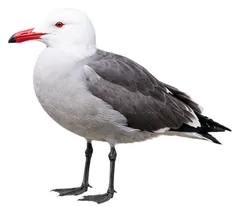 Heermann's GullLarus heermanni
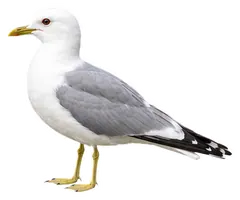 Common GullLarus canus
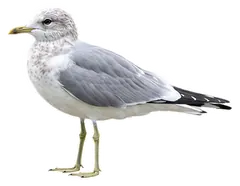 Short-billed GullLarus brachyrhynchus
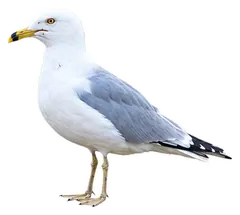 Ring-billed GullLarus delawarensis
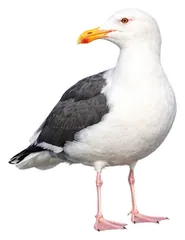 Western GullLarus occidentalis
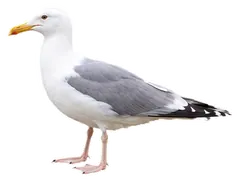 Caspian GullLarus cachinnans
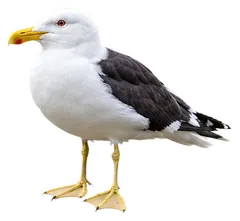 Kelp GullLarus dominicanus
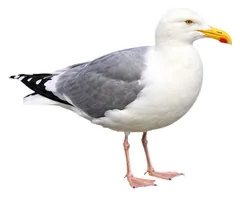 European Herring GullLarus argentatus
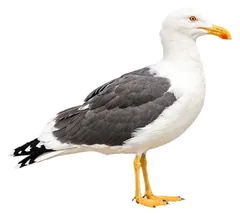
Download illustration
Free to use with credit: “Illustration: Bird Album (birdalbum.com)”. Drawn by AI from reference photos. ↗
Heard it but can't see it? Mingji identifies birds by sound and photo, on your phone.